

Miomir Kecmanović opened his Gstaad campaign in the first round with a 6:1, 3:6, 6:3 win over Kilian Feldbausch, a result that gives the week an important start. The scoreline shows the day was far from straightforward.
That is why the victory is useful for judging his form. Kecmanović started strongly, dropped the second set, then found his rhythm again in the third. A response like that often counts for more than a routine match with no trouble along the way.
The first set brought control
When a player takes the opening set 6:1, it is clear he quickly settled into his game. Kecmanović put pressure on his opponent’s serve from the start and never let Feldbausch get comfortable in the contest.
The danger after a set like that is complacency. Matches can turn quickly when an underdog wins a few clean games and the favourite starts waiting for errors rather than forcing them himself.
The second set raised the value of the win
Feldbausch’s 6:3 reply made the match more serious. Kecmanović had to solve a problem that emerged mid-match, rather than simply finish off a routine job.
That kind of confidence matters. Players often learn more when they have to repair a set than when everything goes through without resistance.
The third set showed a practical calm
Kecmanović’s 6:3 in the deciding set points to a return to simple patterns. He did not need to chase spectacle, only to restore depth, serve and patience.
For Serbian tennis, that is a good sign. His best weeks usually begin when he cuts down on unforced errors and makes his opponent earn every point.
| Signal | Meaning |
|---|---|
| Opponent | Kilian Feldbausch |
| Result | 6:1, 3:6, 6:3 for Kecmanović |
| Main value | Response after losing the second set |
| Serbian angle | Fresh return to clay after grass |
Gstaad can reward his baseline game
Conditions in Gstaad suit players who can control ball height, spin and the rhythm of rallies. Kecmanović can make use of that stability without forcing the issue.
The next match is therefore a clear test. If he keeps his depth and places his serve well, this win could develop into a more serious tournament run.
This is not a repeat of the Wimbledon story
The theme is not an old story from the grass. This is a new tournament, a new opponent, a new result and a different tactical demand.

Miomir Kecmanović during the first-round match in Gstaad
That is exactly why the transition matters. Kecmanović moves from grass back into a week in which building points is worth more than the first shot.
A tidy start means something for Serbian tennis
A win by a Serbian player at an ATP event in Europe adds welcome variety to the daily sports coverage. It also gives Kecmanović the matches he needs before the next change of surface.
The next step is not a big word but one more clean performance. A reset only becomes a run once a second match confirms the same level of control.
Why the Gstaad win has value
Kecmanović’s win on clay matters because it gives Serbian tennis a fresh July signal away from its biggest names. One calm match can restore a player’s rhythm and show that form does not always have to be measured on the largest stage.
On clay, it is especially important how a player picks the moment to attack. If he goes for the winner too early, the surface punishes him. If he waits too long, the opponent gains time. That is why a result like this is worth reading in terms of patience and control of the court.
Gstaad is also a useful test because of its conditions. The ball can bounce high, points lengthen and movement has to stay clean. Kecmanović therefore takes more from this win than just a place in the next round.
For SerbianSport this is a solid tennis story because it is concrete and Serbian. It does not manufacture news out of old form, does not force a link to another player and stays with what happened on court.
What Kecmanović takes forward
Kecmanović’s 6:1, 3:6, 6:3 win over Kilian Feldbausch matters because he had to recover after losing the second set. The third set showed he can find safer patterns again and not let one poor spell decide the match.
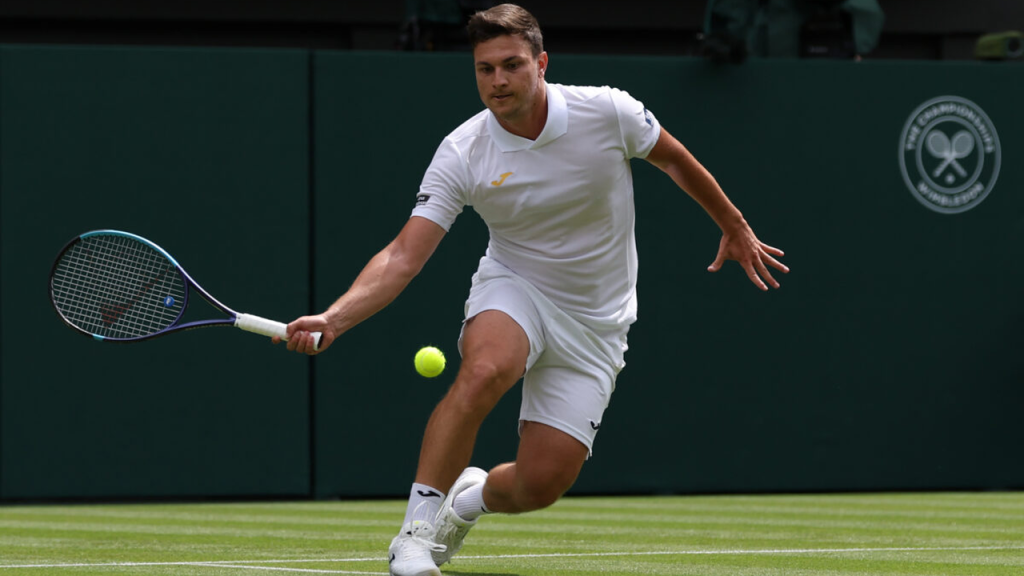
Miomir Kecmanović in action before his return to clay
On clay, that return usually begins with position on the court. Kecmanović has to stand close enough to the baseline to attack a shorter ball, but not so close that a high bounce pushes him into errors before he is ready.
The win also matters because of the move from grass to clay. After low bounces and quicker points, Gstaad demands more sliding, patience and longer rallies. Three sets have given him useful competitive rhythm.
His next match should show how well he protects his serve and how calmly he chooses when to attack. If he finishes short points when the chance comes and accepts long rallies without rushing, this week could deliver more than a good opening win.
Where his first serve lands may decide whether Kecmanović keeps the next match under control. On clay a flat first serve is not always enough; a serve into the body and a wide variation can open up the first forehand.
Return games will be just as important. If he returns enough second serves deep, Kecmanović can start from a neutral position rather than immediately defending the baseline. That detail could turn a good opening win into a stronger tournament run.
Kecmanović can also draw confidence from the fact that the match changed direction. An easier win in two sets would have been cleaner, but the route through three sets tested his concentration. That may help if his next opponent forces longer rallies.
It is also significant that the win came at a European event, where conditions demand quick adjustment. Gstaad is not just another stop on the calendar; the height, the bounce and the rhythm of rallies can change how the shots feel after only a few games.
For Serbian tennis it is useful when more than one player has competitive rhythm in the same week. Kecmanović’s win gives a steady result on a surface that demands plenty of work within the point and a patient choice of when to attack.