
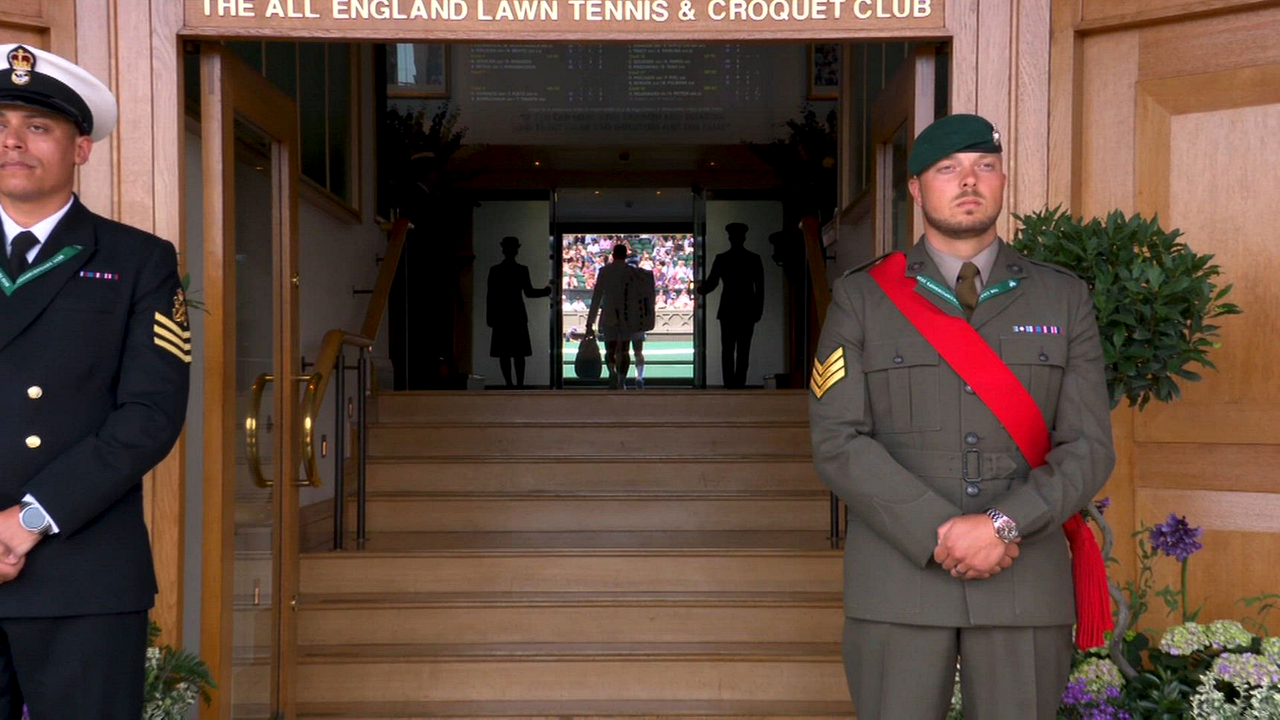
It all starts with the first serve
Arthur Rinderknech can make a grass-court match uncomfortable if his first serve wins him points often enough. Djokovic knows that better than almost anyone on tour. His first task, then, is not to break every game on the return straight away, but to read the directions, the second ball and the intent after the serve.
On grass, that kind of information builds up through small details. Does Rinderknech go to the body when he is under pressure, does he look for the forehand from the middle after serving, how quickly does he close the net and how does he react when the first shot brings him no advantage. Djokovic tends to change a match exactly when he has that map in hand.
If the Serbian stretches the points by a ball or two early on, the pressure shifts onto the server. Rinderknech then has to hit not only his serve but also his first choice of shot after it. That opens the space for Djokovic’s best Wimbledon habit: patiently wearing down the opponent’s sense of security.
The basic shape of the duel
| Tournament | Wimbledon, the fifth day of the grass-court schedule. |
|---|---|
| Serbian focus | Novak Djokovic continues his path through the draw with the full attention of the home public. |
| Rival | Arthur Rinderknech brings the serve and the first shot as his main sources of pressure. |
| Key | Do not rush on the return, but change position once the serving pattern becomes clearer. |
| Main sign | Djokovic must not let the rival’s quick games change his plan. |
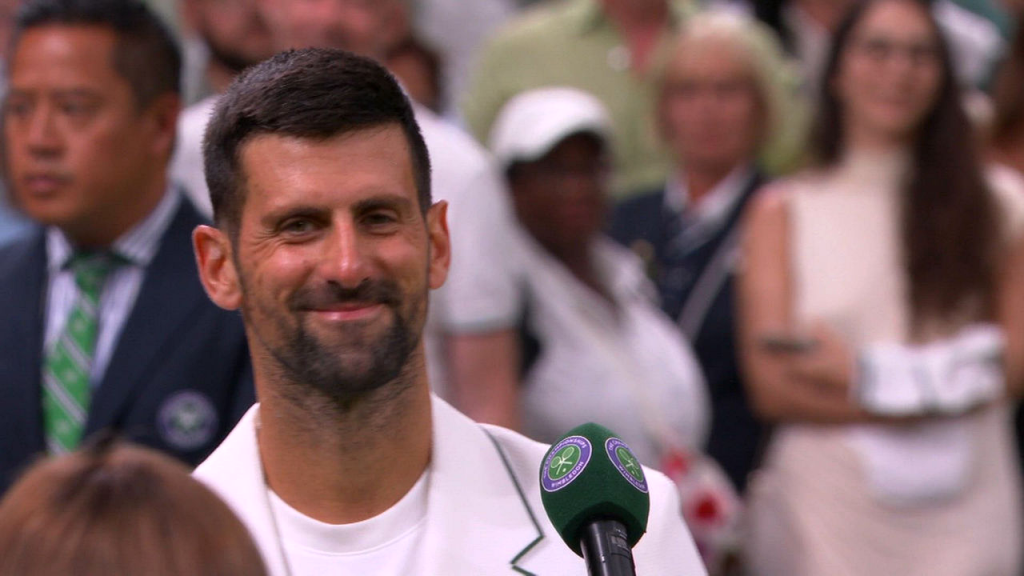
Djokovic’s patience remains the Serbian anchor
Serbian attention follows Djokovic through every Wimbledon appearance, because his matches still carry more sporting weight than an ordinary early-round tie. Even so, it is risky to expect every grass-court duel to look comfortable from the start. A big serve can keep a lower-ranked player in the scoreline for a long time.
Djokovic’s edge is that he rarely panics over a few easy games for his opponent. He separates the scoreboard from the flow of play. If he sees he is close to cracking the return, even without a break point, he keeps pressing the same area. If he is not getting the read, he shifts his position, changes the depth and forces the rival to hit from a different angle.
That patience is the essence of this match. Rinderknech does not need to play badly to lose control. It is enough that he has to win three points under pressure in one game, and Djokovic is at his best when he turns a small shift into a whole set.
Centre Court magnifies every small change
The Wimbledon Centre Court has a way of amplifying small moments. A double fault, a poorly judged approach to the net or one missed forehand after a good serve can suddenly change the feel of a match. Djokovic is used to that stage, while Rinderknech has to hold together not only his game but also his nerves.
For Djokovic, that does not mean waiting for a gift. On the contrary, he must be active enough that his opponent feels every service game has a cost. If Rinderknech wins quick points without being questioned, the crowd and the surface can help him. If every game takes a little longer, the same scene becomes harder for him.
That is why body language will matter. Djokovic must not show impatience if the first break does not come early. Rinderknech, for his part, must get through the moment when he first senses that the Serbian is getting close to reading his serve.
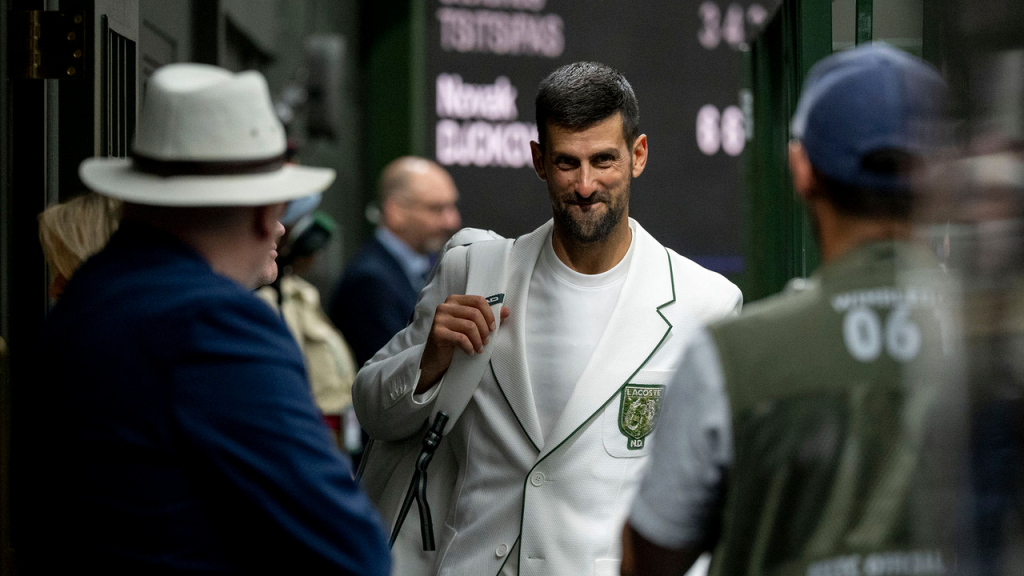
His position on the baseline can change within the first set
Djokovic will probably start from a position that gives him enough time to read the serve. If Rinderknech hits many first serves, the Serbian may occasionally step back to get a longer swing. If the second serve starts landing shorter, moving forward can change the pressure straight away.
Such an adjustment does not have to be dramatic. Sometimes a step closer to the baseline or a slightly different angle on the backhand side is enough. Rinderknech then has to change his routine, and a server who changes his routine under pressure loses some of his original advantage.
The main thing is that the scoreboard does not push Djokovic to abandon his plan too early. On grass, the break often arrives from one well-read game. If the Serbian stays calm until that moment, the duel may only look level from the outside.
The Serbian angle is progress, not just passage
For the Serbian public the goal is clear: Djokovic should go further. For him, though, the value of the match will also lie in how precisely he builds his form through the tournament. Early Wimbledon duels are not just obstacles, but chances to test movement, reaction to the serve and confidence in longer exchanges.
If Rinderknech manages to drag him into tight games, that need not be bad. Through such moments Djokovic gathers information that will be valuable later against stronger rivals. The only thing that matters is that tight games do not turn into nervous ones.
The best scenario for Serbia is a match in which Djokovic does not have to play for too long, but works enough to come out of it sharper. Such a win would be more than routine: it would confirm that his Wimbledon rhythm is being built without wasted energy.