
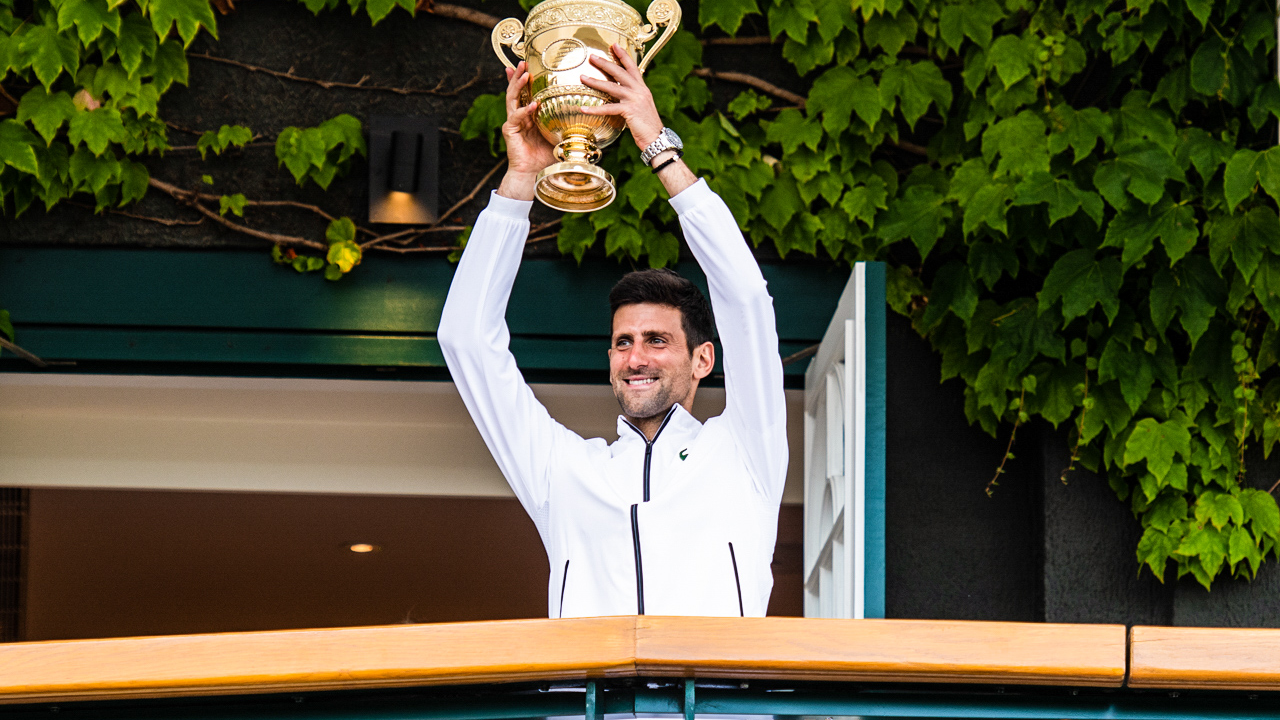
An untamed contender who could rewrite the record books: Djokovic’s quest for a 25th Grand Slam title at Wimbledon 2026
Few stories in sport carry the weight of a man chasing immortality. When the draw for Wimbledon 2026 is made on 26 June, one name will draw more attention than any other on the planet: Novak Djokovic. Heading into the tournament, which begins on 29 June, with a seeding that reflects his current standing, the 39-year-old Serbian arrives at the All England Club in a role he rarely occupies in his career, as an outsider rather than the clear favourite. Yet on the grass of SW19, where he has dominated more than almost any player in the Open Era, that label feels almost absurd.
The prize on offer if he succeeds could hardly be more historic. Djokovic currently holds 24 Grand Slam singles titles, a record he has owned outright since he equalled Margaret Court’s tally. A twenty-fifth would push the boundary of what was once considered possible into genuinely uncharted territory, firmly cementing a legacy that future generations will struggle to comprehend.
The question is not whether Djokovic is capable of winning Wimbledon 2026. His record on grass answers that immediately. The question is whether his body, his placement and the draw will allow that brilliance to surface at exactly the right moment across two gruelling weeks.
A champion weighed down by his ranking
Djokovic’s slide down the seeding list is a consequence of a ranking that no longer reflects his ability on grass, shaped by a period of injury and a reduced number of matches played. The ATP’s rolling 52-week ranking system punishes players who miss significant portions of the season without mercy, and Djokovic has paid that price.
Arriving at Wimbledon with a lower seeding than his record deserves means the draw offers less protection than usual: he may meet a top-ten player before the second week, and is almost certain to face another high seed earlier than would befit a player of his stature.
That is a significant obstacle, but not an insurmountable one. History offers precedents of lower-seeded players winning Grand Slams, and Djokovic himself has never been a player who relies on an easy draw to accumulate titles.
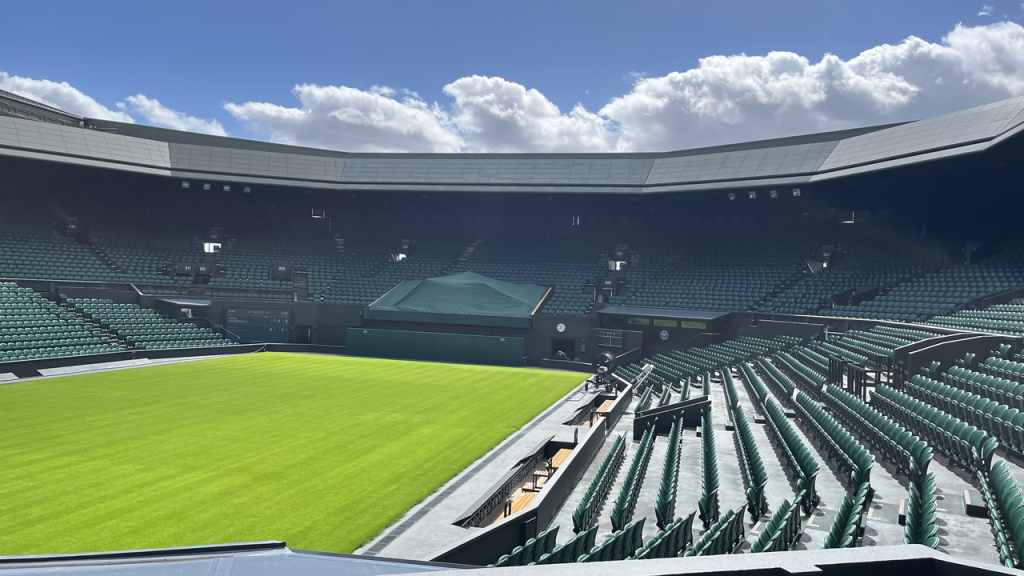
His game rests on defensive brilliance, mental resilience and an extraordinary ability to raise his level in the matches that matter most. If the draw is unkind, he will simply have to beat better players sooner. For a man with his record, that is a challenge rather than a death sentence.
The draw will be published on 26 June, and much of the pre-tournament discussion will revolve around which section of the bracket Djokovic lands in and whom he could meet in the early rounds. A path that avoids the top of the draw, and world number one Jannik Sinner, at least until the semi-finals would give him the best platform to build rhythm and confidence as the tournament progresses.
Grass: the surface that made him a legend
To understand why Djokovic’s candidacy at Wimbledon must be taken seriously regardless of his seeding, it is enough to look at his record on grass. He has won seven Wimbledon titles, a feat matched only by Pete Sampras, and his overall record on grass at the Grand Slams is outstanding.
He has reached the Wimbledon final a remarkable ten times, winning four consecutive editions from 2018 to 2022 before recent health problems disrupted his schedule. No active player understands more deeply how to navigate the two weeks on the grass courts of the All England Club.
Djokovic’s game is particularly well suited to grass. His flat, penetrating baseline strokes skid through the surface on a trajectory that troubles opponents who rely on heavy topspin and high bounce. His serve, though not the biggest on tour, is tactically intelligent, able to direct it wide, to the body and down the middle with a precision that keeps returners guessing.
His return of serve, arguably the finest the men’s game has ever seen, becomes a weapon even against players with powerful serves, because his reflexes and reading of the ball allow him to neutralise the shots that would earn cheap points against other players.
Physically, the lingering concern is whether he can sustain the intensity demanded by seven best-of-five matches, without the benefit of a seeding that might secure him an easier early draw. His fitness heading into Wimbledon 2026 will be closely watched, and his preparation on grass, whether through warm-up events or private training, will underpin every challenge he mounts.
The landscape he must conquer: Sinner, the draw and an absent Alcaraz
The men’s tournament at Wimbledon 2026 has been shaped by one significant absence before a ball has been struck. Carlos Alcaraz, who won the title in 2023 and 2024 and was widely regarded as the pre-tournament favourite, has withdrawn through injury. His departure removes perhaps the one player best equipped to beat Djokovic on grass in a major final: a complete baseliner with the athleticism and nerve to trade blows with the Serb over five sets.
For Djokovic, Alcaraz’s absence changes the arithmetic of the draw considerably. You can read more about how that withdrawal reshapes the men’s event in our analysis of the Sinner and Alcaraz situation at Wimbledon 2026.
Jannik Sinner, the defending champion and world number one, now enters as the clear favourite. The Italian has developed into the most complete player on tour, and his ability across all surfaces means Wimbledon is no longer the exception it once was for him. A Djokovic versus Sinner semi-final or final would be among the most compelling matches in recent Grand Slam memory: a young champion defending his crown against the greatest player the sport has ever seen, on the surface where that greatness has perhaps been most comprehensively demonstrated.
Beyond Sinner, the draw will include the usual collection of dangerous grass specialists and big servers who make Wimbledon uniquely unpredictable. Daniil Medvedev, Alexander Zverev and a number of younger players present threats at various stages. For Djokovic, the key will be winning the early rounds with enough authority to remind opponents, and the draw, that he remains a genuine title contender rather than merely a sentimental favourite.