
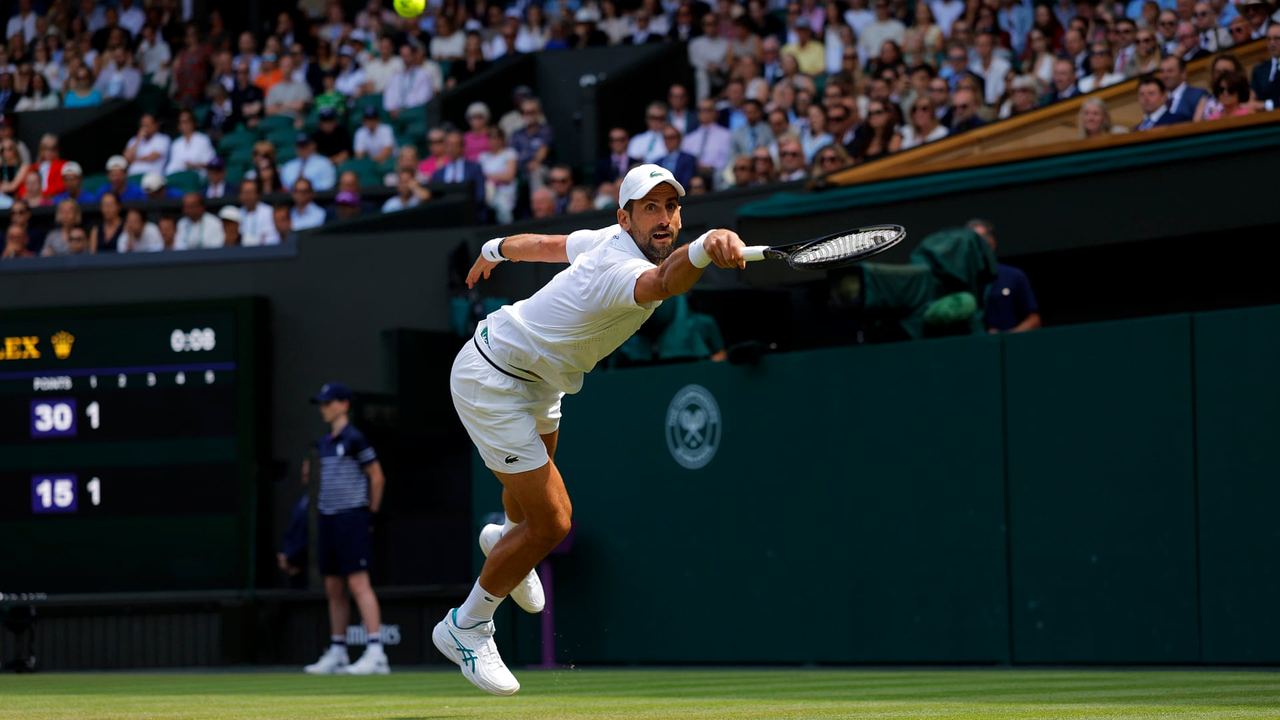
The milestone is historic, but the match was no ceremony
Novak Djokovic beat Arthur Rinderknech 7:5, 6:4, 1:6, 7:6 to reach 105 men’s singles wins at Wimbledon, equalling Roger Federer’s record. The figure is a big one, yet the match itself was never a quiet walk towards a number.
The third set was a reminder that Djokovic does not move through the draw without questions. Rinderknech managed to break his rhythm, pushed him into a rougher spell and put the fourth set under real pressure. Djokovic nonetheless finished the job in the tiebreak, and that is the most encouraging part of the story going forward.
History therefore comes with a useful check. The record speaks to the scale of his career, while the manner of the win shows that Djokovic still has to solve concrete problems on court.
Key facts
| Result | Djokovic beat Rinderknech 7:5, 6:4, 1:6, 7:6. |
|---|---|
| Wimbledon tally | He reached 105 wins and equalled Federer’s men’s record. |
| Next opponent | Roman Safiullin is the next opponent. |
| Head-to-head | Djokovic leads 3:0 and has not lost a set to Safiullin. |
| New factor | It will be their first meeting on grass. |
Safiullin is more than the next stop
Roman Safiullin arrives after a three-set win over Joao Fonseca, which means he does not enter the next duel worn down by a marathon. Djokovic’s head-to-head record looks complete, but grass changes how the match reads. Short points, the serve and the first shot can keep an underdog in contention for longer than on a slower surface.
Djokovic will therefore need to apply pressure from the first game on the return. He does not have to break straight away, but he must show Safiullin that every service game carries an extra ball, an extra decision and the risk of a point being stretched in a direction the Serb controls better.
If Safiullin wins quick games without being questioned, the match could feel more nervous than the ranking and history suggest. If Djokovic reads the direction of the serve early, the gap should open gradually.
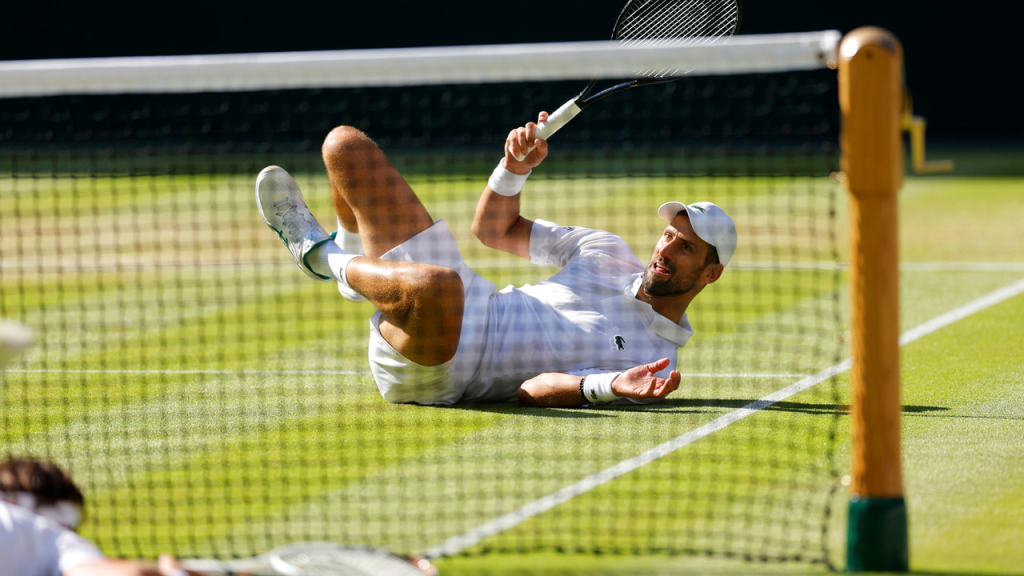
Body language remains important scouting
At this stage of Djokovic’s career, opponents watch more than the scoreline. They watch his reaction after a long point, the way he moves between games and every brief exchange with himself. Rinderknech found some hope precisely when Djokovic’s rhythm became uneven.
Safiullin will try to stretch those moments. His aim is not merely to land a few heavy shots, but to keep Djokovic constantly shifting, pull him out of comfort on the backhand side and stop his service games from feeling routine.
Djokovic’s response has to be calm. It does not need to look perfect in every game, but it must shorten the spells in which his opponent believes the match is opening up without much risk to himself.
The record must not overshadow the job
Matching Federer’s figure will naturally be the main headline, but for Djokovic what happens next matters more. Wimbledon does not reward historical statistics alone. It rewards the player who moves better from round to round, reads the serve more clearly and saves energy for the closing stages of the tournament.
That is why the Safiullin match should not be treated as a formality. Djokovic has the edge in experience, reading the game and psychological pressure, but he must make that advantage visible in every important game. One lost set on grass can quickly change the tone of a day.
The best scenario for him is a win in which the rhythm improves, the serve stays steady and physical wear does not rise unnecessarily. Such a victory would turn the record story into useful preparation for the next level of the tournament.
For Serbian fans, the focus is control, not just progress
For Serbian supporters, progress is the first goal, but with Djokovic something more is always measured. It matters how he looks between points, how quickly he finds a solution when his rhythm drops and whether his opponent has to play above his level just to get a chance.
Against Rinderknech the response was not perfect, but it was solid enough when the match needed to be closed. Against Safiullin it would be ideal for that solidity to appear earlier. Then the historic number will not feel like a burden, but like a backdrop for the work ahead.
Djokovic has shown many times that a tournament is built round by round, not through one brilliant performance. This Wimbledon now demands the same logic. The record is there, but the next match calls for precision.
If Safiullin senses there are no easy service games and that every short ball is punished immediately, Djokovic will pull the match back into familiar territory. That is the zone in which history most often gains one more chapter.