
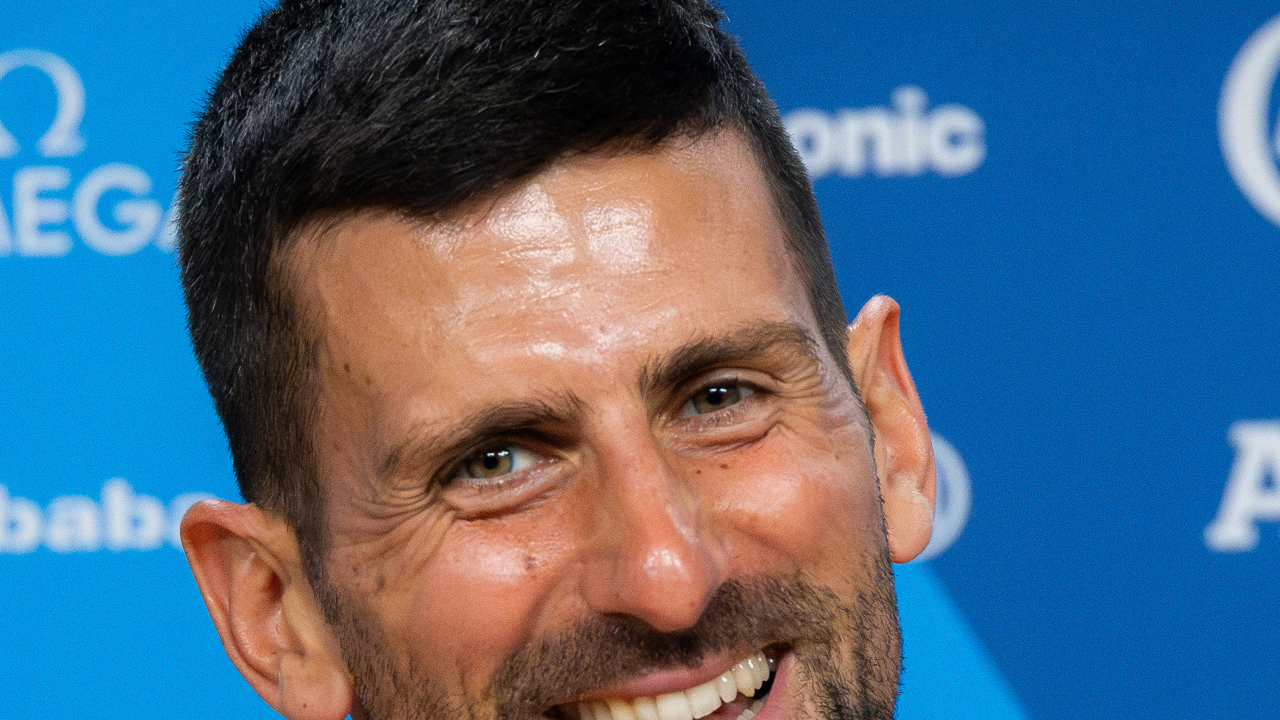
For most of the last fifteen years, the question before Wimbledon was a simple one: who could possibly stop Novak Đoković? In the summer of 2026, that question arrives with a rather different look on its face.
A 2026 season that refuses to settle
The numbers tell a story of inconsistency rather than decline. Đoković holds a 9-4 singles record for this year as of 22 June, a return that would flatter most players on tour but sits awkwardly against the standards he has set for so long. Four defeats by mid-summer are not a disaster, yet they are friction, the kind that wears at the certainty a champion leans on when matches begin to carry weight.
Each of those losses has chipped at a slightly different part of the armour. A great season is built not only on a winning percentage but on the feeling that difficult days can be ground out through sheer will. This year that rate of recovery has fluctuated, and the margin between dominance and vulnerability has narrowed in a way his rivals have certainly noticed.
What complicates any tidy reading of his form is the change of surface. Clay demands one thing and grass another, and Đoković enters the grass season carrying questions rather than answers. A 9-4 record is a snapshot, not a trend line, and the truth about his summer will be written over the next two weeks in south-west London rather than in the months behind him.
Roland Garros left a bruise
His last outing before Wimbledon was anything but reassuring. At Roland Garros he was beaten in the third round by Joao Fonseca, the young Brazilian whose rise has been one of the more exciting subplots of the season. For Đoković, an early exit in Paris is a shock; the clay major has long been a stage where he has pulled out deep runs even when his game was not at its sharpest.
A defeat at that stage matters for reasons beyond the scoreline. It shortened valuable time spent in competitive matches, the repetition a player uses to sharpen timing and tighten loose strands in his game. Rather than stacking sets against quality opponents, Đoković found himself with an unexpected gap in the calendar and a loss to digest.
Why the timing stings
- An early Paris exit removes high-pressure matches from his legs at the very moment they are most valuable.
- A loss to a rising talent such as Fonseca shifts the narrative from “favourite” to “open question” before a single ball has been struck on grass.
- The move from clay to grass rewards rhythm and confidence, two things a third-round exit offers little of.
None of this erases what Đoković has achieved at Wimbledon over the years, but it reframes the conversation. He arrives needing to find his form on the go rather than bringing it with him, and grass is an unforgiving place to search for your best tennis in real time.
A thin grass preparation and a demanding fortnight
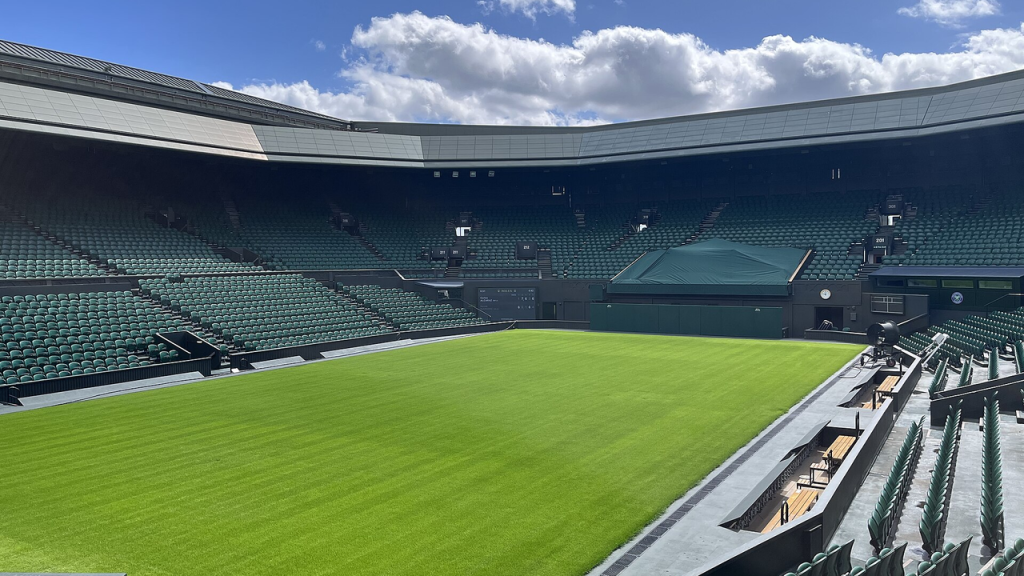
The grass calendar is brutally short, a narrow slice of the season squeezed between the clay swing and the summer hard-court stretch. That compression punishes anyone who arrives underprepared. A player without recent match sharpness has precious little room to rediscover footwork, the read of a low bounce and the timing on the slice that grass quietly demands.
For a competitor of Đoković’s stamp, the instinct will be to trust experience over preparation, to assume that muscle memory built across countless Wimbledon campaigns will surface when required. Yet experience has its limits when the body has not been fed by regular competition, and the early rounds of the Championships have a habit of exposing exactly that gap.
You can follow the build-up through our Wimbledon coverage and dig deeper into the competition through our tennis section as the draw takes shape.
A reshaped top of the draw
The landscape Đoković steps into has changed before he has even reached the court. Carlos Alcaraz, one of the most dynamic forces on this surface, has withdrawn with a wrist injury, removing a headline name from the equation and redrawing the upper half of the bracket. Competition always shifts when a player of that calibre drops out, and the ripple effects touch everyone still in the field.
It would be tempting to present Alcaraz’s absence as a clear opening, but that reading is too simple. A redrawn bracket does not hand out the title; it simply rearranges the obstacles. For a player whose own form is uncertain, one rival’s disappearance does little to solve the pressing problem, which is finding rhythm quickly enough to survive the early rounds.
The Championships run from 29 June to 12 July, with the draw ceremony set for 26 June, so the exact shape of Đoković’s route will only become clear in the days ahead. Until then, the story is less about who he might meet and more about which version of himself turns up. Follow the picture as it develops through our dedicated Novak Đoković page.
Frequently asked questions
What is Đoković’s singles record in 2026?
As of 22 June 2026, Novak Đoković holds a 9-4 singles record for the season. By most measures that is a respectable return, but it falls short of the dominance he established over the previous decade and points to a campaign still searching for consistency.
How did Đoković fare at Roland Garros?
His last event before Wimbledon was Roland Garros, where he lost in the third round to the young Brazilian Joao Fonseca. The early exit cut into valuable match time and left him without competitive rhythm ahead of the grass portion of the season.
When is Wimbledon 2026 and who has withdrawn?
Wimbledon 2026 is played from 29 June to 12 July, with the draw ceremony set for 26 June. Carlos Alcaraz has withdrawn with a wrist injury, a development that reshapes the top of the draw, though it does not remove the questions hanging over Đoković’s own preparation.
The next two weeks will not be settled by reputation alone. Đoković still owns one of the finest grass-court games the sport has produced, but on a surface that rewards confidence above almost everything else, he carries a season open to doubt and a worryingly short run of momentum. Whether the old certainty returns under pressure, or 2026