
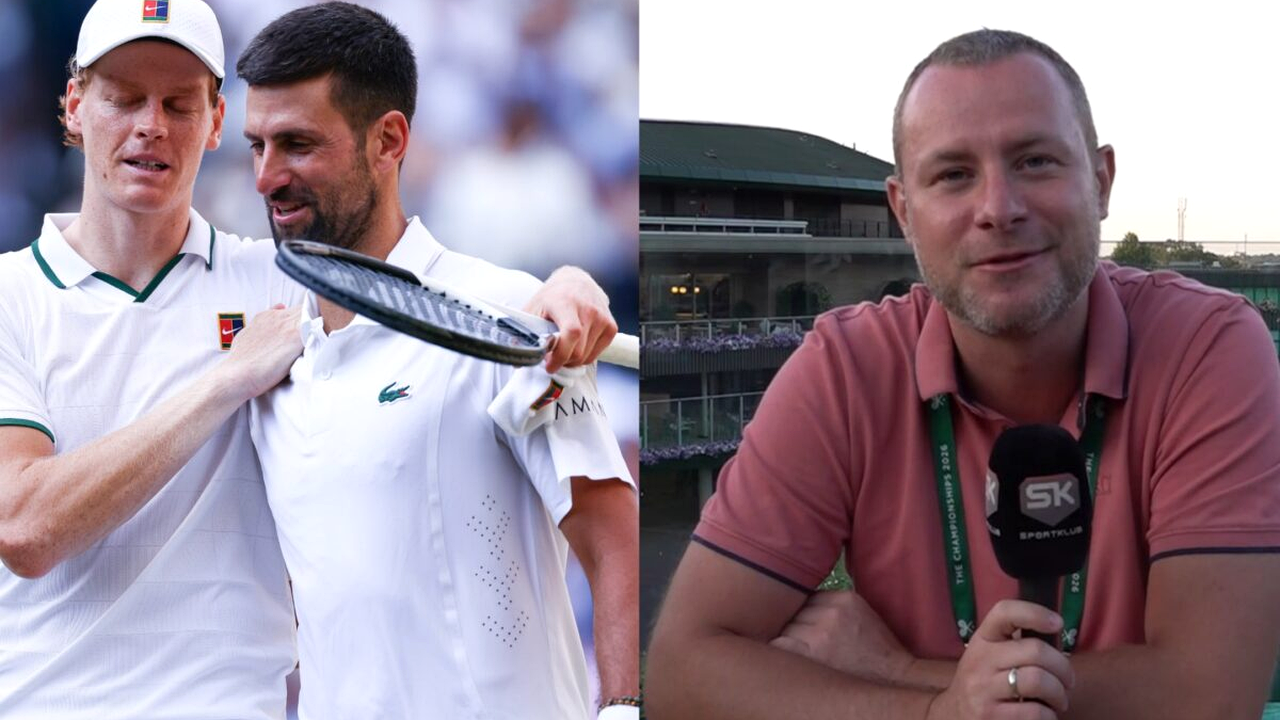
Novak Djokovic came away from his defeat to Jannik Sinner with a tough but useful lesson. The issue was not tactics alone. The rhythm of the match ran faster than his body could keep up with.
The scoreline told the story of the pace
Sinner’s three-set win left little room for polishing the picture. Djokovic was behind in the rallies, was not getting enough depth from his returns and rarely managed to apply real pressure. He had only one break point, and Sinner saved it with an ace. That single moment sums up the whole match well.
The defeat stings because Wimbledon is a place where Novak usually finds his answers even when a match starts badly. This time the rhythm slipped away too early. Sinner served with variety, hit firmly straight after his serve and kept his points short enough that Djokovic never got into his control.
Candour matters
After the match Djokovic spoke calmly and directly. He accepted that Sinner was the better player and that his body did not respond as quickly as his mind asked it to. That distinction matters. He often knew where the ball was going but arrived half a step late. At this level, half a step can change an entire point.
That candour is not a sign of surrender. Novak built his whole career on adjusting after painful defeats. Now that adjustment has to respect his age and his recovery more closely. Not every Grand Slam can be played as if the body will simply respond. The plan has to be narrower and more precise.
| Point | Note |
|---|---|
| Result | Sinner won in three sets and controlled most of his games. |
| Main problem | Djokovic often read the point correctly but was late to the ball. |
| Next focus | Recovery, serving and deeper returns must be the first priorities. |
Sinner’s serve shut down the return
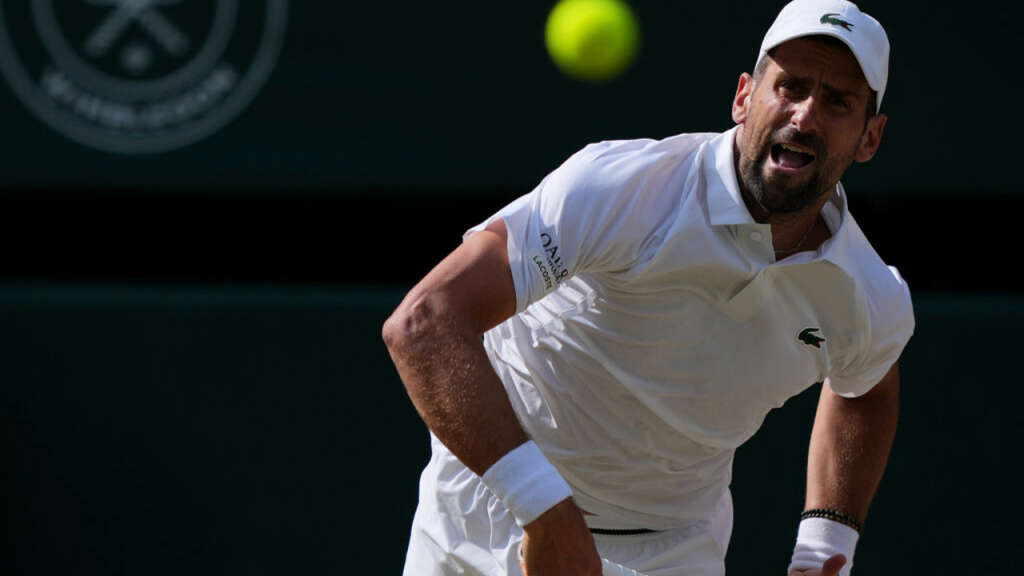
The biggest practical problem was Sinner’s serve. Djokovic could rarely attack it, and the first shot after the serve came hard and deep. When a returner fails to create depth, the server gets the next shot on his own terms. That is why so many points looked settled after just two strokes.
Sinner switched directions well. The wide serve opened up the court, the serve into the body took away his swing, and the second serve was often deep enough to stop Novak from moving forward. Djokovic has read the very best servers throughout his career, but here he did not have a clear enough pattern to attack.
Recovery becomes the first question
The match showed once again that freshness is now the central issue. Djokovic can still play top-level tennis, but against the fastest opponents he has to be physically sharp from the first point. If he reaches the semi-final a little drained, Sinner and Alcaraz can make every small delay visible.
The answer may be fewer tournaments before the biggest goals, better-timed training and a stronger reliance on the first four shots of a rally. Novak does not need to become a different player. He needs to protect the start of the rally so that a younger opponent does not turn every point into a pure test of speed.
The legacy is not in dispute
This defeat does not change Djokovic’s place in history. A single semi-final cannot do that. The real question is personal: how much more he wants to pay in physical cost for one more major title. His answer did not sound like resignation. It sounded like an acknowledgement that the road has become harder.
For Serbian fans that is an important message. Not every defeat has to be read as an ending. The quality of the opponent can be acknowledged, and it can be seen that Novak remains competitive. The margin is thinner than before, but it still exists. If his body allows proper preparation, Wimbledon is not yet a closed book.
The next lesson is simple
The useful lesson from the match against Sinner is not emotional. Djokovic needs more easy points, deeper returns and fewer hard battles before meeting the fastest players. If those parts are improved, he can still cause problems for anyone in a Grand Slam draw.
Sinner showed the clearest measure of the current gap. It hurts, but it helps. Novak now knows what he has to protect. The answer is not romance. The answer is recovery, quality of serve, depth of return and a calm decision to build the next run around what his body can genuinely deliver. The schedule has to be simple and strict. Fewer unnecessary matches can save more strength for the day he faces the fastest players. Calm in preparation matters too. If the plan is clear early, each training session can have one aim rather than five small fixes at once. That way energy is easier to save for the matches that decide tournaments. It is a hard road, but also the most honest one. Novak has shown many times that he can accept an uncomfortable truth and turn it into work.
The plan has to stay short
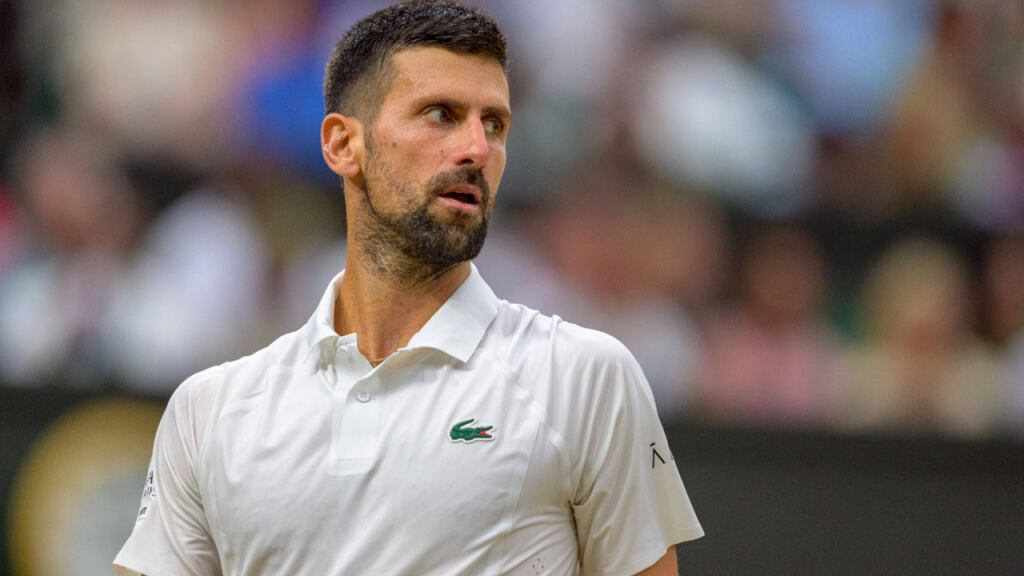
Djokovic does not need a crowded answer. He needs a narrower calendar, safer service games and enough recovery for the first exchanges to feel calmer.