
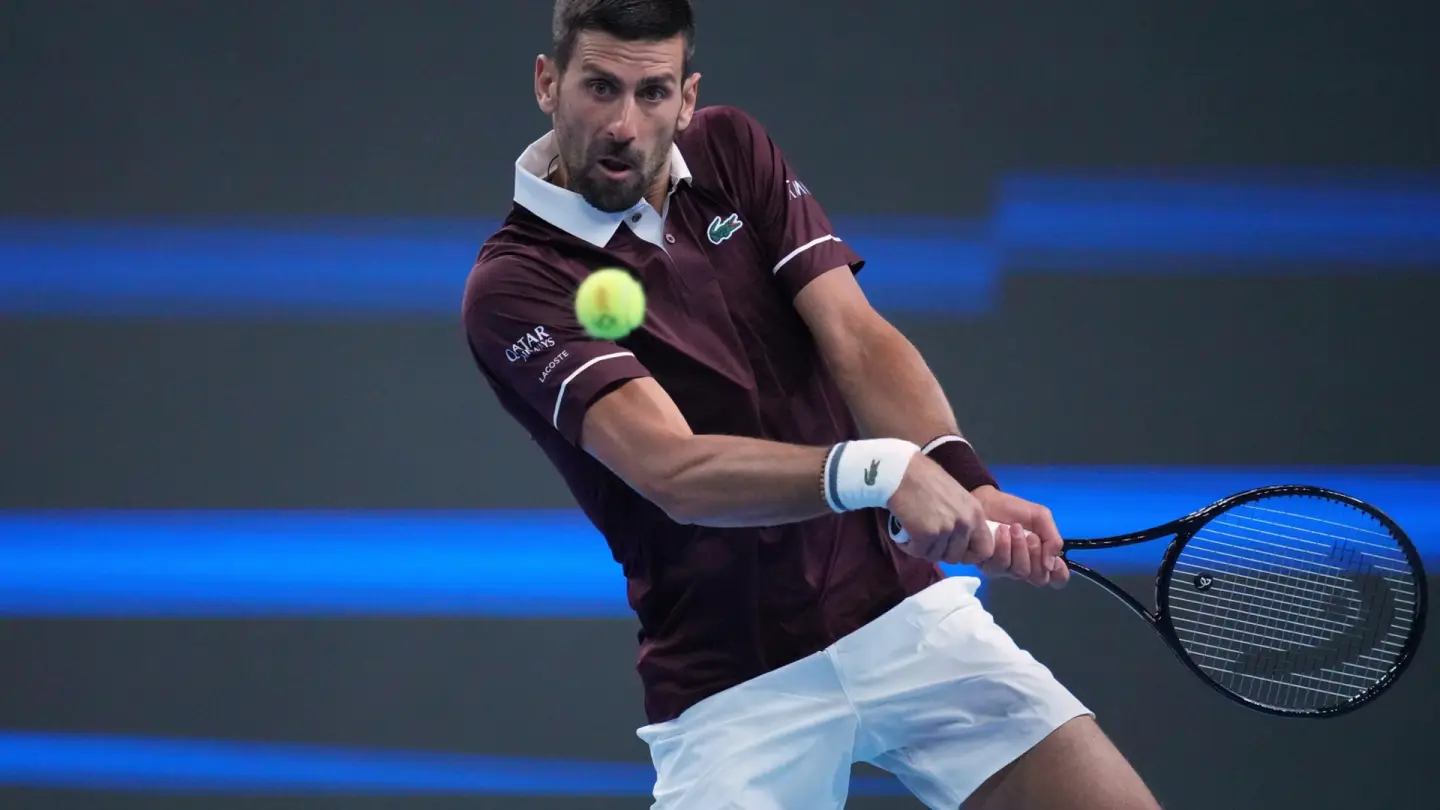
Novak Djokovic returned to Beijing with a 6:3, 7:6(2) victory over Nuno Borges. The Serbian now owns 30 wins without a loss at this event and is pushing on towards a seventh title. It was no straightforward afternoon: he settled the opening set with a single break, while the second needed patience all the way to the tiebreak.
He took the first set by squeezing the pressure onto one service game
Djokovic did not have to create many break chances to control the opening. It was enough to stretch the rallies in the key game and force Borges to play his second shot from an awkward position. Once ahead, he held his own serve without rushing, closing the set 6:3.
That economy matters when returning to a tournament after a long break. A player does not chase a peak on every point, but a steady pattern he can repeat. Djokovic chose depth before the line, then stepped in when his opponent left a short ball. The risk only grew once the situation had been prepared.
Borges lifted the quality of his first strike in the second set
The Portuguese served better and attacked the ball earlier, so Djokovic no longer won the same number of neutral exchanges. The set went without a break, and every small gap left open raised the value of the next service game. The Serbian did not try to force a turnaround with a heavy forehand on every ball.
Instead he kept the pressure alive through the scoreboard. Borges knew that every short ball would be attacked, even when it did not cost him serve right away. That constant obligation drains concentration. Djokovic stayed close enough to carry the set into the stage of the match where experience and the choice of first shot count for even more.
The tiebreak turned patience into a clear gap
A 7:2 scoreline in the tiebreak shows how quickly Djokovic took control once every point became a separate task. A good return gave him an early lead, and he then avoided giving away cheap errors on his own serve. Borges had to hunt for lines under pressure and ran out of room to fight back gradually.
The key was not one spectacular shot but a series of sound decisions. Djokovic knew when to extend a rally and when to change direction and move forward. There is no time to correct a run of mistakes in a tiebreak, so control of the first few points is often decisive. The Serbian made his biggest difference right there.
| Item | Detail |
|---|---|
| Result | 6:3, 7:6(2) |
| Opponent | Nuno Borges |
| Wins in Beijing | 30 |
| Losses in Beijing | 0 |
| Titles won | 6 |
The 30-0 record reflects adaptation across different phases of his career
Djokovic’s earlier titles in Beijing were not won in a single season or against the same type of rival. The perfect record spans changes of surface, balls, his own game and the generations on tour. His return after eleven years was therefore not a continuation under identical conditions, but a test of whether his old strengths could adapt to the present moment.
The opening match confirmed that his reading of serves and his handling of big points have not faded. Still, a streak on its own does not carry him into the next round. Every opponent gets a chance to end it, and reputation does not hand over a break in advance. Djokovic has to keep his focus on the specific pattern against the next player rather than on the overall number of wins.
A return to Beijing demands careful management of energy
An Asian swing brings a different time zone and conditions that can change how the ball feels. In that schedule, a two-set win has practical value. Djokovic did not have to play a deciding set, so he saved some physical energy and cut the time spent under competitive load.
That does not mean recovery is automatic. A long second set and a tense tiebreak call for work after the match, especially on mobility and serving. Progress through a tournament depends on being able to repeat the level the next day. An experienced player therefore spreads his effort across the whole event, not just the current scoreline.
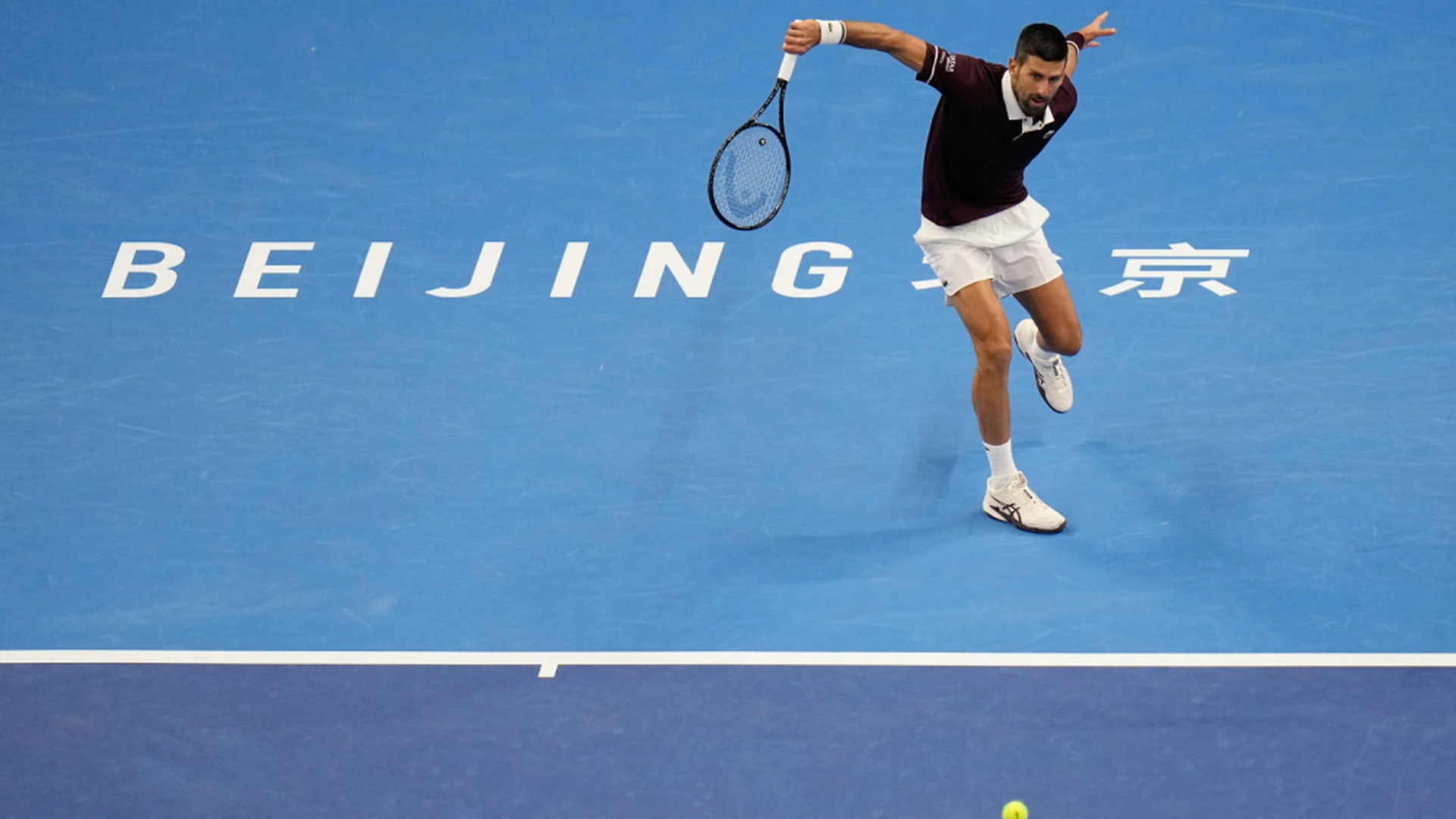
A seventh title remains the goal, but the first step has already given a strong answer
Djokovic has won six trophies in Beijing from six previous appearances. The win over Borges kept the unbroken run alive and showed he has found his competitive rhythm quickly. The biggest positive signal is not the result alone but the way he closed the set without a break and stayed precise when the pressure gathered in the tiebreak.
The next match may call for a different kind of patience, especially if the opponent shortens points more often or changes the height of his shots. Djokovic already has information about the conditions, the speed of the court and his own movement. The 30-0 record is an important part of the tournament’s history, but its real value for this run is the confidence that his agreed game works in the present.
The next round starts from a fresh plan
His next opponent will not walk on court to protect Djokovic’s record but to end it. The preparation therefore has to return to concrete patterns on serve, the return and positioning after the first shot. The number thirty remains a meaningful figure, yet the next point starts again from zero.
That approach protects concentration and reduces the emotional weight of the streak. Djokovic already knows that the conditions in Beijing suit his game. The task now is to turn that advantage into simple decisions he can repeat even when the next rival changes the pace of the match.