
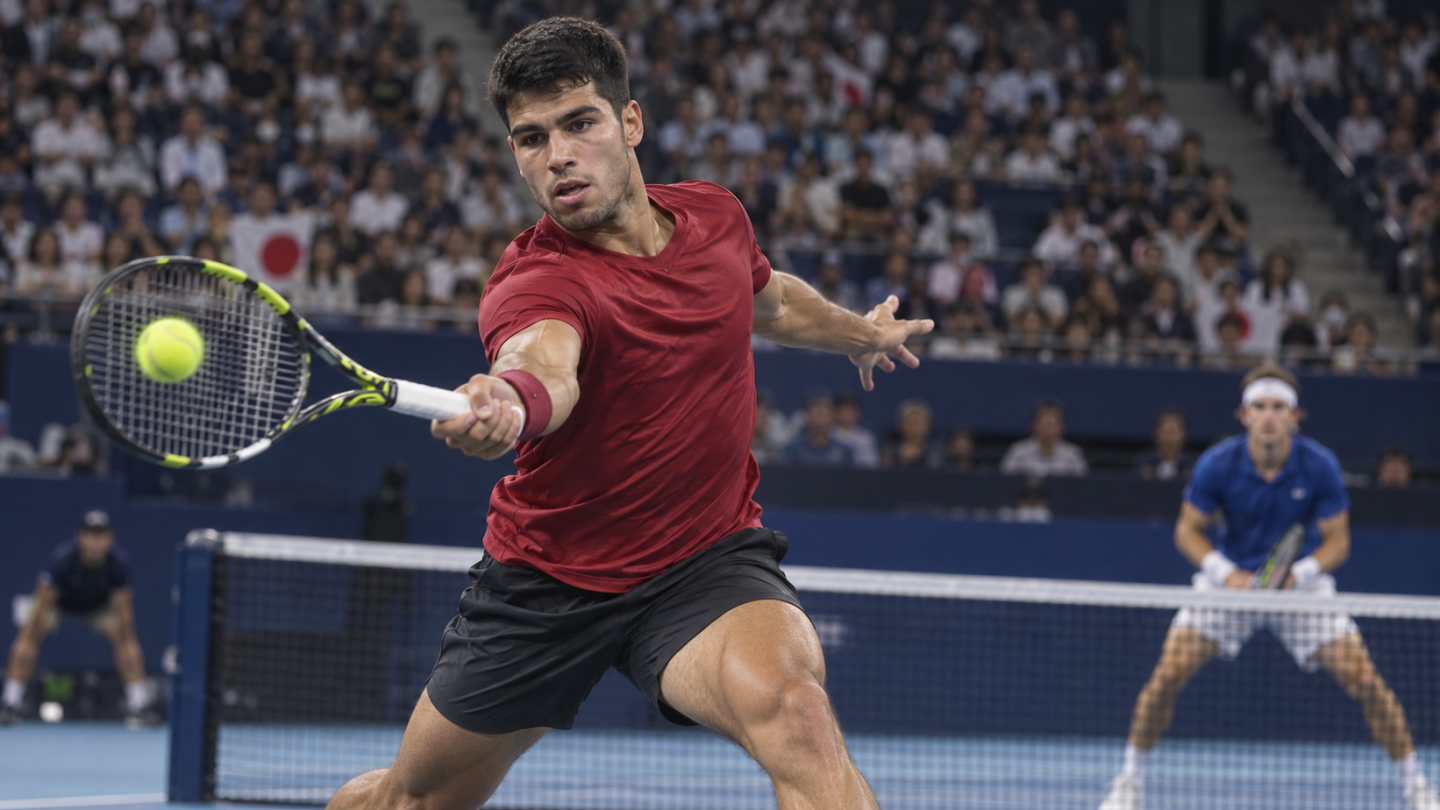
Carlos Alcaraz reached the Tokyo quarter-finals after saving four straight set points in a tiebreak against Matteo Arnaldi. The Spaniard trailed 2:6 before winning six consecutive points to take the opening set. Having turned the contest around, he took control and closed out the match without needing a deciding set. The result underlines his ability to raise his level when there is no room left for error.
Arnaldi reached 6:2 with disciplined play, deep returns and a readiness to attack anything short. For a spell Alcaraz struggled to find his first serve and too often looked for the line too early. The shift came with a steadier shot through the middle, which took away the Italian’s angles. Once he cut down on risky decisions, he was able to use his speed within the rally rather than finishing points from a poor position.
Six straight points changed the whole match
The first of the four saved points carried the greatest psychological weight. Alcaraz did not attempt an impossible winner. Instead he extended the rally and forced Arnaldi to confirm his advantage with one more shot. From there the pressure gradually switched sides. The Italian knew he had been close to the set, while the Spaniard played each subsequent point with greater freedom. The run of six points came from patience rather than spectacle.
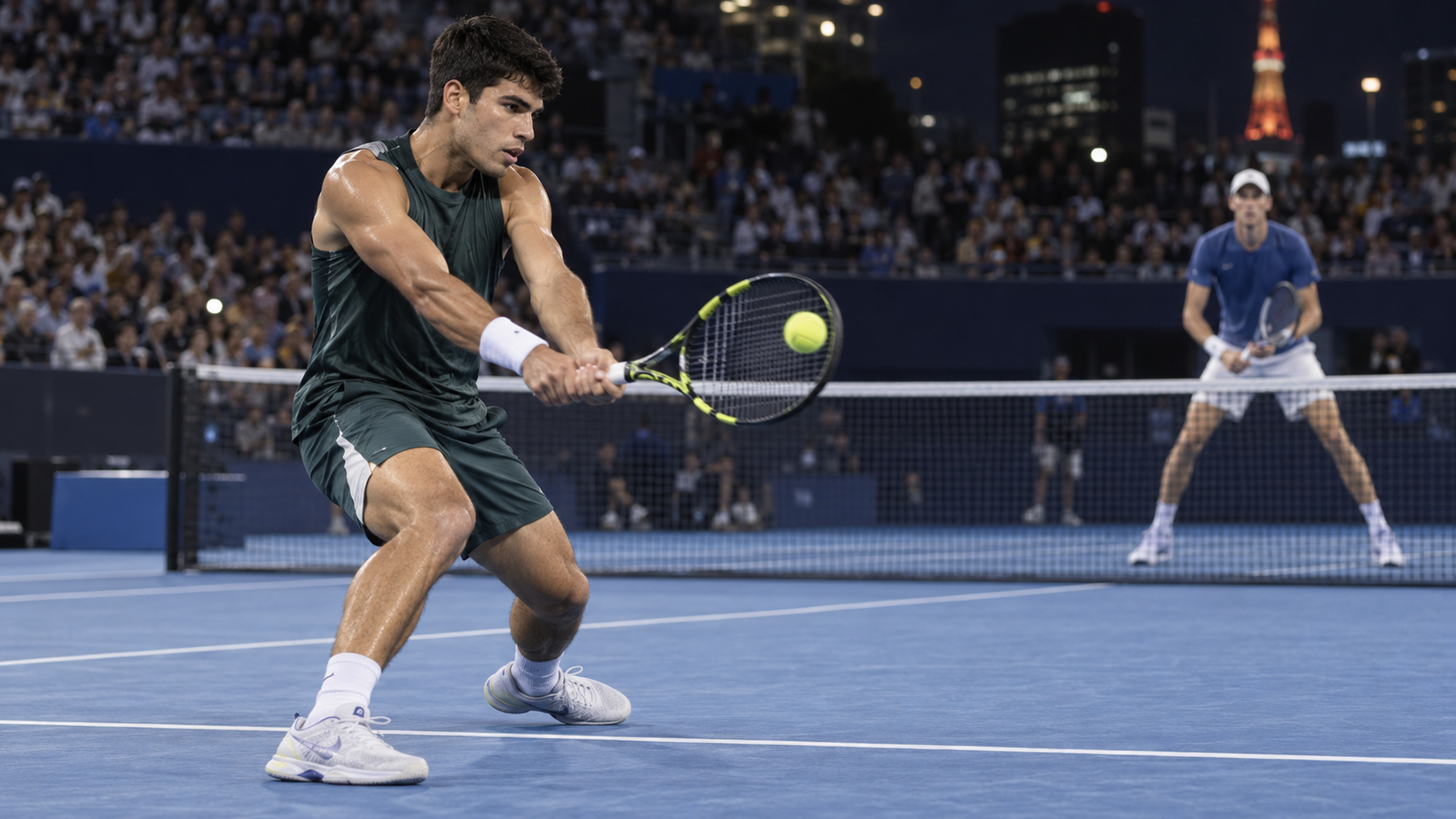
After the tiebreak Alcaraz had moved in early to attack his opponent’s second serve. That shortened Arnaldi’s time and stopped him from rebuilding his rhythm. Importantly, not every return was struck at full power. A deep ball into the middle was enough to win a neutral or slightly favourable exchange. That choice is more sustainable than constantly chasing outright winners and it preserves his legs for a long tournament run.
The quarter-final demands a better start on the return
The quarter-final still carries a warning. Trailing 2:6 in a tiebreak against a more precise finisher would probably have meant losing the set, so Alcaraz needs to raise his first-serve percentage and return depth earlier in matches. His capacity for comebacks is a major asset, but it should not become the default plan. A controlled start lets him attack from a position of scoreboard security and reduces the physical and mental cost of every match.
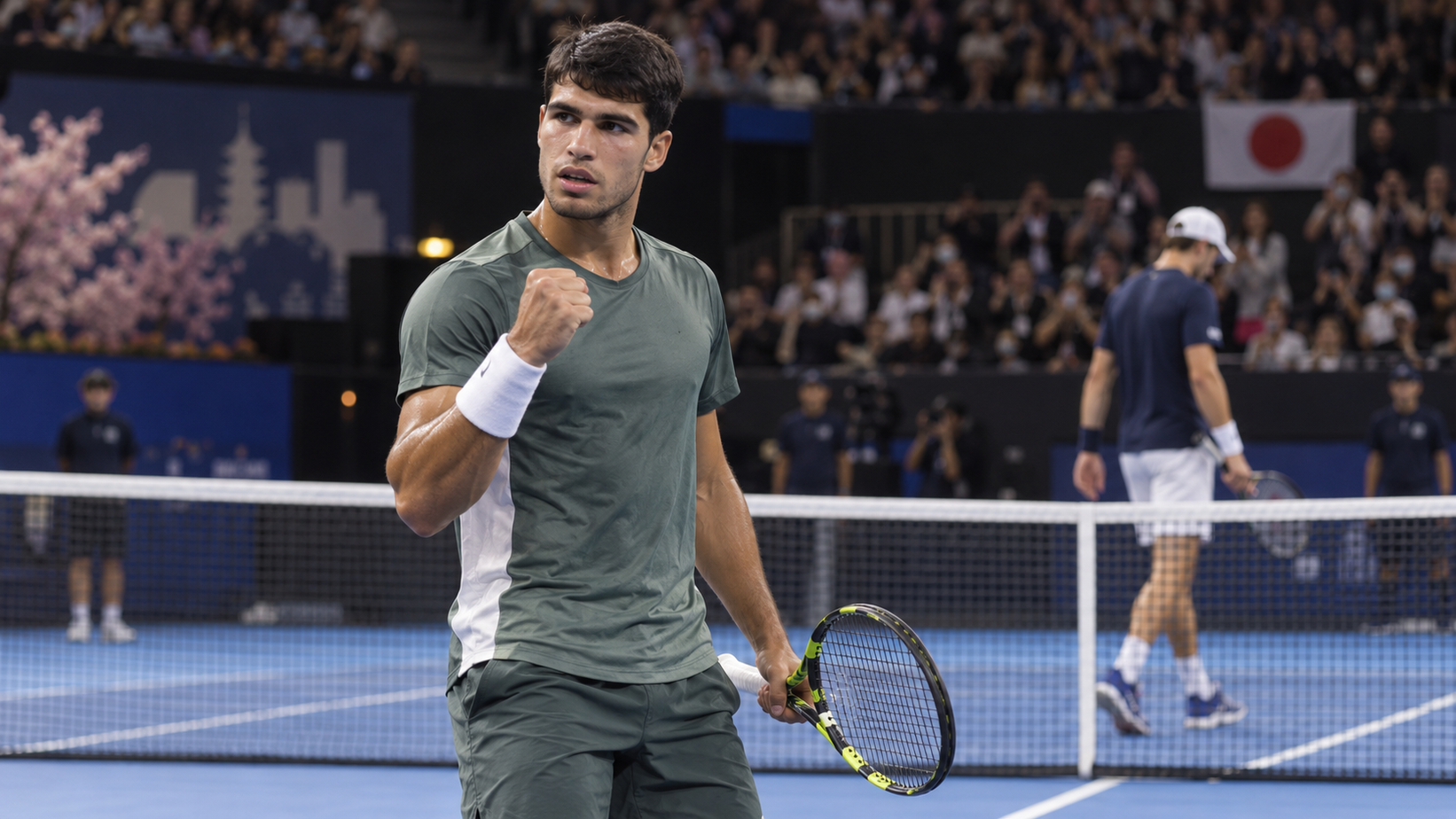
The win over Arnaldi is impressive precisely because Alcaraz was not playing flawlessly. He found a simpler solution, held off four set points and immediately seized the change in mood. In the next round his opponent will try to stop him from taking the court so easily after the first serve. If the Spaniard keeps the calmness he showed at the end and tidies up his opening games, his Tokyo run can continue without another major escape from a situation that looked almost lost.
The tournament schedule now demands a quick recovery, since an emotionally draining tiebreak can leave a mark even when a match does not go to three sets. Alcaraz’s team will monitor leg load, fluid intake and the length of the evening training session. Extra hitting makes little sense if it dulls his freshness for the quarter-final. A few serves aimed at a specific target and a short tactical session will be more useful. Arnaldi can take from the defeat the confirmation that the favourite was on the brink of losing the set. His task is to hold the same pattern at a similar moment rather than start protecting a lead. Alcaraz exploited exactly that small shift. The Tokyo tournament goes on with the Spaniard in the leading role, but the match showed that the gap at the top often lies not in the number of good shots but in the decision made on set points.
First-serve statistics and points won after the second serve will give a better answer than the total number of winners. When the first shot was not working, Alcaraz had to build the point from an even position, and that is when he took more risky decisions. The improvement does not necessarily require a bigger serve, only a more precise target and a ready forehand. If that pattern works earlier, opponents will find it harder to string together runs like the four consecutive set points he just survived.