
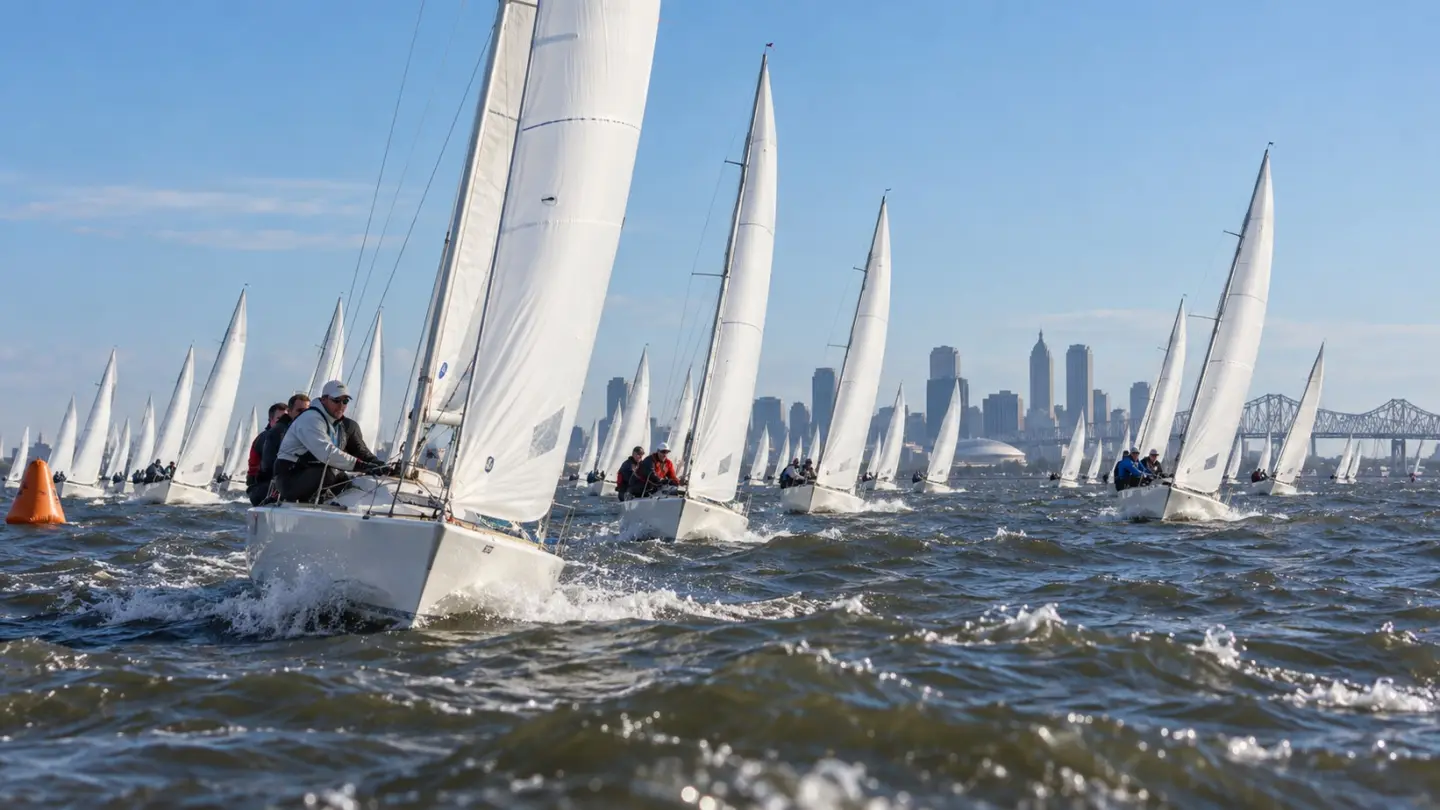
The J/22 World Championship opens in New Orleans with 46 crews entered. Registration and equipment inspection take place on 5 and 6 October, and the practice race is scheduled for 6 October at 15:00. Scoring races run from 7 to 10 October, with eleven races planned in total.
Host Southern Yacht Club has to fit a large fleet to conditions on the water that can change quickly. The warning signal is planned for 9.55 on each racing day, but the actual start depends on wind and safety. The race committee wants a course that is stable enough that the first leg does not turn the starting position into an undeserved lottery.
The J/22 class uses a one-design hull, so differences in boat speed are smaller than in open formulas. Crew weight, sail trim and precise manoeuvring therefore carry more weight. A slow turn at a mark can cost several places, since 46 crews arrive in a very tight bunch and quickly close off any clear wind.
Measurement and the practice race prepare the fleet for the first start
The equipment check before the championship protects fairness and keeps technical questions from affecting results. Crews verify sail measurements, mandatory safety gear and whether hulls comply with class rules. The process takes time, but it means that once the first start goes, attention can turn to sailing rather than later protests over permitted changes.
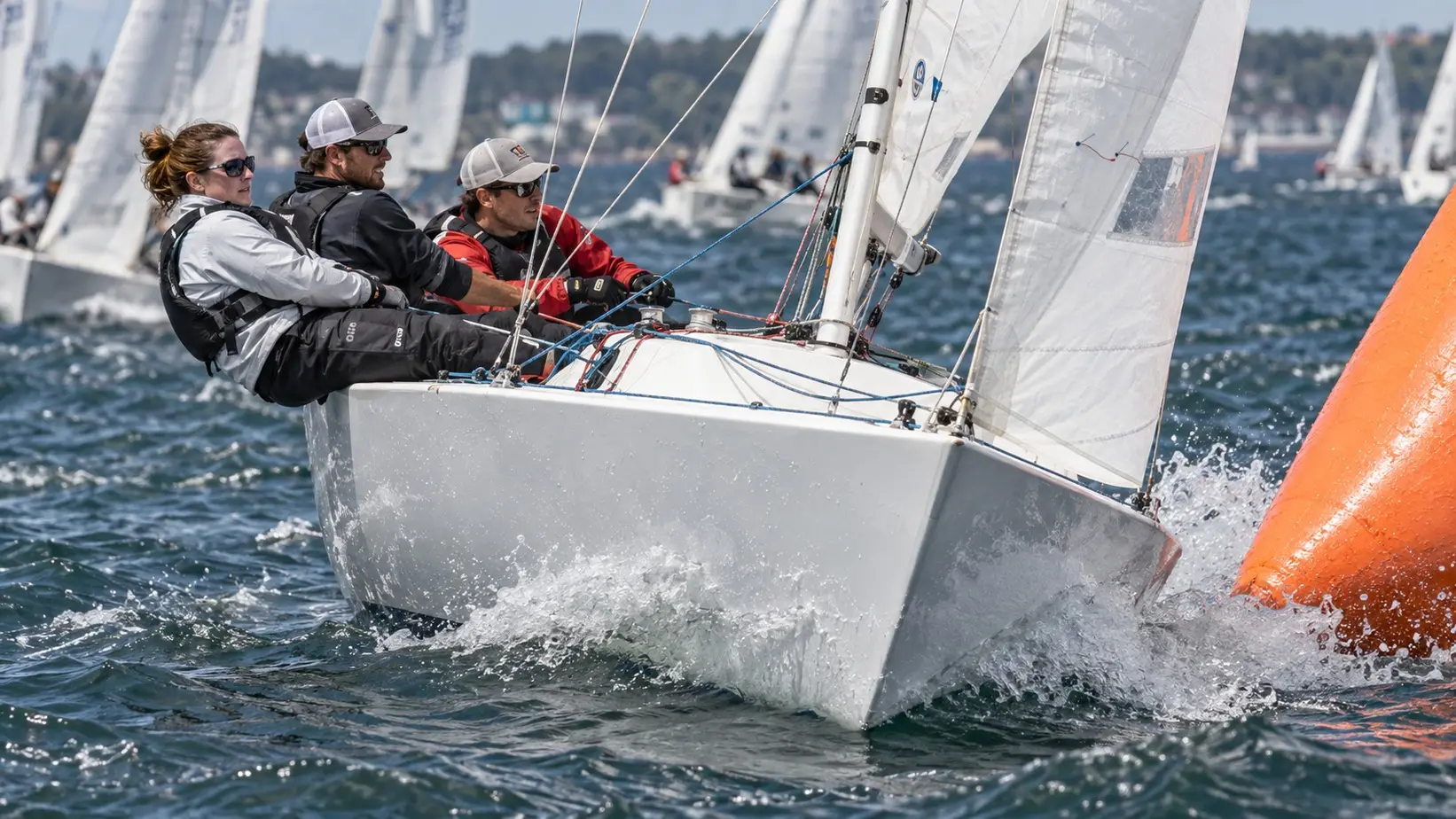
The practice race is more than a ceremonial sail. It gives teams a chance to read the current, judge how the wind shifts along the shore and rehearse communication in real traffic. Experienced crews may not show full speed, but they will note which side of the first beat carries steadier pressure and where the approach to the mark is cleaner.
With eleven races, the championship rewards consistency more than one risky start. A crew that wins once and then finishes in the last third twice will struggle to stay at the top. It matters more to leave the start line cleanly every time, avoid penalties and, after a poor beginning, win back every available place through sound tacks.
The one-design hull puts crew decisions at the centre
Starting 46 boats requires a clear read of the space available. An aggressive position near the committee boat can pay off, but it also risks an early crossing or being squeezed out without speed. Crews must time the countdown against distance, keep clean air on the leeward side and have a backup exit if the expected gap closes.
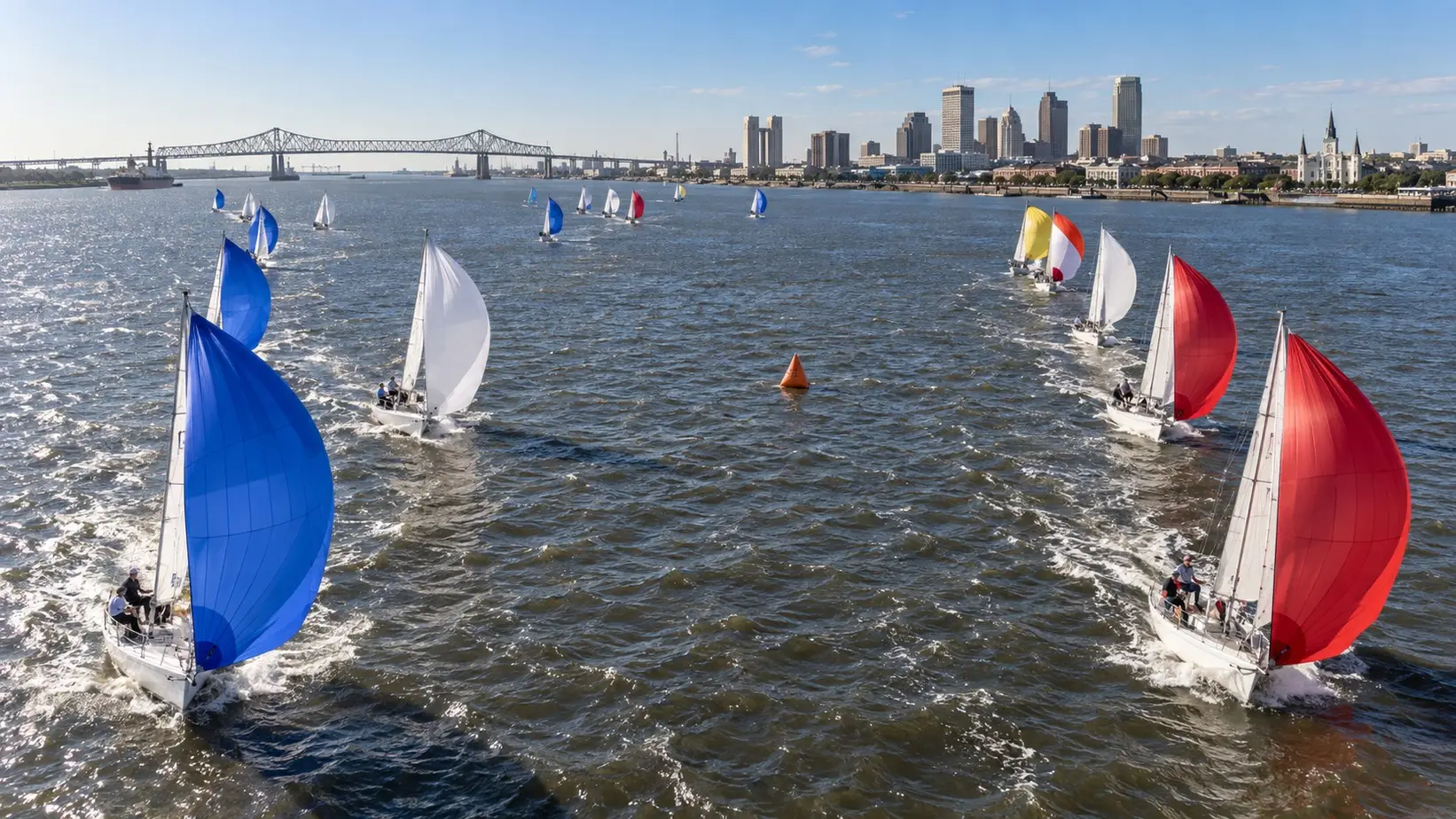
At the end of every race, communication about gusts and boats coming in with right of way is critical. A boat does not gain anything on its own if the crew reacts late. Short, pre-agreed calls cut the time between spotting a shift and making the move, especially as fatigue builds across several races in one day.
The championship in New Orleans will be a clear test of preparation, since the fleet has four days and a wide range of possible scenarios. The most successful crew will not need to win all eleven starts. The title is more likely to go to the team that rarely makes costly mistakes, reads wind changes quickly and keeps gaining places after a weaker passage through the first mark.
For a full assessment, it is worth following the average finishing position across all eleven races, the number of start penalties and the places gained after the first mark. That data will show whether the result came from a pattern that can be repeated or from a handful of exceptional moments. The final score describes the outcome, but it does not reveal how steady the plan was when the balance of strength shifted and a rival tried a different solution.
The immediate task is for crews to adapt their decisions from the practice race to the real traffic and changing wind over the four days. Success will depend on keeping the strongest elements of their current form and fixing any weakness they have spotted without overhauling everything. That approach links this result to the next challenge, rather than treating each outing as a separate story with no measurable follow-on.