
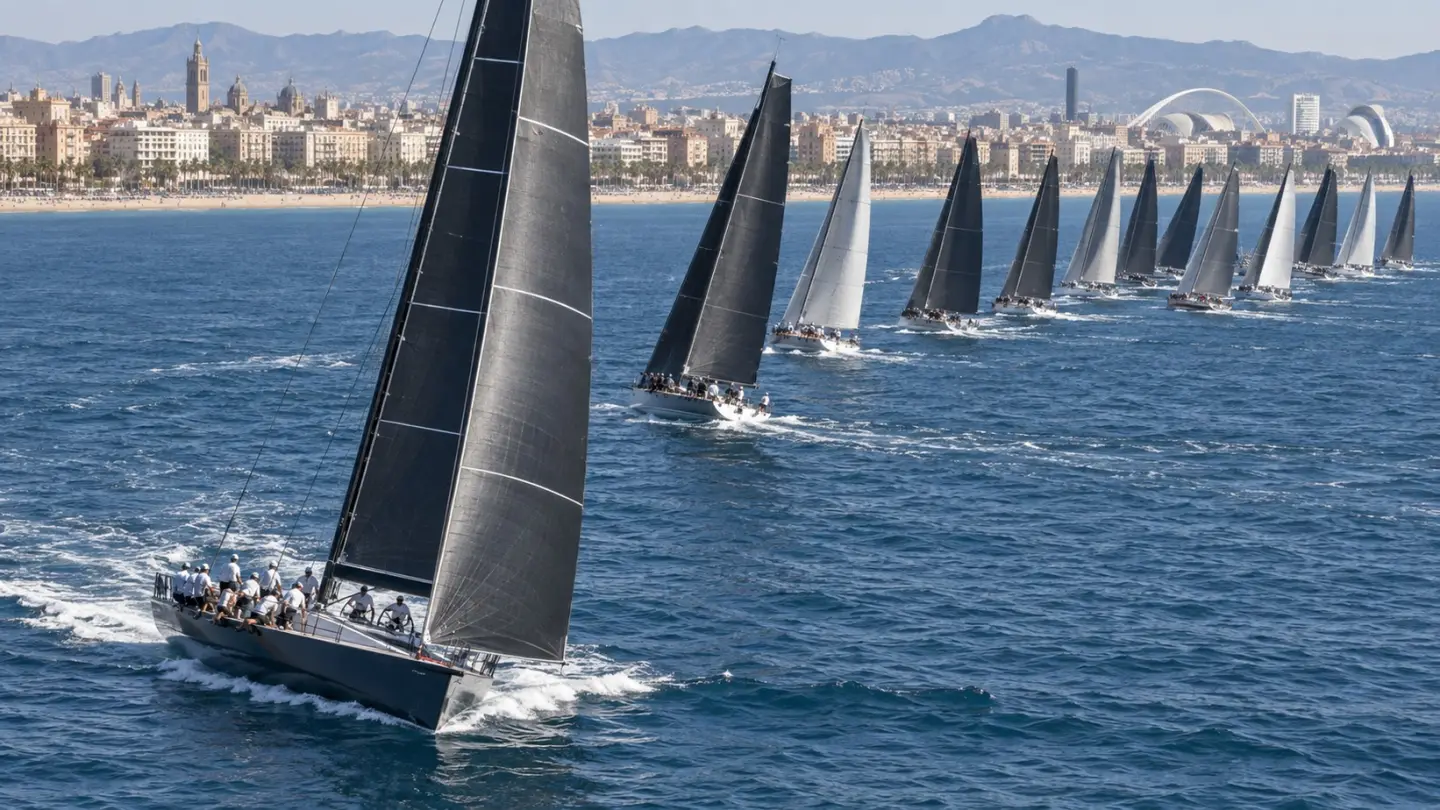
The French crew Paprek leads the 52 Super Series Valencia Sailing Week after the first two races. A second and a third place brought them five points, ahead of Vayu and Sled on ten each. On the water off the Malvarosa beach, a record 16 boats from 11 countries are competing, so every rounding of a mark is tighter, and a clean line in the breeze is harder to hold than at earlier stops of the season.
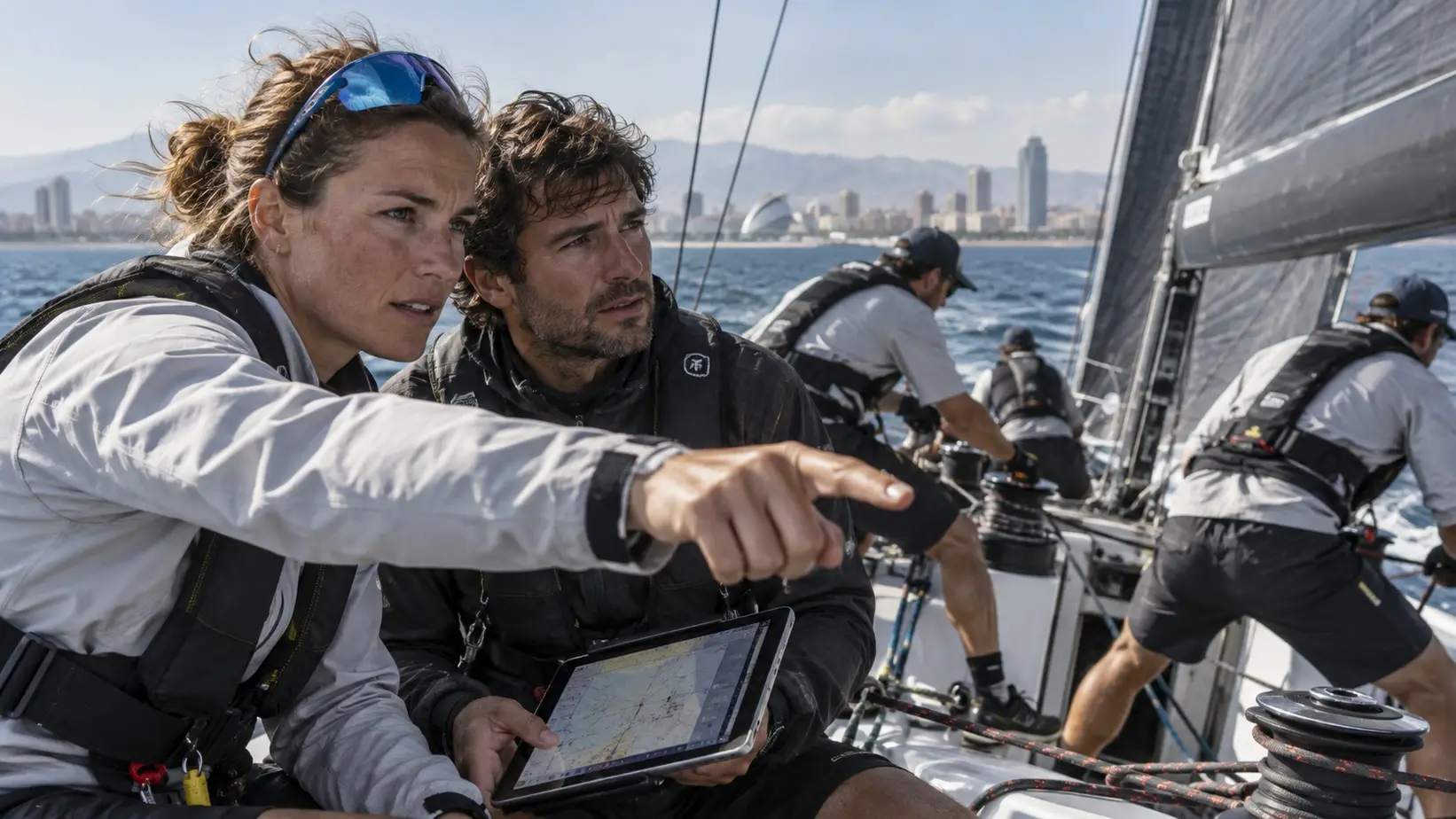
Paprek did not have perfect starts. In the second race they were over the line at the signal and had to correct the error, but tactician Loïc Péron and navigator Joan Rishom found the more favourable side of the course. Good speed in light to moderate wind let them come back without panic manoeuvres, which mattered more than one short gain after a risky turn.
Trinity Racing won the first race and Alkedo Chitilar the second. The rest of their day shows how unpredictable the fleet is: Trinity finished only 14th after its win, while Alkedo had been tenth before theirs. Paprek’s 2-3 combination is therefore worth more than a single triumph, because a series punishes one very bad result more than it rewards one spectacular moment.
Two weaker starts did not stop them choosing the right side
On flat water and shifting wind, a crew must decide whether to trust one side of the course or protect the middle. Paprek twice picked the area where they expected more pressure and gained enough speed to get clear of the crowd. Such a decision only works with constant comparison against rivals, because the same side can lose its value if the wind shifts a few degrees.
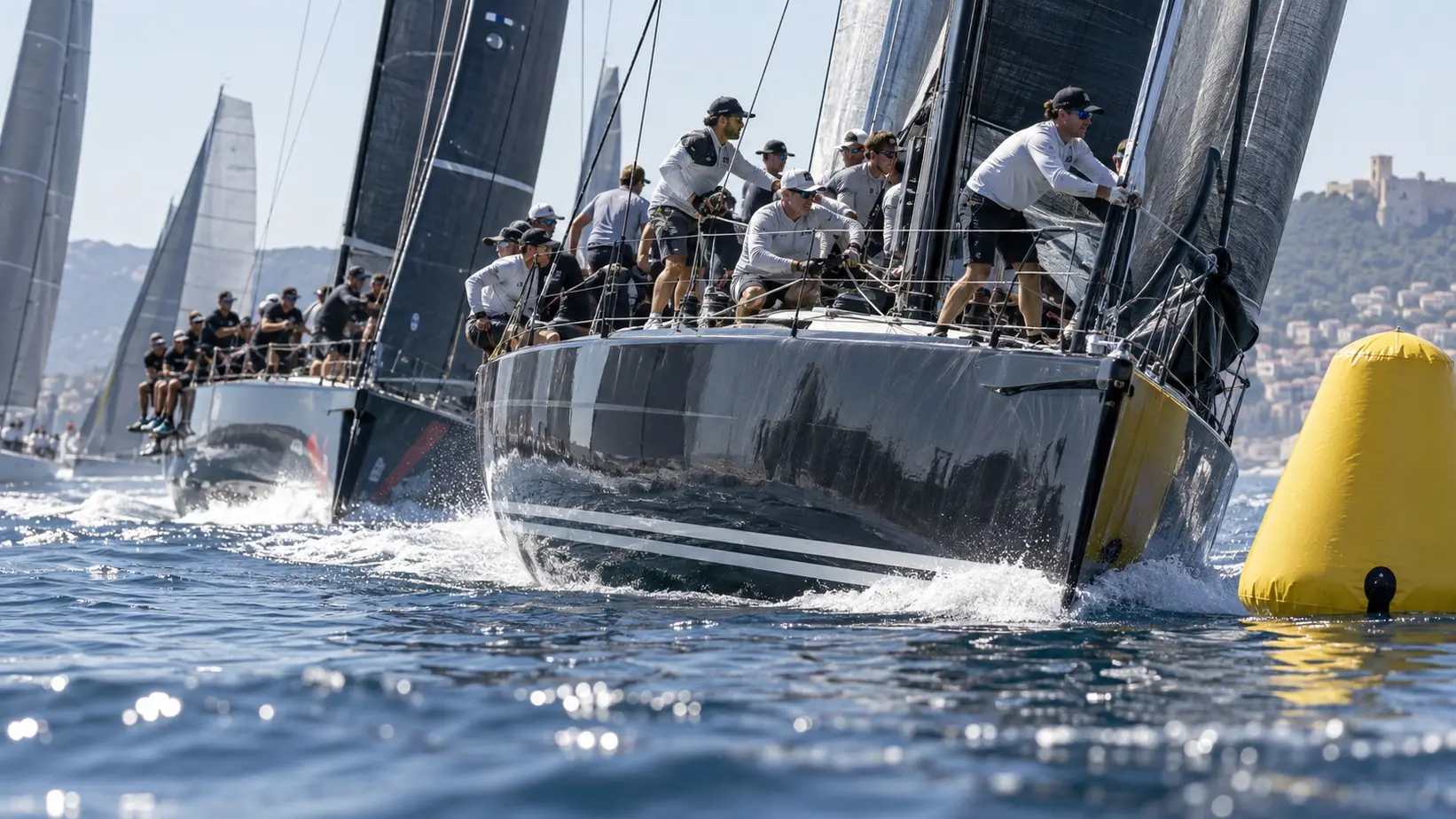
The final event will also decide the overall champion. Platoon Aviation kept the season lead after two sixth places, but its advantage over Sled has shrunk from 11 to nine points. Paprek is fighting for the podium at the same time, so it has to balance two calculations: winning the regatta in Valencia and limiting risk against direct rivals in the season total.
The programme allows up to ten races, which means five points after the first day is no protection. A larger number of boats raises the chance that the leading crew ends up on the wrong side or gets squeezed at a mark. Paprek needs to keep choosing the exit before a crowd forms, even when that route temporarily costs a place.
Five points give the lead, but the season finish remains open
The most important indicator will be the average position at the first mark. If Paprek regularly enters among the top five, later stability could protect the lead. If starts remain a problem, constant recoveries will raise the risk and use up the room for error. The crew does not have to win every time, but it cannot regularly start a race behind the middle of the fleet.
The second indicator is the number of penalties and extra turns in the mark zone. In a fleet of 16 TP52s, one slow turn can drop a team several places. Short, agreed-in-advance commands and a clear assessment of right of way reduce errors when three boats close on the same space. A clean rounding is often worth more than an aggressive attempt at the inside line.
Paprek earned the first day’s lead through consistency, speed and the ability to recover from two poor starts. Five points give a deserved lead, but there is no room for relaxing in Valencia. If the French crew improves its starts without losing its good reading of the wind, it can turn an early advantage into a win and at the same time attack the season podium.
Weather models in Valencia did not fully agree even on the first day, so crews cannot rely on a single forecast. The wind observer, navigator and tactician must constantly compare expectation with the real picture on the water. Paprek’s lead will only be sustainable if the same communication works when the favoured side stops paying off.
Recovery between days also counts towards the result. The crew finishes more races while constantly calculating and doing physical work on manoeuvres. A short analysis, good food and sleep can preserve, on the last day, the precision that decides several places at a mark.