
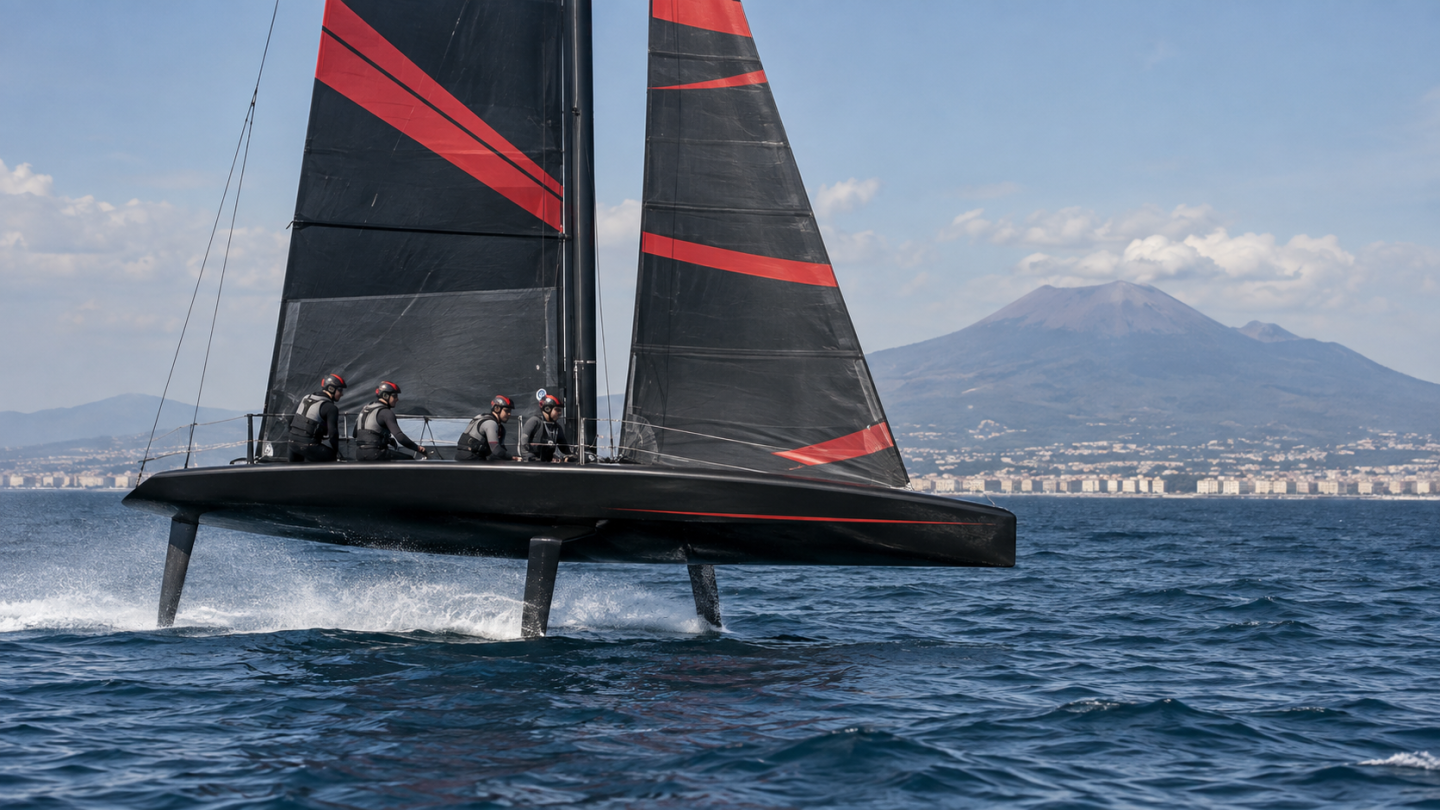
Italy’s Luna Rosa claimed the America’s Cup preliminary regatta in Naples, winning both fleet races on the final day and then getting the better of Emirates Team New Zealand in the head-to-head final. Piter Berling and Marco Gradoni’s crew controlled the closing duel from the start to the finish line. The title is the preliminary regatta trophy, not the America’s Cup itself, whose next edition is scheduled for 2027.
Two fleet wins set up the final
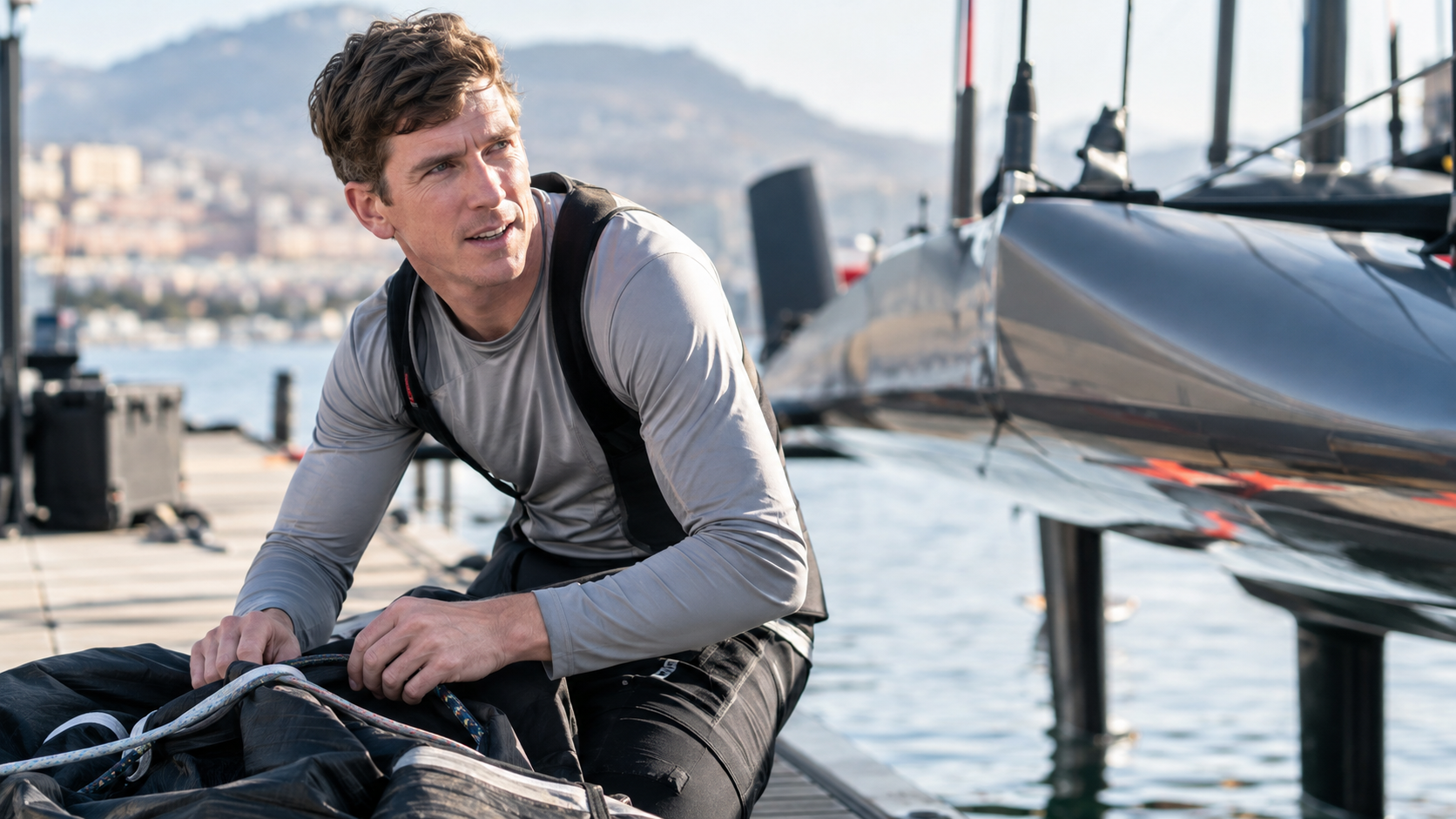
Going into the last day of racing, Luna Rosa had the chance to confirm its lead in Naples. In race seven of the fleet, the senior crew took the lead straight after the start, held on to it at the first mark and crossed the line first. In race eight it led from the outset again and added another win. According to the club’s official report, each of those two races brought the team ten points.
That run mattered because the preliminary regatta sees crews sail against several rivals at once, with the final bringing the two strongest teams together in a head-to-head contest. New Zealand had to hold its place in the final while the French team La Roche-Posay fought for a podium finish. Luna Rosa, with that battle behind it, could build an advantage and test its pace ahead of the decisive match.
Conditions on the water demanded constant decisions, not just a good start. The organisers reported a breeze of 11 to 14 knots, with shifts in direction and strength through the day. In such conditions, the crew that reaches each mark first has to protect its position at every new turn. Luna Rosa did not give up the lead at the marks in the three races of the week, which explains why both the fleet races and the closing duel left a similar impression of control.
How Luna Rosa beat New Zealand
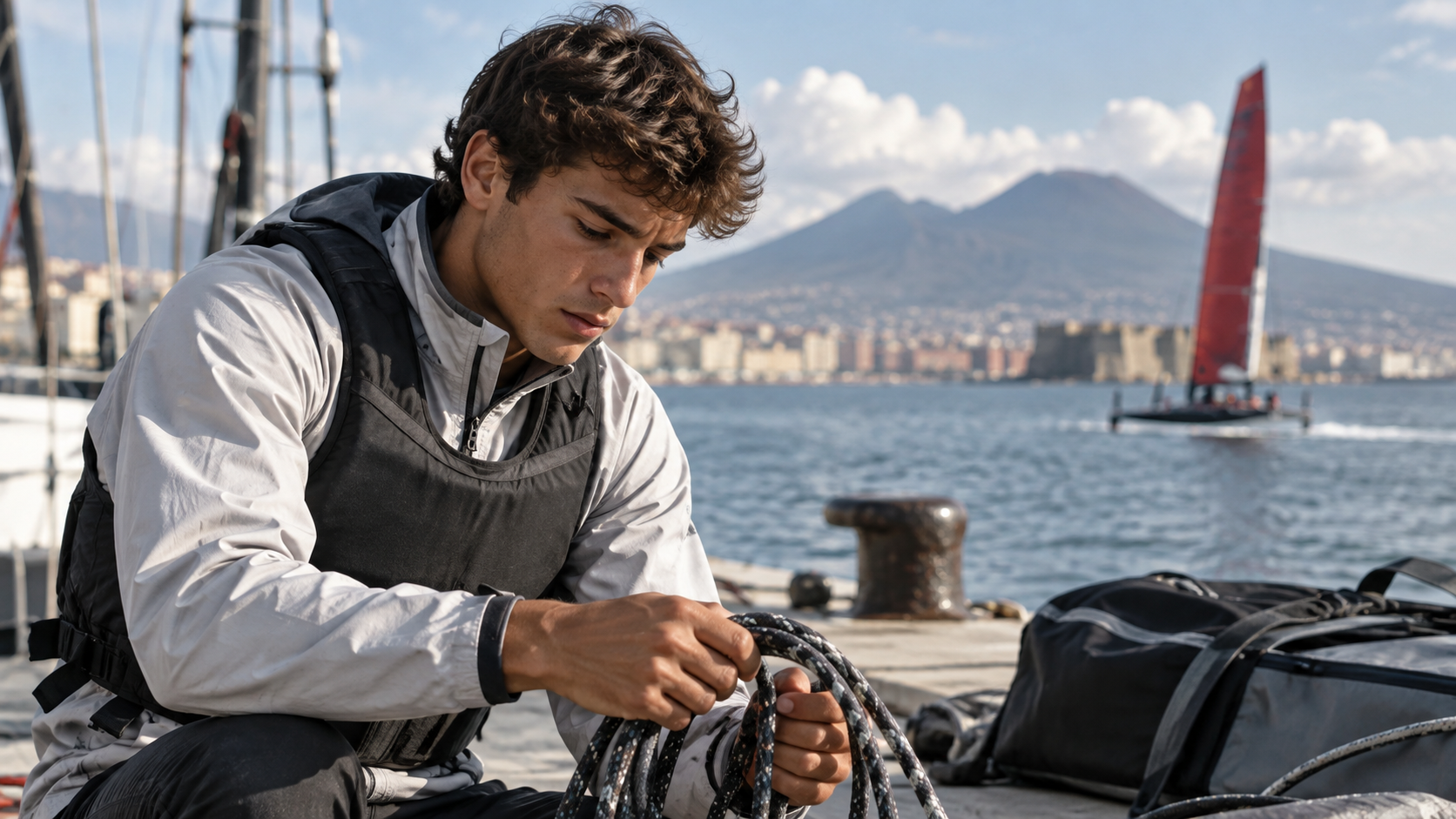
In the one-on-one final race, the Italian crew took the initiative after the starting battle. Berling and Gradoni steered the boat so as to limit their opponent’s chance of moving into cleaner wind. New Zealand tried to switch sides of the course on the crossings, but the Italians answered those moves and kept their advantage. That tactical control is why the duel was not decided by boat speed alone.
Before the final run downwind, Luna Rosa’s lead was more than 200 metres, the official race report states. The club said it crossed the line 17 seconds ahead of the New Zealand crew. The two measures describe different moments of the same race: the distance gained while sailing and the time gap at the finish. The Italian team took the trophy on the back of a clear advantage at the finish, not after a late ruling or a tied final manoeuvre.
Luna Rosa’s senior crew comprised Piter Berling, Marco Gradoni, Marija Đubilei and Đanluiđi Ugolini. The helming pair for the rival team were Nathan Outteridge and Seb Mentzis. The names matter because Luna Rosa’s flag also competed in the same regatta with a second, youth and women’s crew; that result is not part of the senior team’s victory in the main final.
A separate result for the younger crew
Luna Rosa 2 finished second in the youth and women’s category. The Italian and New Zealand crews were level on points, but New Zealand won the title thanks to a better placing in the last race. It is therefore not accurate to say the Italian team won in every category. The senior trophy and the younger crew’s result are two separate decisions from the final day.
The regatta gave Naples a test ahead of the 38th America’s Cup, announced for 2027. The success on the AC40 boats shows how well prepared Luna Rosa was for the specific format of the preliminary competition. It does not automatically carry over to the trophy of the main event, which will use a different preparation programme. The team’s next step is to turn the Naples result into progress in its campaign for the bigger goal, while the other crews analyse the gap from the head-to-head final.