
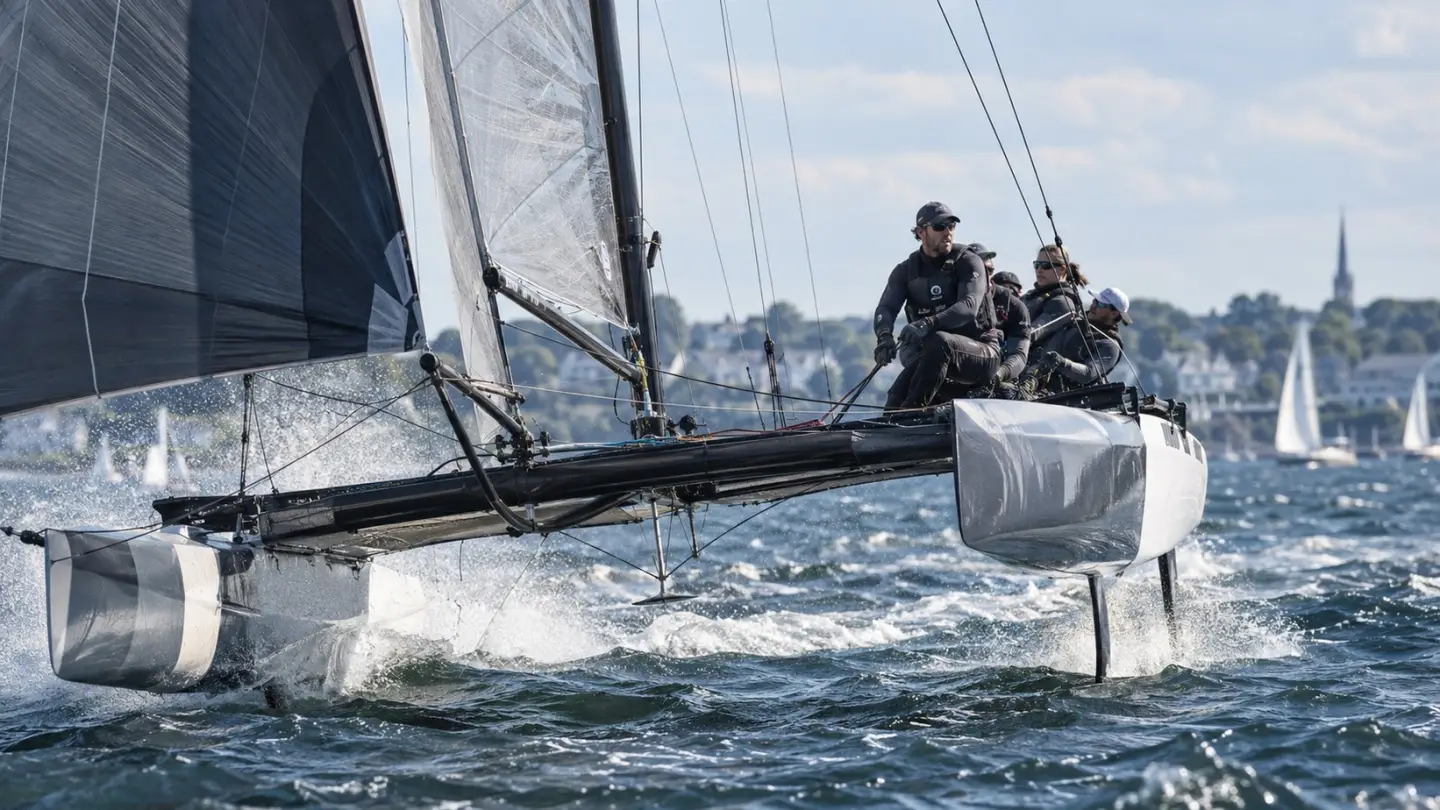
The crew of Jangblud, led by Majls Džulijen, won the M32 World Championship in Newport with 56 points in total. Rated X finished second on 63, while Tuuči took third place on 71 points. Ten catamarans competed in short, fast races where one poor start or a penalty could cost several places. Jangblud built the title through a consistent run of results across the whole series.
The decisive momentum came on the third day, when the crew posted 1, 3, 4, 3 and 1 across five races. Two wins showed their top speed, while third and fourth places prevented a big loss of points in races that did not go to plan. In a scoring system based on the sum of places, the champion is often not the crew that wins every race, but the one that turns a bad start into an acceptable finish.
A third day with two wins opened the path to the top
The M32 catamaran accelerates quickly and punishes any delay in a manoeuvre. The crew has to coordinate weight shifts, sail trim and the choice of side of the course, and decisions must be made while the gap to the mark closes fast. Jangblud kept its speed through the turns and avoided being stuck in dirty air behind rivals. Those small gains across several races explained the difference on the final table.
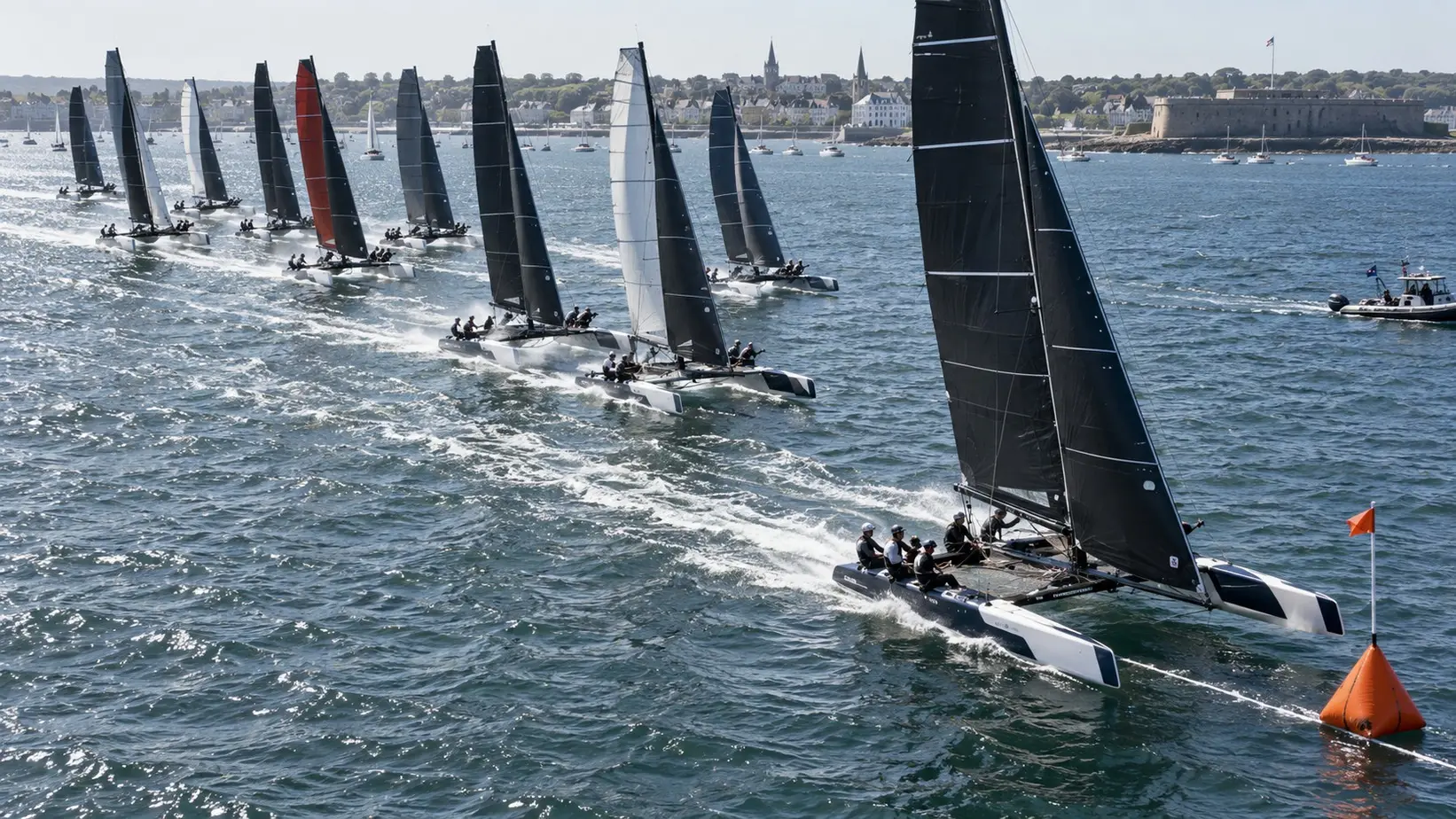
The start is especially important because a short course leaves little time to recover. Still, taking too much risk near the line can mean an early start and the obligation to return. Džulijen’s crew did not always lead off the line, but it often chose space that allowed acceleration and a first tactical move. The freedom to switch sides immediately can be worth more than a few metres gained next to a rival who controls the wind.
Consistency across the series mattered more than one perfect start
Rated X stayed closest with a seven-point deficit, keeping the pressure on until the end. Tuuči also had a realistic chance to climb, so the leader could not simply defend its position. Every crew tracks several rivals at once: covering one directly can leave another with a clear lane. Jangblud had to protect its overall standing without giving up its own speed and its plan for the wind.
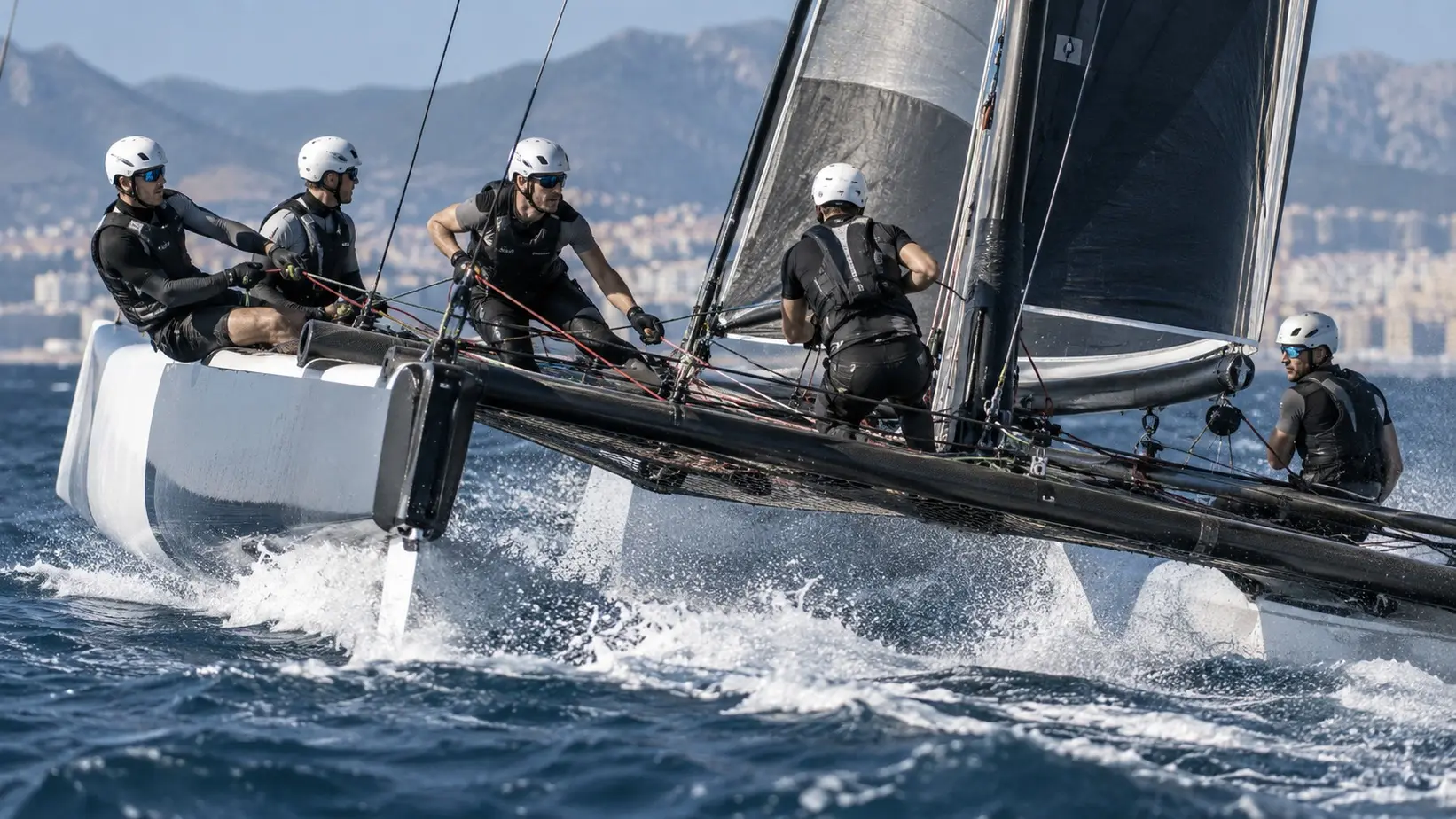
Newport can bring shifts in wind direction and strength that demand constant reading of the water surface. Reading a gust before a rival lets a crew hike out in time and gain speed, but reacting aggressively to every darker patch leads to unnecessary weaving. The winning crew chose moves with tactical value, not just those that looked impressive. That discipline keeps the course steady and makes life easier for the people working the sails.
The world title confirms that Jangblud has the mix of speed and stability needed for a long series. The final 56 points tell a story not only of wins, but of moments when the crew avoided ninth or tenth place. The post-championship review should keep the same focus: which starts opened the course, where height was lost and how decisions were made under pressure. The trophy belongs to a series of precise moves, not to a single finish.
The crew will go through the track of its movement, speed through the turns and position at each start. The aim is not to prove that every winning decision was perfect, but to find where a good result could easily have become a poor one. That kind of analysis stops the team from getting complacent. A world champion stays competitive when it understands what produced its speed and can adapt it to new wind, course and opponents.
The equipment also has to be checked after a series under full load. Lines, joints and sails may look sound yet carry small damage that turns into a failure in a new gust. Preventive inspection protects both the result and the crew. A catamaran’s speed only has value when the system is reliable and each role is clear at the moment an unplanned problem appears. Reliability remains part of every win.