
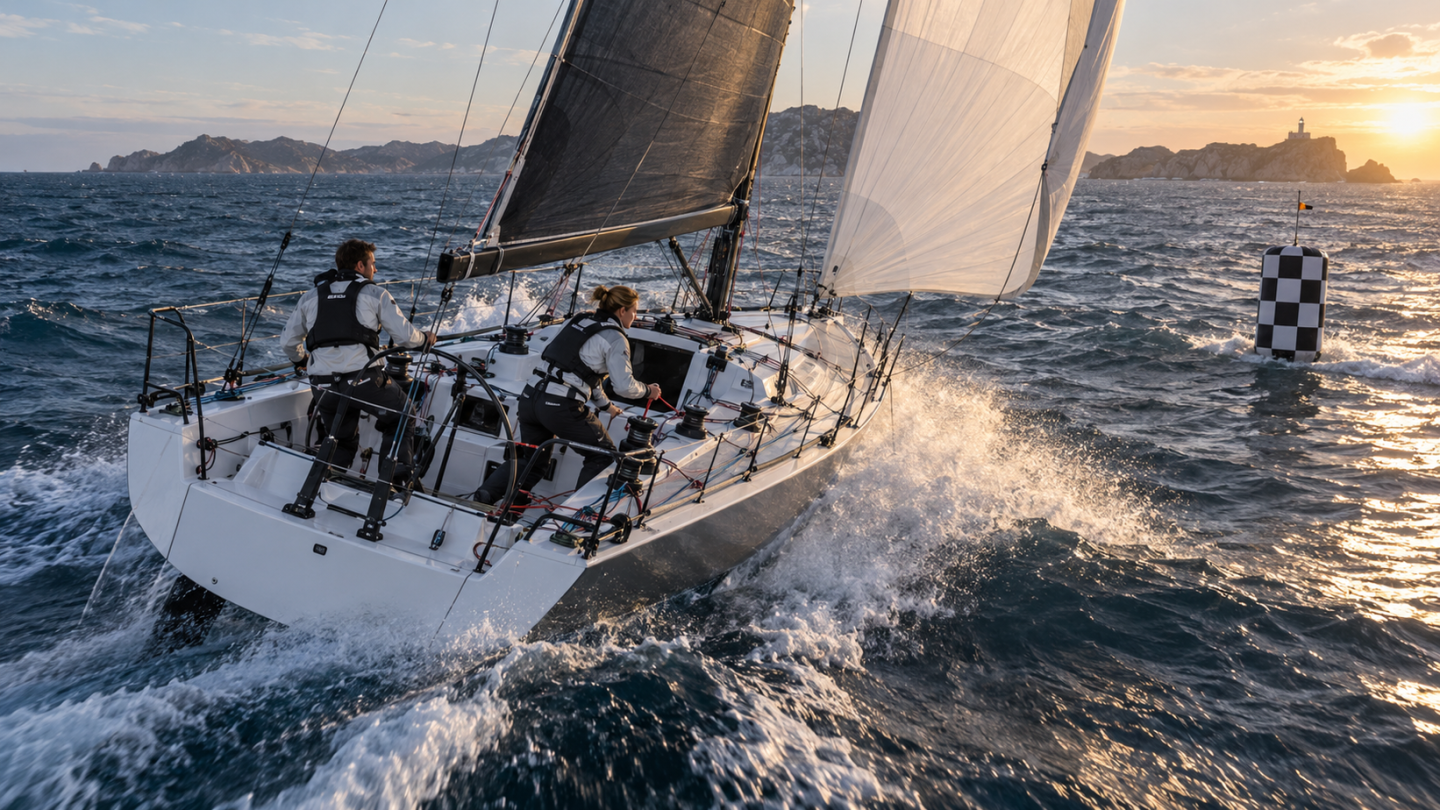
Toma Andre and Colombe Gilly won the world title in the double-handed offshore sailing for France, taking victory in the final regatta over 190 nautical miles. The FRA01 crew crossed the line at 12 hours, 20 minutes and 26 seconds, ahead of Australia and Belgium. The race combined a wind of around 20 knots with calmer zones later on, so the result hinged not only on speed but on how well the route was read through several completely different conditions.
The French pair chose a path closer to the coastline, which gave them a different wind angle from part of the fleet. The decision carried the risk of weaker pressure, but it opened a shorter and more favourable approach to the next mark. Australia finished second, while Belgium claimed bronze by just eight seconds ahead of Uruguay. After 190 miles, a margin that small shows how much every manoeuvre, sail change and course adjustment toward the finish still matters right up to the last moment.
Choosing the inshore route delivered the decisive advantage
The double-handed format raises the cost of every call, since only two people share the navigation, helming, sail changes and rest. When one crew member sleeps, the other has to manage both speed and safety. The French duo managed to keep enough freshness for the closing stage without losing touch with the shifting weather. A good watch system is not simply an even split of hours; it is about picking the moment when the autopilot can be trusted and a manoeuvre is unlikely.
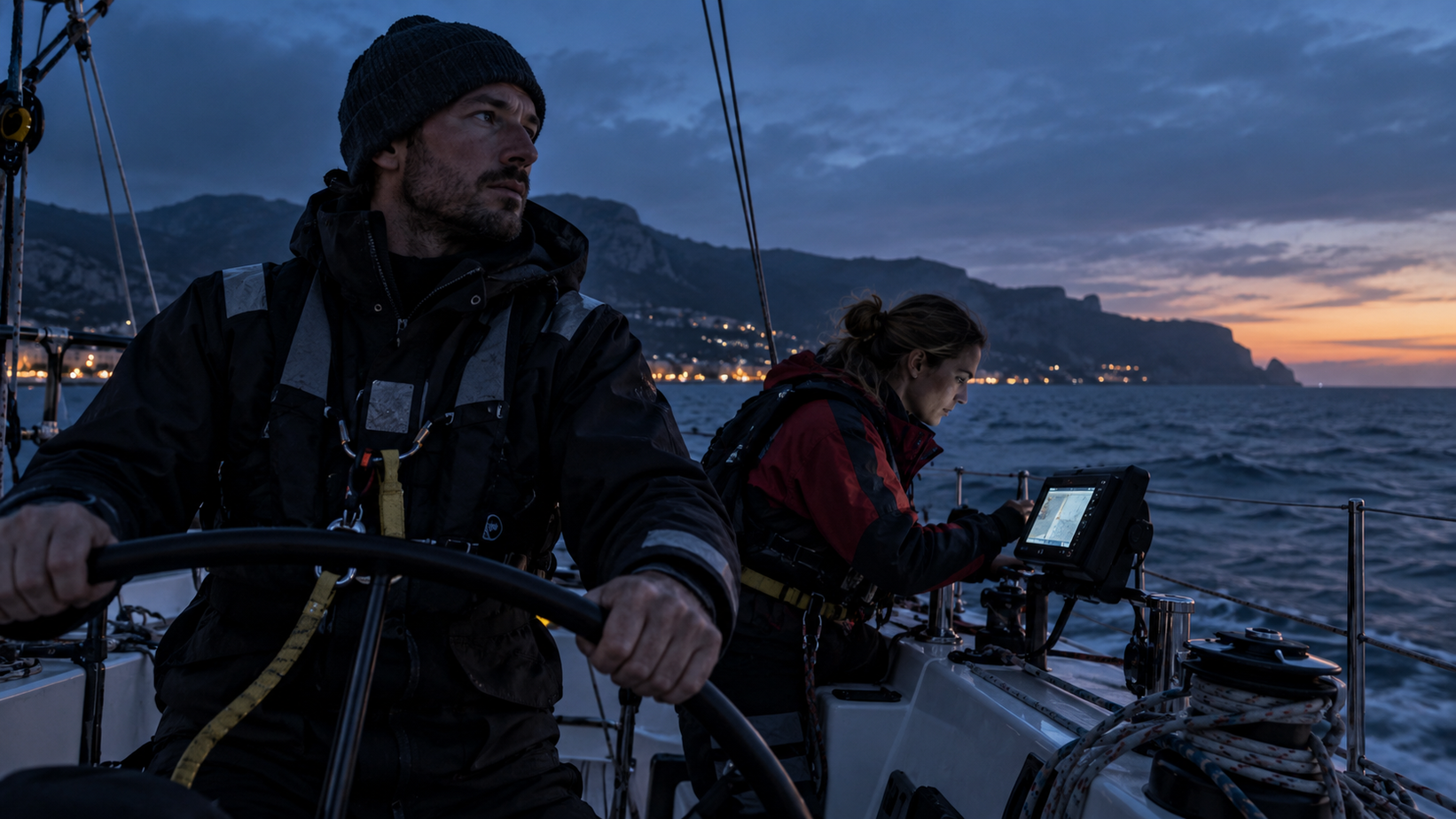
The inshore route demands trust in the data and the ability to interpret the forecast alongside what the water actually looks like. A model may show an advantage, but a local cloud or night-time cooling can change the wind quickly. Andre and Gilly were not simply following the shortest line; they were looking for a zone where the boat could hold its target speed for longer. Such a decision pays off only when the crew executes the changes precisely and loses no time in the tacks.
Eight seconds decided the battle for bronze
The Belgium and Uruguay fight for bronze showed that a regatta is not settled when the final mile begins. Eight seconds can vanish through a poor angle to the line or a slow sail trim change. A tired crew must then communicate in the shortest and clearest way possible. Every command needs to be understood in advance, because there are not enough hands to fix a badly prepared sheet or a late weight shift afterwards.
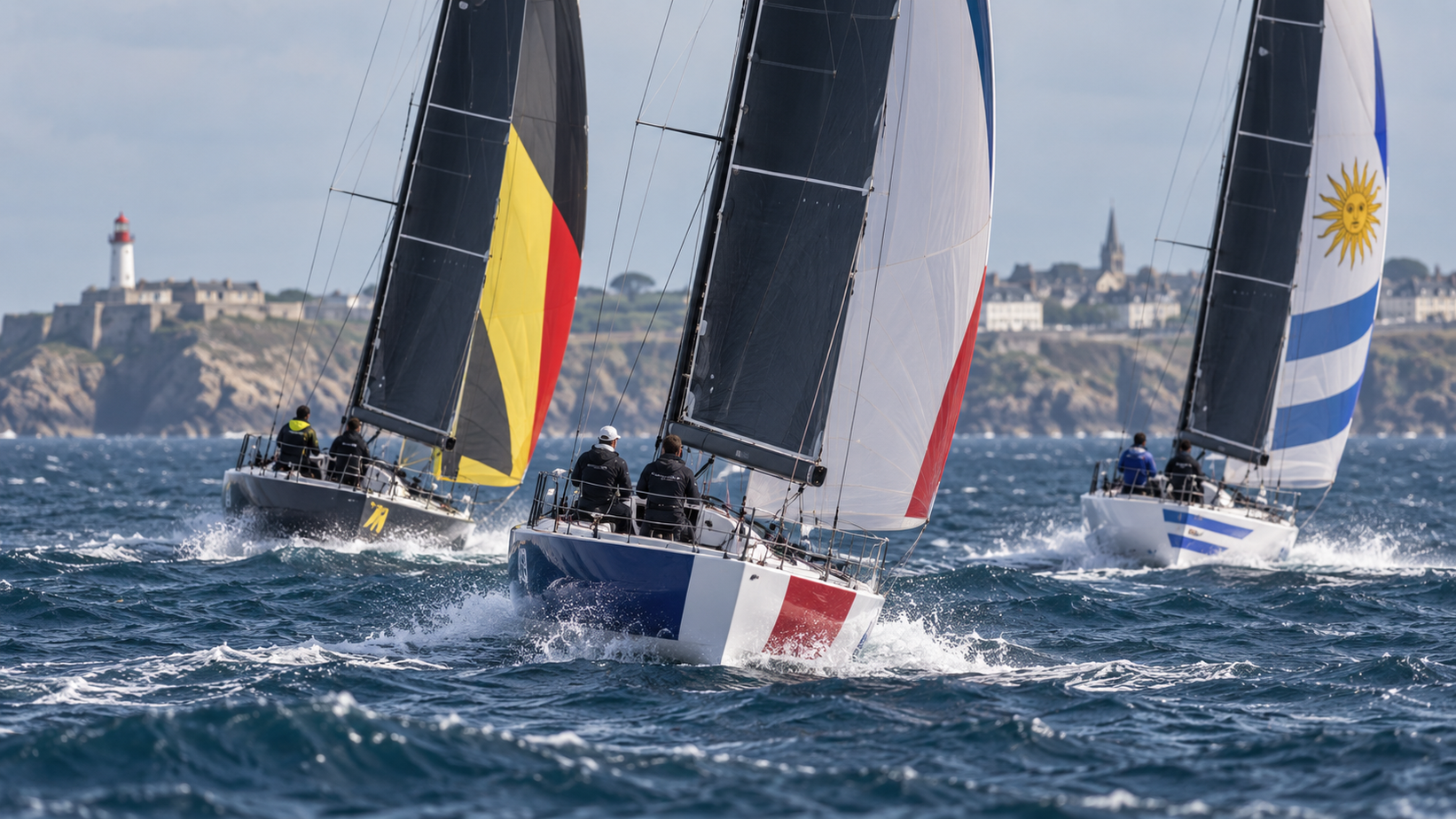
France’s title confirms the value of combining navigation, endurance and teamwork in a small crew. The final victory was not an isolated sprint but the result of reading the wind across almost two hundred miles. For Andre and Gilly, the next step will be analysing the moments when the lead could have been lost, because that is exactly the data that builds the next result. World gold belongs to speed, but even more to the ability of two people to make the same decision through a whole night as one team.
The championship results can also serve as preparation for a future Olympic or professional double-handed programme, although the formats do not match perfectly. Skills in managing fatigue, meteorology and joint decision-making carry over to any longer regatta. The French federation now has a crew that has proved it can win when the forecast is not straightforward. It is important to keep this partnership intact and continue working on communication, since any new combination has to build trust from scratch. Andre and Gilly will review not only the winning choice to stay inshore but also the situations in which they thought differently. The strongest teams agree in advance how they settle a disagreement when tired. The world title shows that their process worked in the final, and the coming regattas will show whether the same process can hold up on a different route and under a new kind of pressure.
The safety side of success includes constant clipping on, watching the traffic and a clear procedure if a crew member goes overboard. Fatigue raises the chance of a simple error, particularly during a night sail change. France’s win shows speed, but finishing the entire route without an incident confirms the quality of preparation. In offshore sailing a result means little if it is chased at the cost of basic rules, which is why the best pairs always combine tactical boldness with a conservative assessment of risk.