
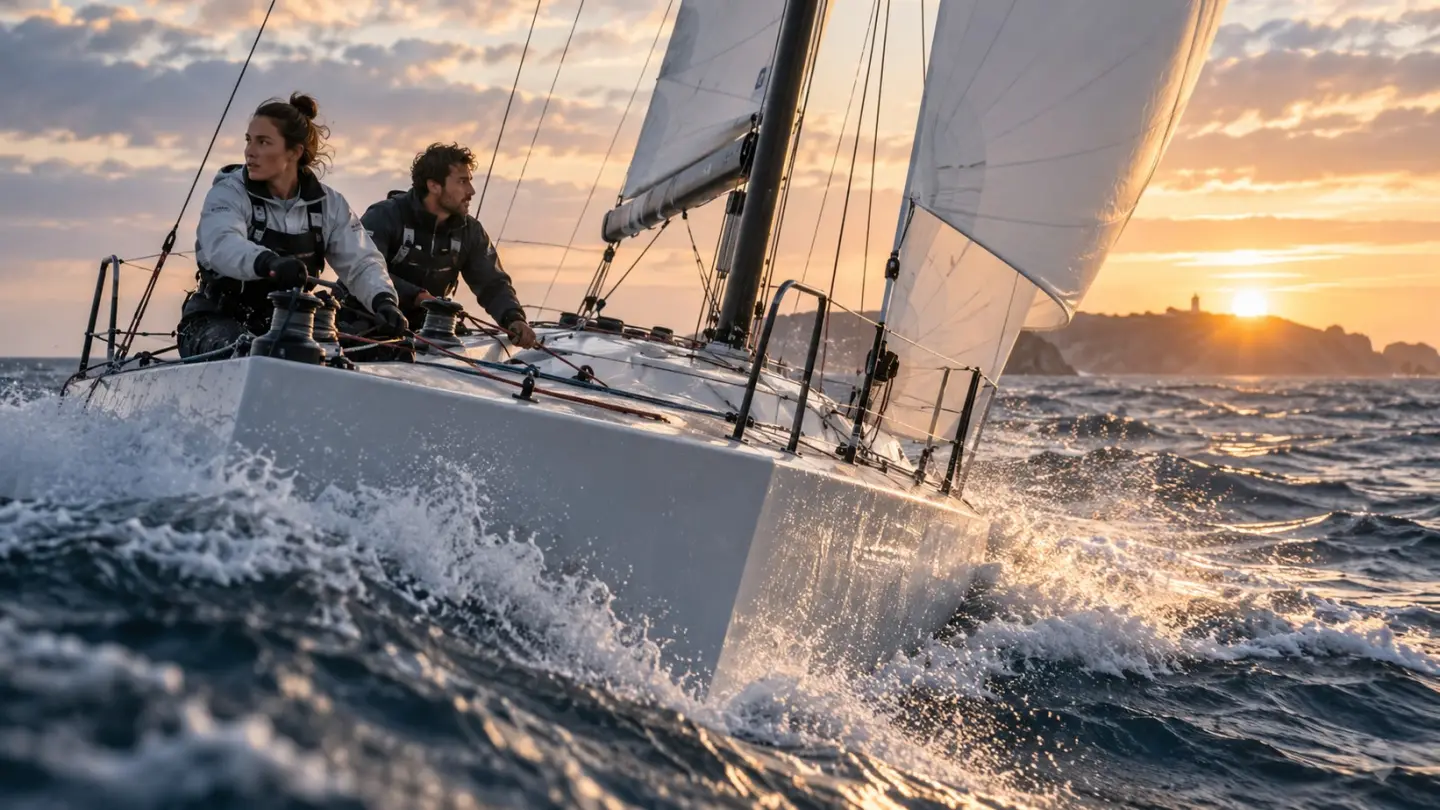
Toma Andre and Colombe Jahili won the World Championship in offshore doublehanded sailing for France after taking the final race, a 190 nautical mile course. The last leg lasted a little over two days and was sailed in shifting, light winds. Australians Ennis Stevenson and Peter Winter finished second, while Belgians Jonas Gerkens and Jemila Tasan took third place.
The lead changed hands between four boats over the closing hours. In light air the gap comes not only from speed but from choosing a lane with a few knots more. The French pair found the best route through the final patches of breeze and crossed the line at 12.20.26. The Australian crew, who had led that morning, could not hold the same pace to the finish.
The race combined strong wind, big seas and almost complete calm, forcing crews to switch modes constantly. Andre and Jahili had to change sails, weight distribution and heading without any extra crew on board. In the doublehanded format every decision also affects rest, since one sailor often steers the boat while the other tries to grab short spells of sleep.
The final 190 mile race changed the leaders several times
Both have experience in the 470 Olympic class and had sailed together before. That proved decisive when they had to swap roles quickly between the helm and deck work. A pair that has worked together for years does not waste time explaining each manoeuvre. One short command is enough to know who checks the course, who readies the line and when the sail change begins.
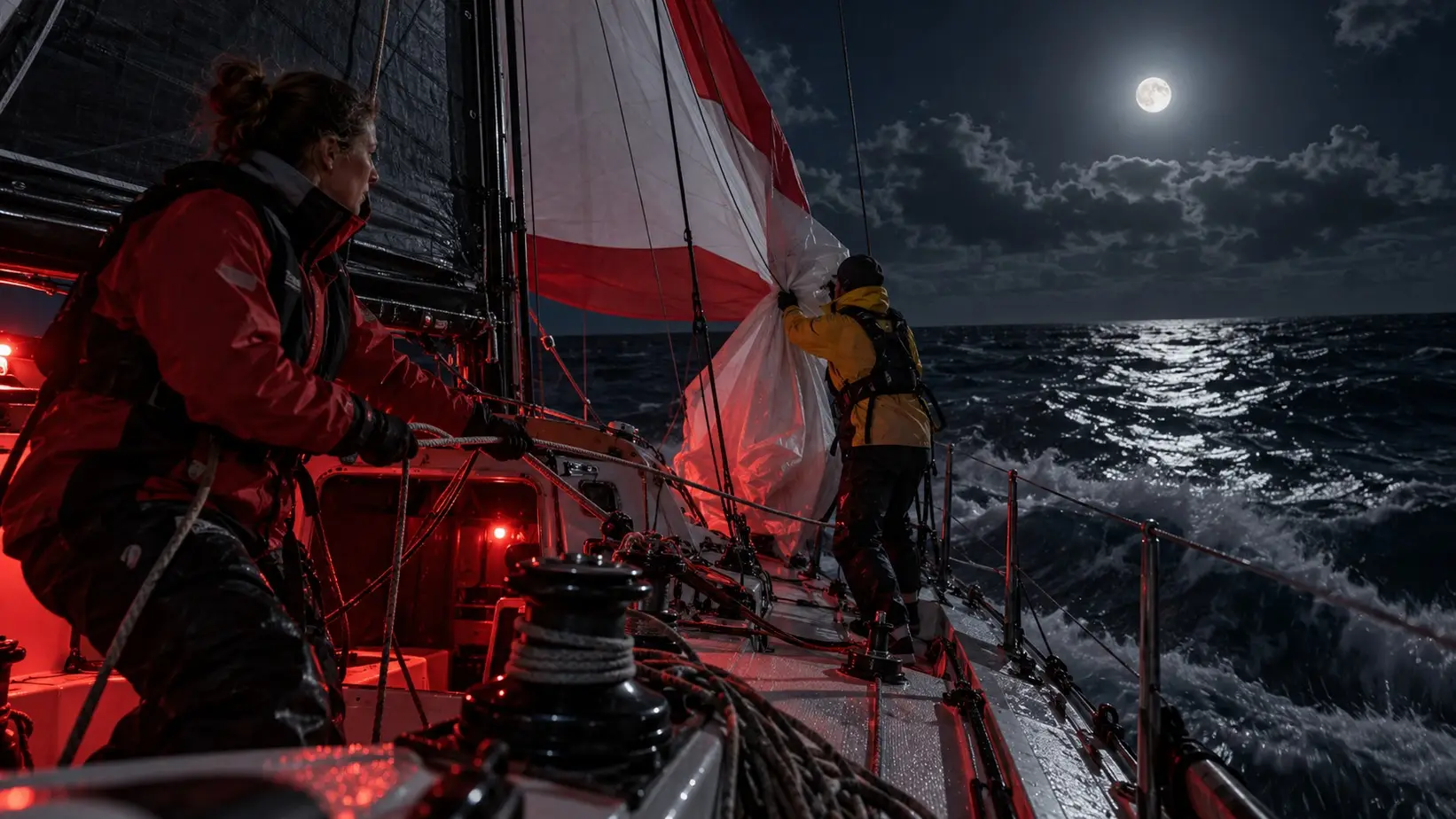
Navigating in light wind means accepting uncertainty. The shortest line to the finish is not always the fastest if it runs through a zone with no current. The French chose a route that may have looked longer but kept the boat moving. When speed drops close to zero, every new acceleration costs time and favours the crew that never comes to a complete stop.
The Australians and Belgians earned their podium places by staying in the fight until the final miles. In an offshore race there is no safe advantage until the finish is near, especially when night or a tidal shift can reverse the order. Crews must keep watching their instruments and the horizon even when they cannot see a direct rival for hours. The final placing is the sum of hundreds of small decisions.
Experience from the 470 class helped the French pair
The world title confirms the value of the French approach, which links 470 class technique with offshore experience. Short regattas teach precise manoeuvring, while long legs demand careful management of energy and time. Andre and Jahili combined both skill sets. Their win came not only from the last push but from reaching the decisive zone rested enough and without any major technical problem.
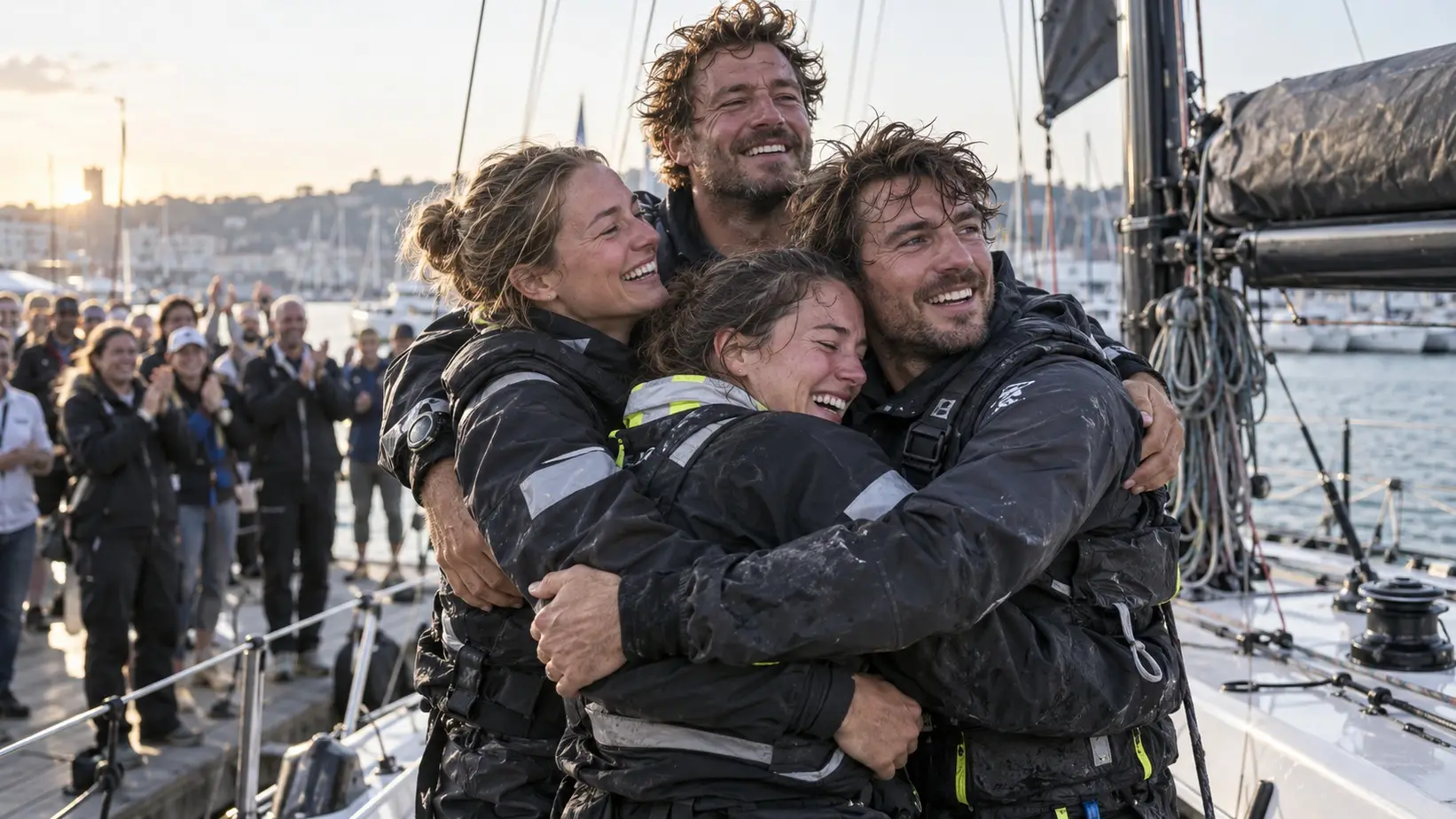
The final race offered an ideal test for the two-person format. Speed, navigation, communication and endurance all carried equal weight. The French crew responded best when the wind was least predictable and the pressure highest. The margin at the finish may look small over 190 miles, but such a finish shows how much a title depends on concentration to the very last minute.
Analysis after the finish should separate speed from circumstance. Starting position, traffic, wind, sea state and the moment a crew changes pace can either enhance or hide the true quality of a performance. The team will therefore compare sectors and decisions, not just the final position. That approach shows where the result was really earned and what can be repeated in different conditions.
Recovery of equipment and athletes begins straight away. Technicians check for signs of load stress, while the coaching staff monitors fatigue, hydration and minor aches that are not fully felt during competition. The next outing is not built on extra training at any cost. It is more useful to remove one technical weakness and arrive at the start with reliable gear and a clear plan.
Rivals will now use this result as a new reference point. They may change their tempo, attack earlier or try to close off the winners’ strongest track. For that reason a successful plan cannot stay fixed. Its value lies in the principles of energy distribution, risk assessment and precise communication, while the specific move is adapted to the next course or route.