
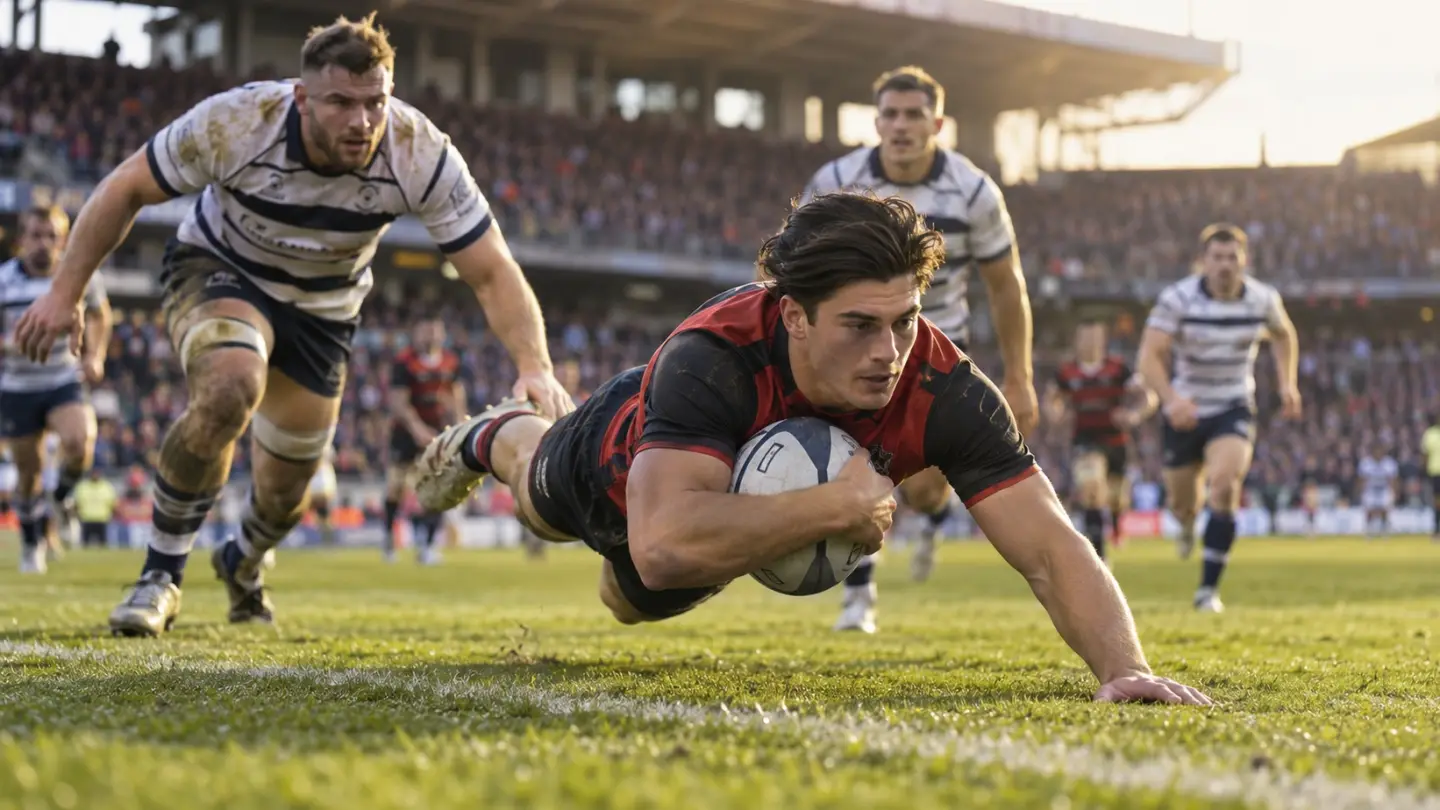
Bristol Bears beat reigning champions Northampton Saints 41:26 and claimed the bonus point after scoring six tries. Louis Ris-Zamit crossed twice, while Gabriel Ogre, Tom Jordan and Harry Randall each added one, along with a penalty try for the hosts. Bristol took charge early and forced the visitors to spend most of the match chasing the gap through a more open and riskier game.
Ris-Zamit’s pace changes the shape of the defence before he even receives the ball. The outside defender has to close ground sooner, leaving the inside player with more space to cover. Bristol used that threat to create overlaps after a quick ruck and a change of side. Once the pass reached the wing, the defence no longer had enough time to fix its position. Both tries were the final step of space that had been prepared as a team.
Bristol’s early attack forced the champions to chase the score
Randall and Jordan gave the attack a varied rhythm. Moving the ball quickly stopped Northampton from setting a firm line, while more direct carries tied the first defenders in place. Bristol did not try to send every phase straight out to the wing. A few short runs through the middle were needed to narrow the blocks, and only then did the wide pass carry its full value. That mix of patience and acceleration was the strongest feature of the home side’s game.
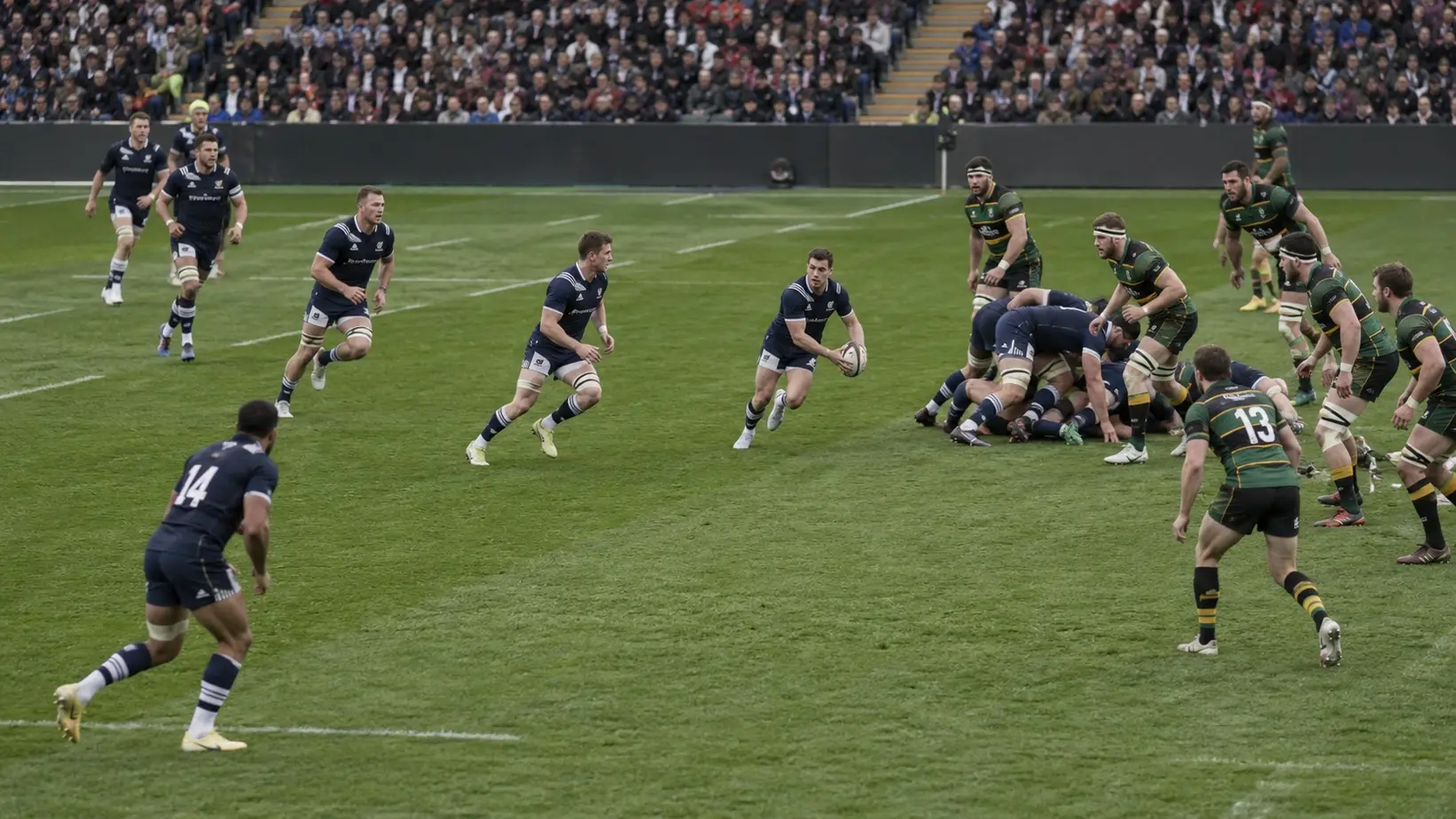
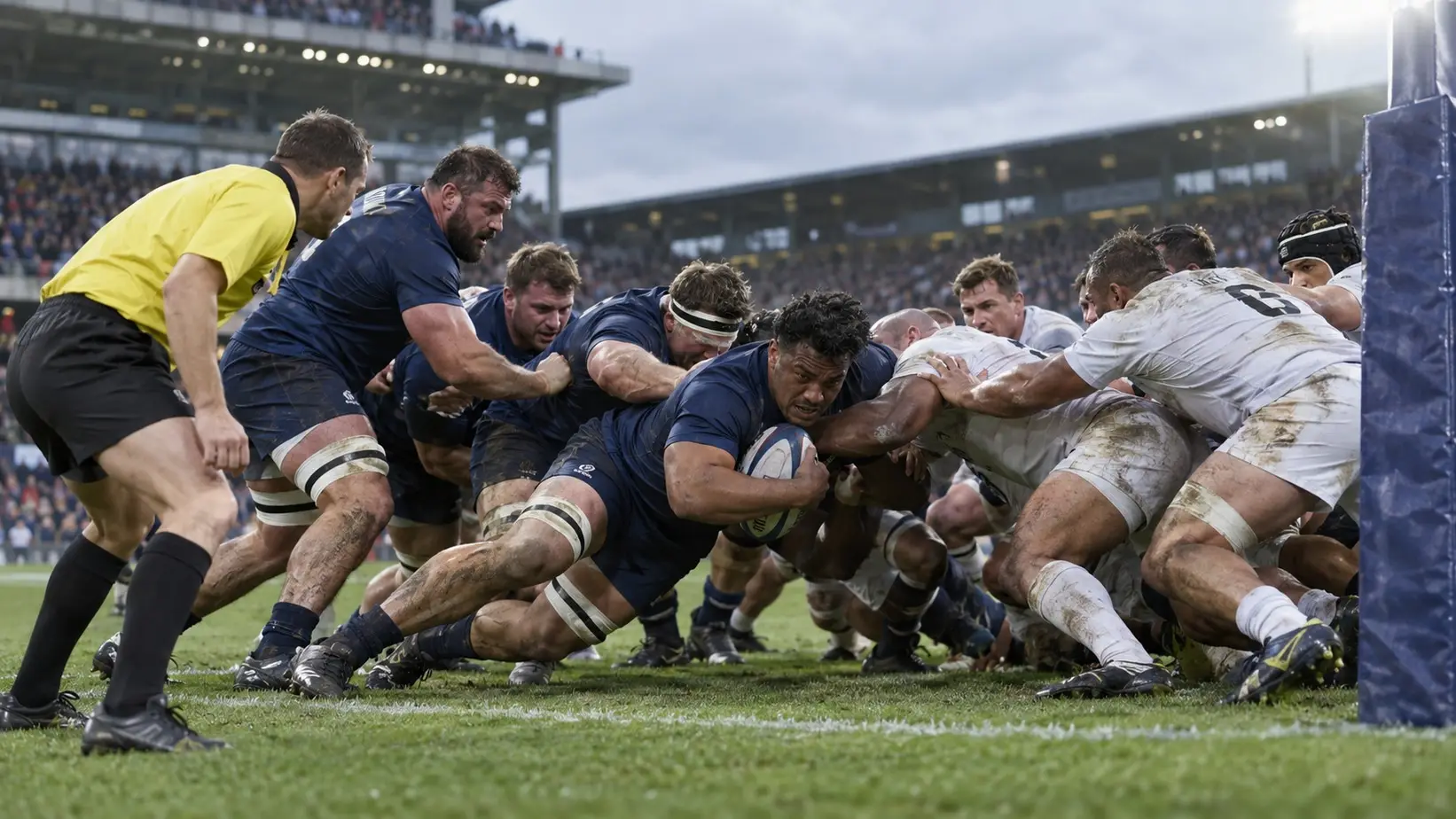
The penalty try shows how much pressure near the line was weighing on the visitors. When a defence repeats an infringement to stop a probable score, the referee can award the maximum penalty without any conversion. Such a situation is worth more than seven points; it takes away the defence’s sense that it can keep gambling. Bristol had earned that decision through the earlier phases, retaining control of the ball and forcing their opponents back.
Two tries show how much Ris-Zamit widens the attack
Northampton scored 26 points and at times showed why they are champions, but they cut the deficit without enough defensive stability. Each comeback lost its value whenever Bristol again crossed the advantage line with ease. The visitors will analyse the quality of the first tackle, the number of missed contacts and how quickly they got back into shape after losing the ball. An open match suits attacking talent, but it cannot be won if every score of your own is followed by a new crack.
Concern for the hosts came from a blow to the head suffered by Bernard Jansen van Rensburg. The health protocol must take priority over the result and any plan for the next match. Rugby requires a swift decision when a concussion is suspected, since a player cannot reliably judge his own condition. Bristol will separate the sporting side of the win from medical monitoring and return to it only once specialists confirm it is safe.
Beating the champions gives Bristol a strong early statement, but the greatest value lies in how different players contributed. Ris-Zamit was the most visible, Ogre and Jordan finished from other zones, and Randall kept the tempo up. Opponents therefore cannot simply double up on one wing. If the Bears keep their discipline, their security in contact and well-timed width, the 41:26 scoreline could become a pattern for a consistent season rather than just one attractive day in attack.
Bristol will take from the match the number of quick rucks, the gain after first contact and the output when the ball reaches the outside channel. That data will show whether the width came from a sound base or merely from individual speed. If the carriers keep drawing the inside defence, Ris-Zamit will keep finding space without forcing it. Then the two tries will be the product of a system that rivals find hard to shut down.
Northampton will want to find an answer without giving up their attacking identity. They need better control in contact and a return to the line, not a slowdown of every action. Bristol showed where space appears when the champions are late after the ruck. The next opponents will try the same, so the speed of defensive reorganisation becomes the most important task between the two matches.