Table Tennis: Rules, Techniques, and Tips for Beginners
- Author: SerbianSport
- SerbianSport
Have you ever wondered why table tennis, better known as ping-pong, attracts millions of players around the world? This dynamic sport, often played in family homes, schools, and recreational centers, offers much more than simple entertainment. Table tennis originated in the late 19th century as a social game among the British aristocracy, and today it is recognized as an Olympic sport that requires speed, precision, and strategy.
In addition to being an excellent way to stay physically active, table tennis improves reflexes, concentration, and hand-eye coordination. In this blog post, we will explore the history of table tennis, the basic rules of the game, and how playing table tennis can positively affect your health and social life. Finally, we will share several tips for beginners to help them progress faster in this exciting sport.
Rules of Table Tennis
Table tennis, also known as ping-pong, is played on a rectangular table with a net in the middle. The goal is to win points by hitting the ball over the net onto the opponent’s side of the table. Players use rubber-covered paddles to control the ball.
Basic Rules
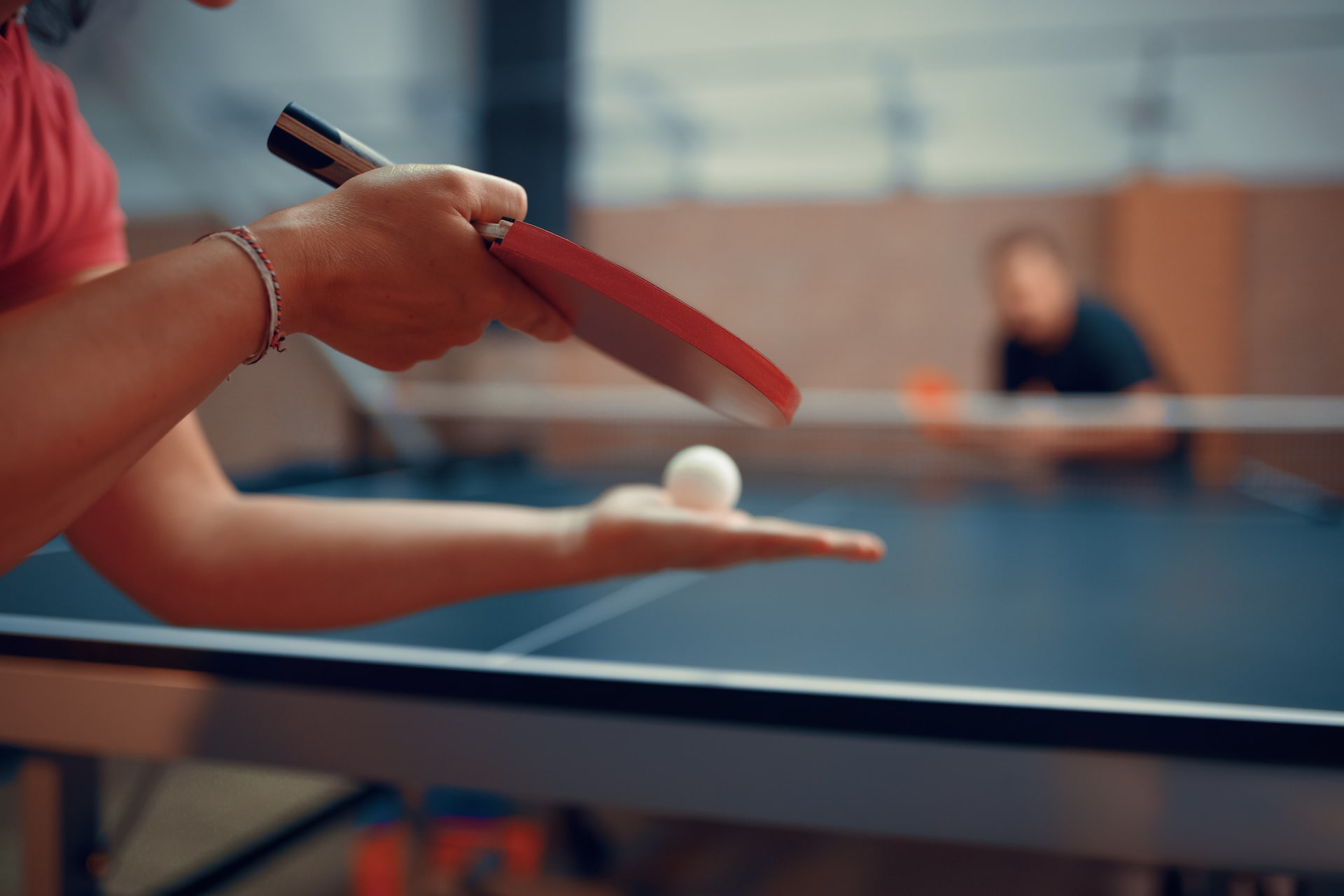
Serve: The player must toss the ball at least 16 cm into the air and hit it so that it touches their side of the table before crossing the net.
Points: Points are won when the opponent fails to return the ball correctly or when the ball does not touch the opponent’s side of the table.
Games: A game is played to 11 points, and the player must win by at least two points.
Net: If the ball touches the net during a serve, the serve is replayed.
Table and Net
Table: The table measures 2.74 m in length, 1.525 m in width, and 76 cm in height.
Net: The net is 15.25 cm high and stretches across the full width of the table.
Playing Techniques
Learning the basic techniques is essential for developing skills in table tennis. Focus on proper paddle grip, movement, and striking the ball.
Paddle Grip
There are two main ways to hold the paddle:
Penhold: Holding the paddle like a pen, allowing quick wrist movements.
Shakehand: Similar to a handshake grip, offering better control and balance.
Basic Strokes
Forehand: A stroke from the dominant side of the body, often used for attacking.
Backhand: A stroke from the opposite side, useful for control and defense.
Smash: A powerful shot used to finish points.
Spin: Adding rotation to the ball to create variety and deceive the opponent.
Movement and Positioning
Stance: Knees slightly bent, weight on the toes, ready for quick movements.
Movement: Use small steps to position yourself quickly near the table.
Tips for Beginners
Beginners often make mistakes that can be avoided with a few simple tips.
Proper Practice
Practice Your Serve: Spend time improving your serve, as it is a key part of the game.
Watch Professionals: Analyze matches of professional players to better understand strategies.
Set Goals: Set clear goals for each training session to track your progress.
Common Mistakes
Hitting Too Hard: Control your power to avoid sending the ball off the table.
Poor Positioning: Always stay balanced and ready for the next shot.
Incorrect Paddle Grip: Experiment with different grips to improve control.
Preparing for Competition
Participating in competitions can be an excellent opportunity to test your skills and learn from other players.
Mental Preparation: Develop mental toughness to handle pressure.
Physical Fitness: Stay in shape through regular exercise and a healthy diet.
Advanced Tactics
After mastering the basic techniques, you can begin developing more advanced tactics.
Playing Strategy
Analyze Your Opponent: Watch your opponent’s habits to predict their moves.
Variation: Change the speed and spin of your shots to confuse your opponent.
Teamwork
In doubles, coordination and communication are key to success.
Understanding Your Partner: Develop strategies that make use of your partner’s strengths.
Communication: Communicate clearly during the game to avoid misunderstandings.
Equipment Maintenance
Proper equipment maintenance extends its lifespan and improves performance.
Cleaning the Paddle
Rubber Surface: Clean the rubber regularly to maintain its grip.
Handle: Keep the wooden handle dry to prevent damage.
Storing Balls
Avoid Heat: Store balls in a cool, dry place to prevent deformation.
Check for Damage: Regularly inspect balls for cracks or dents.
Conclusion
Table tennis is a dynamic sport that requires a combination of physical skills and mental strategy. Learning the basic rules and techniques, together with regular practice, is essential for improvement. Whether you are a beginner or an experienced player, there is always room to improve and enjoy the game.
Discuss the news - leave a comment!
Go to comments ↓
Comments
0