
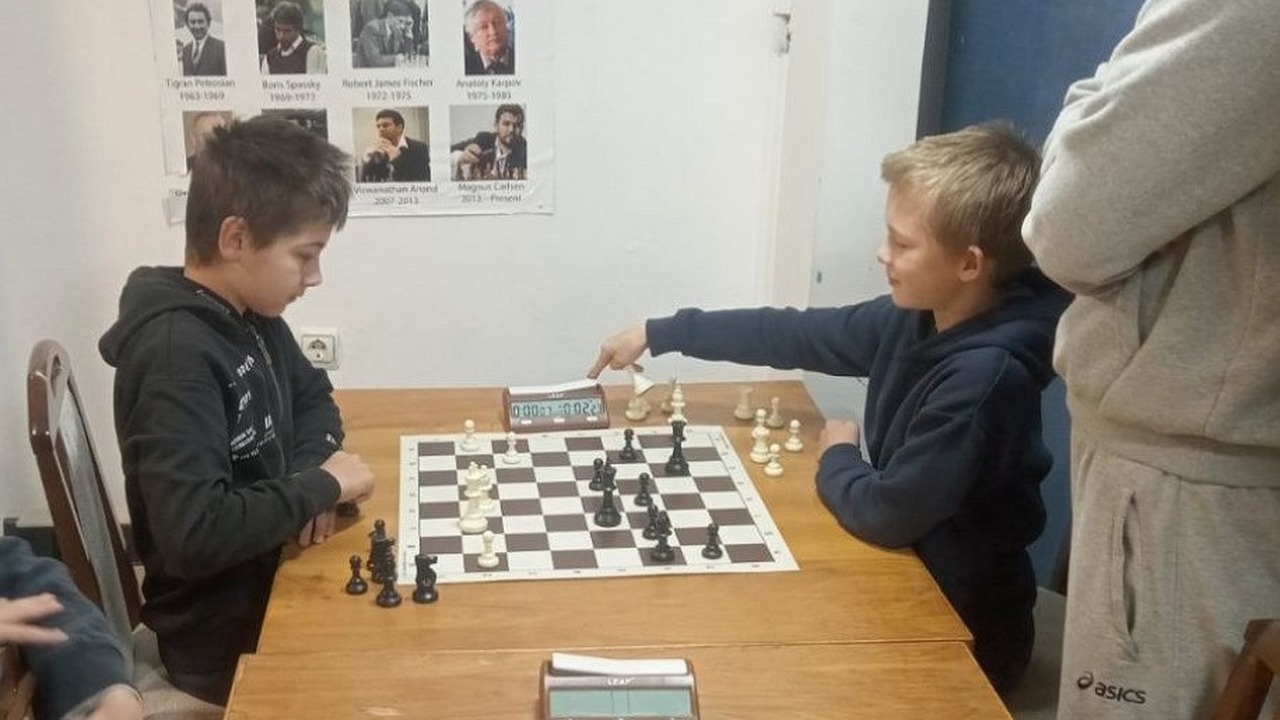
Nineteen players are taking part in the Yugoland Open in Subotica. The classical chess event runs from 3 to 7 August under the Swiss system across five rounds.
Games are played in Park Mini Jugoslavija. Two rounds have been completed, and three players share the lead on two points each.
Swiss pairings are drawn anew after every round
The open section has attracted nineteen entrants. The Swiss format keeps every player in contention without direct elimination. As the event goes on, competitors on similar scores are paired together, so a player’s next opponent depends on how the previous round went. Five rounds fit into five days, leaving little room to recover from a defeat, so every point counts.
A win earns one point and a draw half a point. Tiebreak criteria decide the order when several players finish on the same score. The organisers have published the standings after round one along with the next pairings, so players can prepare for a confirmed opponent. The tournament counts towards international rating, and completed games can change the rating of eligible players.
Starting list mixes experience with young talent
Goran Gabrić came in as the highest-rated player, with a published rating of 2232 before the first round. Lazar Davidov followed on the starting list with a rating of 1983. The field also includes players from several junior categories. Miroslav Ranđelović competes in the under-16 category, while Marko Vujević, Đorđe Marković and other young players are also taking part.
Older competitors bring a different kind of opposition. Some entrants have decades of experience and handle long games well. The wide age range gives the event a varied character. Younger players gain rated games against opponents outside their regular competitions. The starting order brings no tournament points. It only reflects the published ratings before the first move.

Young chess players display their medals after the tournament.
Classical time control rewards patient decisions
The published time control is sixty minutes with a thirty-second increment. Each move a player makes adds time to their clock. Players draw on that extra time in complicated positions, though the clock becomes decisive near the end of long games. Opening moves may come straight from preparation. Newer positions usually demand more thought and more precise judgement. The increment reduces the chance that a game is decided purely by time trouble, but it does not remove mistakes made when little time is left. Players record their moves under classical rating rules, and the scoresheets also help when results are checked later. The chief arbiter is Zoltan Helenji. The published details name both the organiser and the tournament director.
The programme includes an open section and a separate rapid competition. The formats use different clocks and keep separate results. The organiser is ŠK ŠahArt Subotica. The hall in Park Mini Jugoslavija hosts all five rounds of the classical event, each played in the same place. The schedule brings one round each day from 3 to 7 August, and the open tournament runs until 7 August. The final standings will only be known once all five rounds are finished, and until then each round can reshuffle the order. A player can climb quickly with consecutive wins or drop places after a single defeat. Tiebreak criteria become important when several players finish on the same total, and they are calculated from opponents and recorded results. The current list shows a field spanning several generations near the top of the table, and the remaining games will settle the final order.
A short event leaves little room for a poor result
Five rounds is fewer than at many major international tournaments, so one defeat costs a large share of the available points. With an odd number of entrants, one player has no opponent in each round, and the pairing programme assigns that bye. New pairings are published after each completed round, and players on similar scores usually meet one another. Gabrić began as the top seed on published rating. Davidov was second, and the rest of the field is made up of seniors and juniors. After each move the clock adds thirty seconds, and the starting time is sixty minutes per player. Players write down their moves throughout the classical game, and the scoresheet preserves the full course of each game.
The classical and rapid sections keep separate results, and points do not carry over between the two competitions. The fifth round on 7 August closes the open tournament, and points and tiebreak criteria will then set the final order. Each recorded result immediately affects the following pairings, which is why competitors do not know their next opponent until the round is over. The organiser publishes the new list of pairings only after all games in a round have been processed. The tournament ends in the same venue where the first round was played, and every entrant has five classical games on the programme.
Three players lead after the second round
Lazar Davidov, Vlado Kovač and Veso Avram each have two points. They are the only players who have won both of their games. Miroslav Ranđelović and Radomir Lagan follow with one and a half points each. The other players have one point at most. Goran Gabrić began as the top seed and now has one point. The starting rating no longer determines the current order. Davidov and Kovač meet on first board in the third round, and both enter that game with a perfect score.
Gabrić plays Ranđelović on second board, and the pair are separated by half a point before the game. Radomir Lagan faces Marko Vujević on third board, a pairing that brings together players from different age groups. Two rounds remain after those games. The final round is played on 7 August. The standings were last updated after round two, and new results will keep changing them until the tournament ends.