
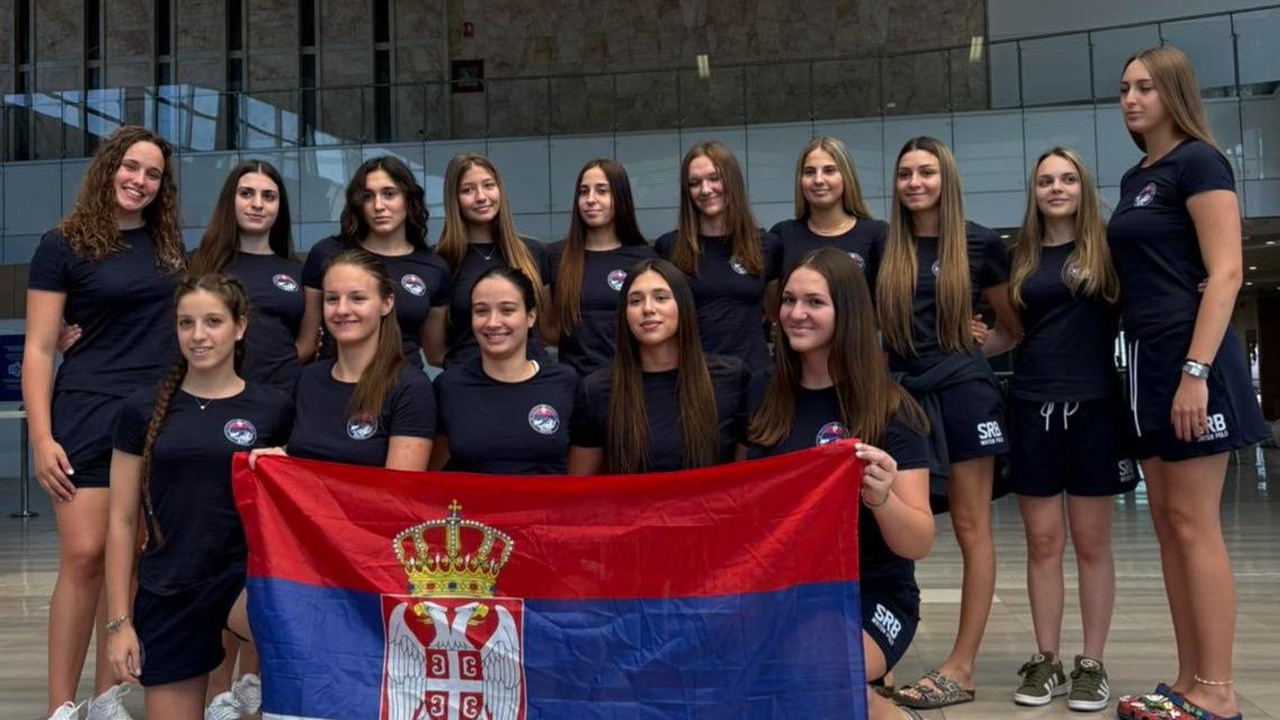
Serbia’s women’s water polo squad at Under-20 level has flown to Portugal. Oeiras is hosting the European Championship from 1 to 7 August. Serbia are in Group F alongside Switzerland and Turkey.
Head coach Dejan Božić has picked fifteen players from seven clubs. Seven members of the squad play for Crvena zvezda. The list includes water polo players born between 2007 and 2009.
Serbia open against Switzerland on Sunday at 13.15 Serbian time. The second match, against Turkey, starts on Monday at 14.45. Both results will shape how the tournament continues.
Fifteen water polo players make the list
Jovana Radonjić and Nađa Kulić belong to the 2007 generation. Radonjić plays for Patras, while Kulić represents Palilula. Andrea Lazović and Nađa Milenković are from the same age group and play at Crvena zvezda.
Eight of the selected players were born in 2008. Elena Ćuk comes from Szeged, and Vjera Bulajić from Jug. Danica Balać and Nika Ratković represent Palilula.
Jana Janković, Una Jelenić and Irina Trbanos were also born in 2008. All three play for Crvena zvezda. Helena Klikovac adds one more Zvezda name from that generation.
The youngest group consists of three players born in 2009. Tara Žagar plays for Vojvodina, Lena Petković for Crvena zvezda, and Natalija Anđelković for Partizan. They close the list of fifteen travellers.
The squad therefore blends experience from Serbian and foreign clubs. Patras, Szeged and Jug supply three players from abroad. Four domestic clubs make up the rest of the team.
The official draw placed Serbia in Group F in February. Turkey and Switzerland completed the three-team group. Serbia therefore knew both opponents several months before the trip. The published list added the names of 15 players for those matches.
Crvena zvezda provides seven players
Crvena zvezda has the largest club contingent in the squad. Lazović, Milenković, Janković and Jelenić are the first four representatives. Trbanos, Klikovac and Petković complete the group of seven.
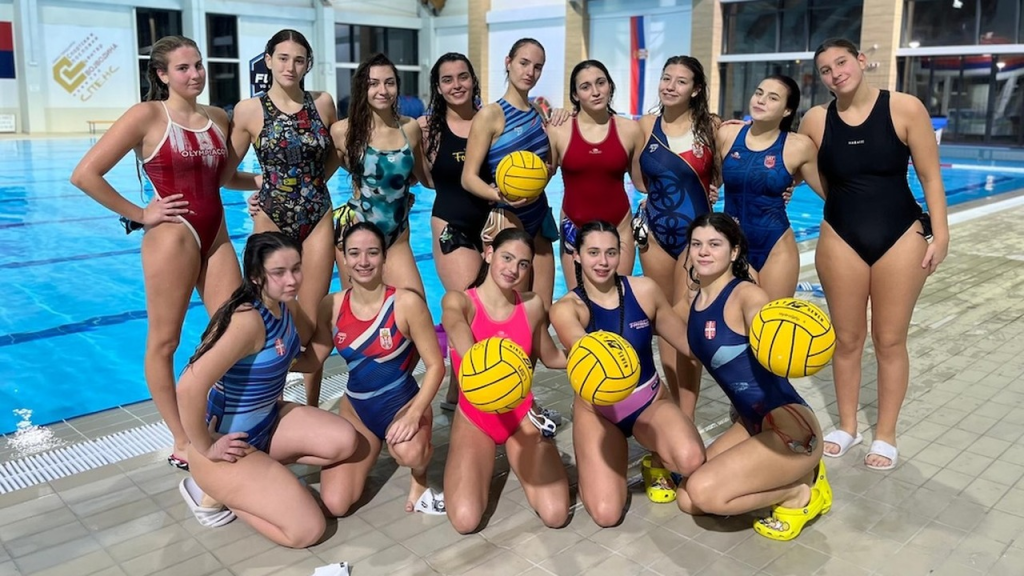
The Serbian players pose together during national team preparations.
Several of them already share home fixtures and training sessions. Their club links bring familiar habits in passing and defence. National team work then brings them together with players from six other clubs.
Palilula contributes Kulić, Balać and Ratković. Vojvodina and Partizan each have one player. The mix ties together several Serbian centres of women’s water polo.
Radonjić, Ćuk and Bulajić bring everyday experience from clubs abroad. They return with a different approach to training and match scheduling. The national team has brought those habits together ahead of the opening match.
The selected players cover both goalkeeping and outfield positions. The statement lists each traveller and her current club. Dejan Božić leads the squad at this championship.
Seven Crvena zvezda players make up almost half of the Serbian squad. Palilula adds three more names. Five water polo players come from Patras, Szeged, Jug, Vojvodina and Partizan. That spread clearly shows the club foundation of the national team.
Switzerland open Serbia’s Group F schedule
Serbia’s two-match programme begins against Switzerland. The game is scheduled for Sunday afternoon, Serbian time. Turkey is the second opponent less than two days later.
Group F contains just three national teams. Each side therefore plays two matches before the next phase. Every result changes the final position in the group.
Serbia are competing in the second division at this championship. The other teams at that level are placed in Groups C, D, E and F. Each group contains three teams.
The four group winners move on to crossover matches after a separate draw. Their opponents come from the lower places in the top division. A crossover win leads to the quarter-finals.
The runners-up in Groups C–F play in the league for places 13 to 16. Third-placed teams decide places 17 to 20 in the same way. All the national teams continue the competition after the group stage.
Twenty European national teams take part in Oeiras
Twenty women’s national teams under 20 are taking part in the championship. The eight highest-ranked sides form Groups A and B. The remaining twelve teams play in four groups of three.
The age category was changed from U19 to U20 for this edition. The Serbian list reflects that wider limit. Its players belong to three birth years rather than a single generation.
Oeiras is staging the competition over seven days. Groups are played first, followed by the crossovers and placement matches. The final standings are settled before the closing day.
Serbia arrived before the opening weekend and announced the full squad. The schedule confirms Switzerland and Turkey as the first rivals. Any later opponent depends on two results in the group.
This squad belongs to a younger age category than the recent team in Zagreb. It includes different players and a new head coach. The team in Portugal now begins its European campaign.
The championship links two divisions within one competition. Groups A and B are made up of eight leading teams from the previous cycle. Groups C–F include a further 12 national teams. The crossovers bring both levels together before the quarter-finals and placement matches.