
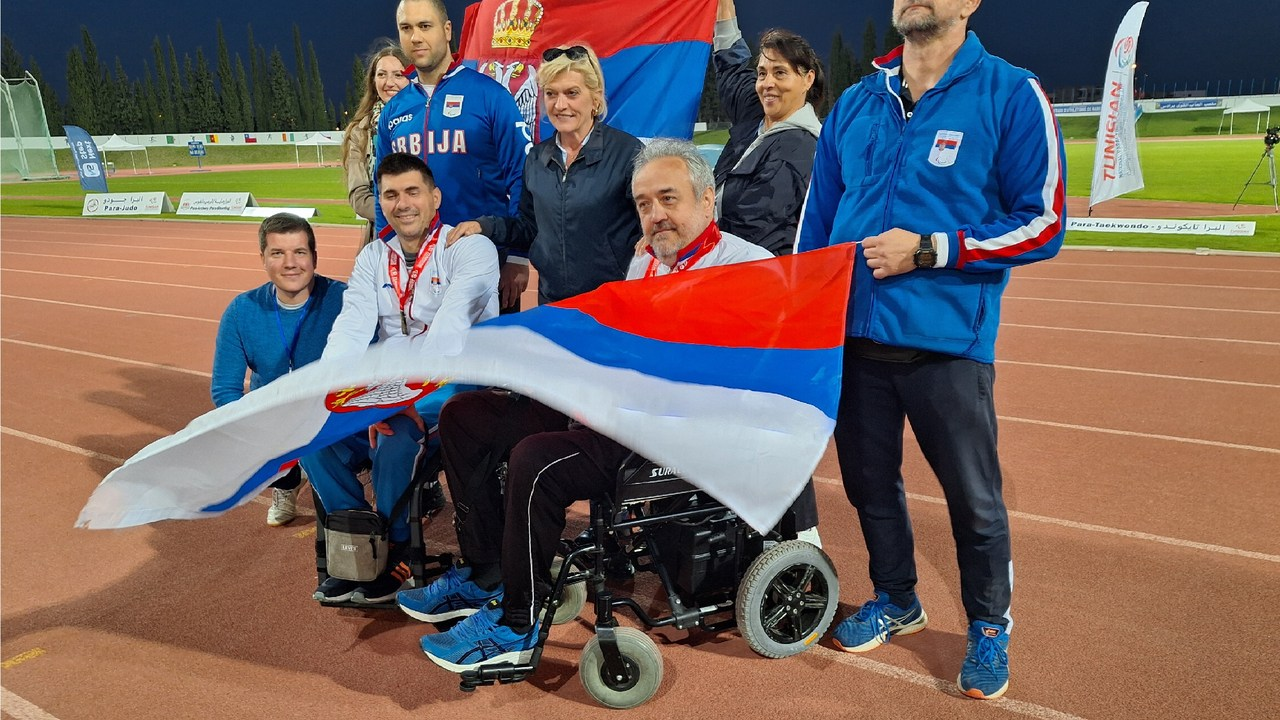
Athletes and members of Serbia’s coaching staff pose in the national kit.
Serbia will be represented by 147 athletes at the Mediterranean Games in Taranto. The complete delegation will count more than 250 competitors, coaches and sports officials.
The event in southern Italy runs from 21 August to 3
September. The squad includes Olympians alongside young athletes with no experience of major multi-sport competitions.
A large delegation heads to southern Italy
The Olympic Committee of Serbia has confirmed the core makeup of the team for Taranto. The athletes come from both individual and team disciplines.
Coaches, doctors and other members of the support staff take the delegation past 250 people. They will oversee preparation, recovery and the daily running of the team.
Two cruise ships will serve as the athletes’ village in Taranto. Serbian competitors will be housed alongside representatives of other nations.
Tomašević described the setting as a good preparation for bigger multi-sport events. For some of the young competitors, it is their first time living in such a village.
Dejan Tomašević judged the Games to offer valuable experience within the wider Olympic programme. He wished the athletes safe travel and thorough preparation.
The Serbian squad combines seasoned competitors with young debutants. For many athletes, Taranto will be their first major multi-sport event.
The first members of the Serbian delegation set off on 16 August. Competition begins five days later.
Serbia returns after a successful Games in Oran
Serbian athletes won more than 30 medals at the previous Mediterranean Games. It was Serbia’s most successful showing at the event.
Tomašević asked that the previous tally should not create extra pressure. The opponents and venues will be different this time.
Part of the delegation already has experience of major international competitions. Others will live in an athletes’ village for the first time and follow a shared programme.
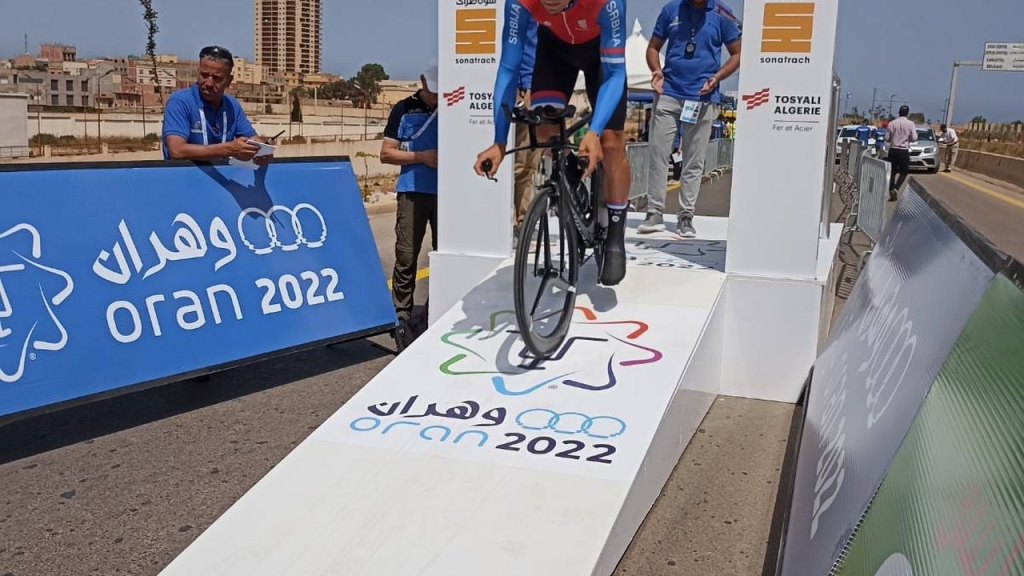
Serbian cyclist Ognjen Ilić competes at the Mediterranean Games.
Such a line-up lets the younger athletes talk with experienced Serbian competitors. Tomašević stressed how this differs from an ordinary single-sport tournament.
Medals matter to the competitors and their federations. Even so, the quality of preparation and arriving healthy count for more than public predictions.
Tomašević said medals mean most to the athletes and coaches. He did not set a mandatory total for the whole Serbian delegation.
Some of the medallists from Oran are back in the national programmes. The remaining places went to athletes who progressed in the new cycle.
Three team sports are on the programme
The host has included volleyball, water polo and 3×3 basketball in the team programme. Five-a-side basketball will not be played in Taranto.
Serbia has strong international results in 3×3 basketball. Tomašević has counted the Serbian side among the main medal contenders.
The Serbian teams arrive after home preparation and friendly matches. The group stage will determine their route to the final.
| Athletes | 147 |
|---|---|
| Full delegation | More than 250 members |
| Host | Taranto, Italy |
| Duration | 21 August to 3 September 2026 |
Water polo and volleyball also bring Serbian teams to the programme. Their matches will be staged alongside the many individual disciplines.
Team sports carry larger coaching and medical staffs. That accounts for part of the gap between the number of athletes and the full delegation.
Tomašević has counted the Serbian basketball team among the main medal contenders. The assessment rests on their international results to date.
Volleyball and water polo complete Serbia’s presence in the team programme. Other representatives will compete in individual disciplines.
Badminton players need more international appearances
Tomašević cited badminton as an example of the needs of smaller Serbian sports. World rankings reward regular participation in recognised tournaments.
Tomašević said badminton players need regular international tournaments. Serbian players currently have fewer such matches than their rivals.
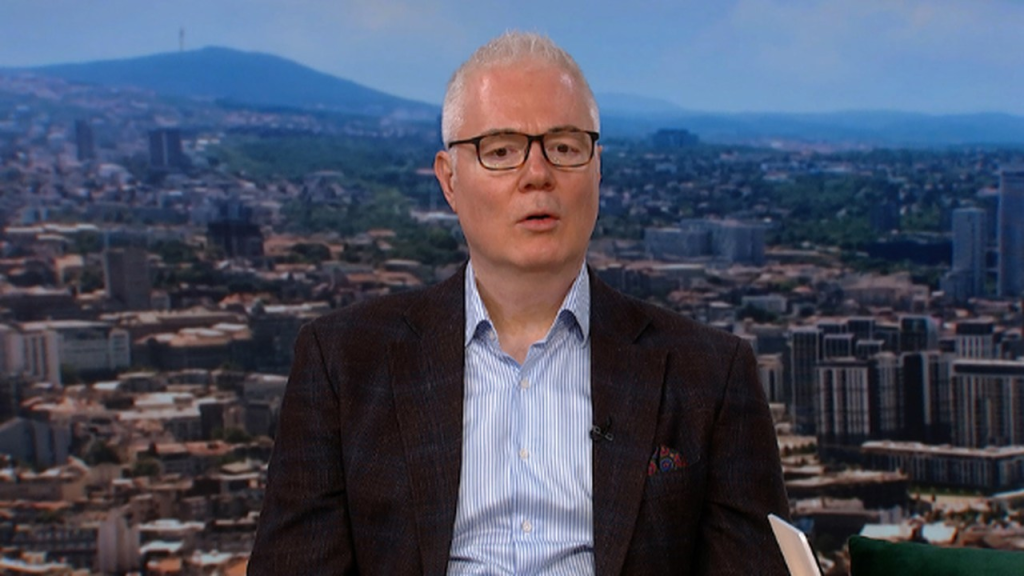
Dejan Tomašević speaks during an interview in the studio.
The multi-sport event gives them a fresh chance to play against international rivals. At the same time, they become part of a shared national delegation.
The same problem exists in other sports with a small international calendar. Missed competitions slow progress up the rankings.
The Olympic Committee recently visited the Serbian badminton internationals. They discussed tournaments and support from state sports bodies.
So Taranto matters not only for the biggest medal hopes. The Games bring matches, experience and visibility to a wider circle of Serbian athletes.
Tomašević also spoke about the difficult step from junior to senior sport. Young athletes need time to adjust to stronger rivals.
Serbia wants a more active role in sports bodies
Before the competition begins, an electoral assembly of the Mediterranean Games organisation will be held. Serbia plans a more active part in that process.
Tomašević reminded that Serbia was among the founders of the Mediterranean sports movement. Its representatives later held fewer international posts.
The committee wants seats for Serbian representatives on the relevant Mediterranean and European commissions. Similar work continues within the Olympic movement.
Those positions concern the governance of sport rather than results on the field. They improve cooperation and the exchange between federations.
Among his priorities, Tomašević named an Olympic House and museum. He also wants a shared space for federations without permanent offices.
The delegation combines experienced Olympians and young international competitors. The first contests in Taranto begin on 21
August. His closing message focused on health, not medal forecasts. He wished the athletes good preparation and performances free of added pressure.