
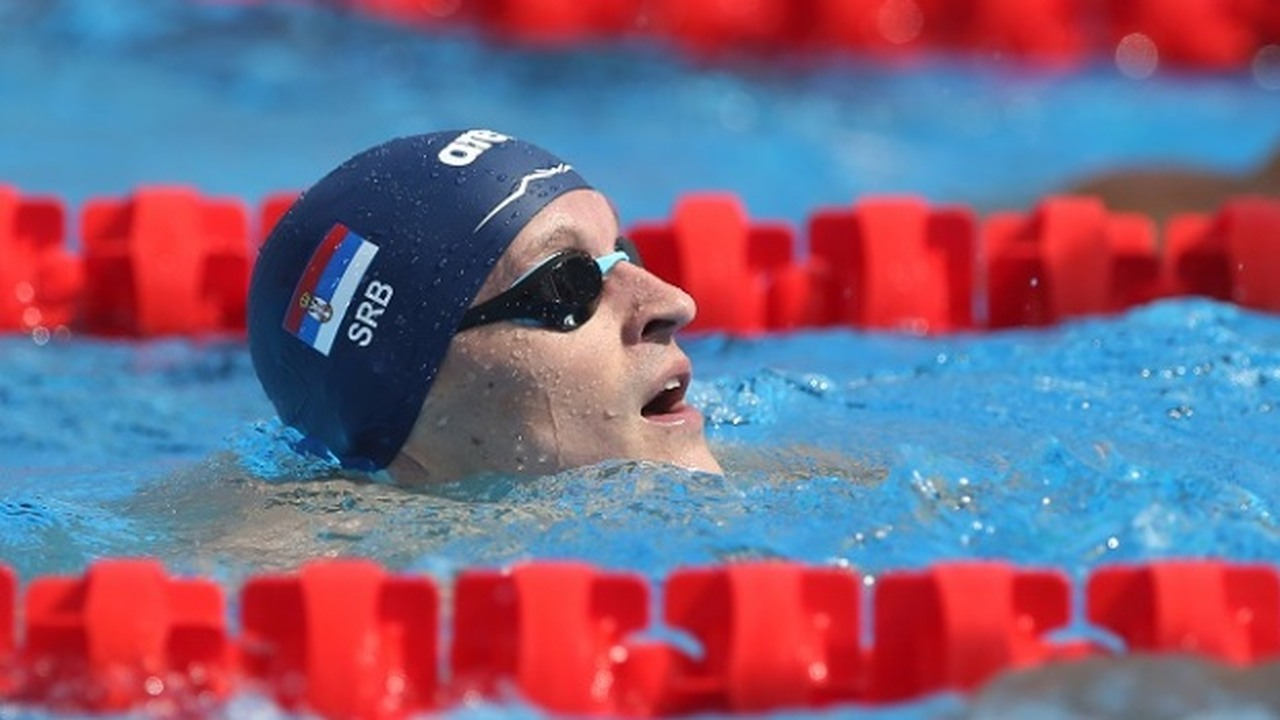
Serbia has named its swimming team for the European Championships in Paris, which run from 10 to 16 August. Velimir Stjepanović and Andrej Barna bring the most senior experience to the squad.
The men’s 4×100 freestyle relay returns after its European gold in Belgrade. Alongside Stjepanović and Barna, Nikola Aćin and Justin Cvetkov complete the line-up. That event gives Serbia a relay group that has already trained together.
The squad also includes swimmers competing in freestyle, butterfly and breaststroke. Martina Bukvić will represent Serbia in the 100 metres breaststroke. Several younger competitors will get important senior outings.
Stjepanović brings a wealth of European experience
Stjepanović arrives as the most decorated active Serbian swimmer. He has won three European golds and one silver medal. Those successes came at different stages of a long career.
In Paris, Stjepanović will swim the 100 metres freestyle. The event demands a fast start and strong control after the turn. Small differences in those phases often separate the leading swimmers.
His experience will matter for the rest of the Serbian squad too. He knows well how to prepare for and pace qualifying heats. Younger team-mates can follow that routine throughout the championships.
Stjepanović also remains part of the 4×100 freestyle relay, linking individual speed with a proven team unit. The relay heads to Paris with its recent European gold behind it.
Barna arrives with top-level sprint speed
Barna holds the Serbian record in the 50 metres freestyle. His best result this season is the second fastest in Europe. A time like that places him among the key sprinters in Paris.
Over 50 metres there is little room to correct a poor start. Reaction, the underwater phase and a clean exit decide things very quickly. Andrej Barna’s results this year confirm good form in that event.
He is also an important member of the men’s relay. The relay leg involves a changeover and a different starting technique. Barna knows those demands from the biggest national team competitions.
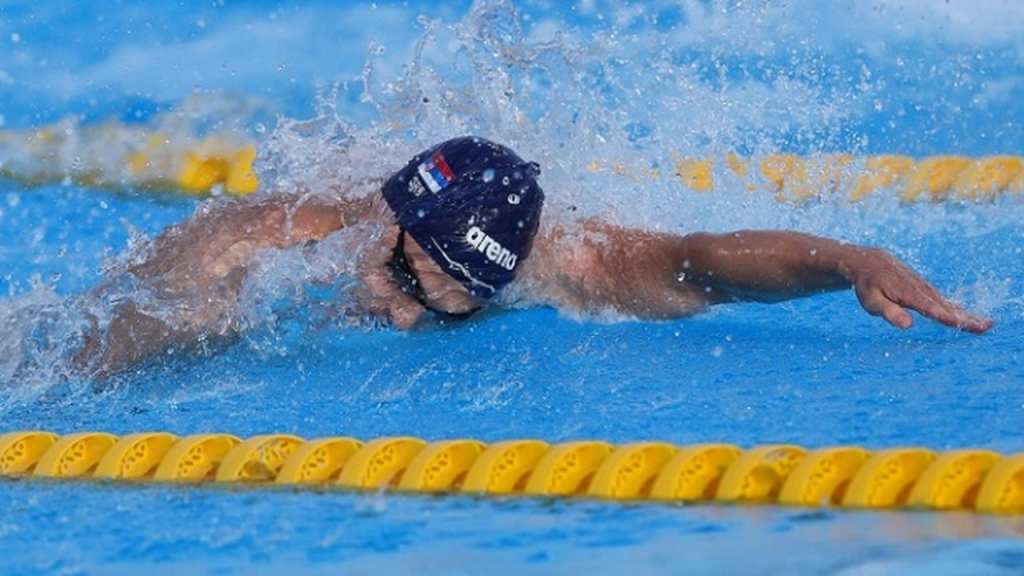
A Serbian swimmer competes in the butterfly in an indoor competition pool.
The sprint programme leaves little time to recover between races. Heats, semi-finals and finals can be squeezed into a short span. Experience helps when repeating that kind of intensity.
The relay returns after gold in Belgrade
Serbia previously won European gold in the 4×100 freestyle relay. That victory came in Belgrade in front of a home crowd. The same core group now travels to Paris.
Stjepanović, Barna, Aćin and Cvetkov make up the chosen line-up. Each swimmer finishes one leg at full speed. The collective time also depends on precise changeovers.
A relay start differs from the start of an individual race. The swimmer leaves the block as the previous team-mate touches the wall. A good changeover saves time without the risk of an early reaction.
The men’s relay goes to Paris as the reigning European champion. Other nations will arrive with altered line-ups and faster times. Paris begins as an entirely separate championship.
Cvetkov also competes in an individual race
Cvetkov will also swim the 100 metres freestyle. That event gives him a direct individual race alongside the relay programme. The individual swim also shows his current speed.
The young Serbian swimmer already has experience of European relay gold. Paris gives him the chance to build on that team success. The individual outing brings a different kind of responsibility.
Aćin completes Serbia’s four-man relay. His role stays important even without a main individual event. The relay result depends just as much on every leg.
Together, the four swimmers preserve the continuity of the Belgrade group. They already know how the others approach changeovers. The final running order may depend on form during the championships.
Younger swimmers cover three different strokes
Nemanja Maksić makes his first appearance at a major senior championship. He has been picked for the 50 metres butterfly. That event combines a powerful start with a precise stroke rhythm.
Uroš Živanović represents Serbia in the 50 metres breaststroke. That sprint calls for a strong underwater phase and a precise touch on the wall. A small technical error costs dearly over a single length.
Nikola Simić swims the longest pool event in the men’s programme. He has been selected for the 1,500 metres freestyle. The race demands an even pace over thirty lengths of the pool.
These entries extend Serbia’s programme beyond the sprint group. Butterfly, breaststroke and the long freestyle each place different demands on a swimmer. Together they widen the squad’s presence across the whole week.
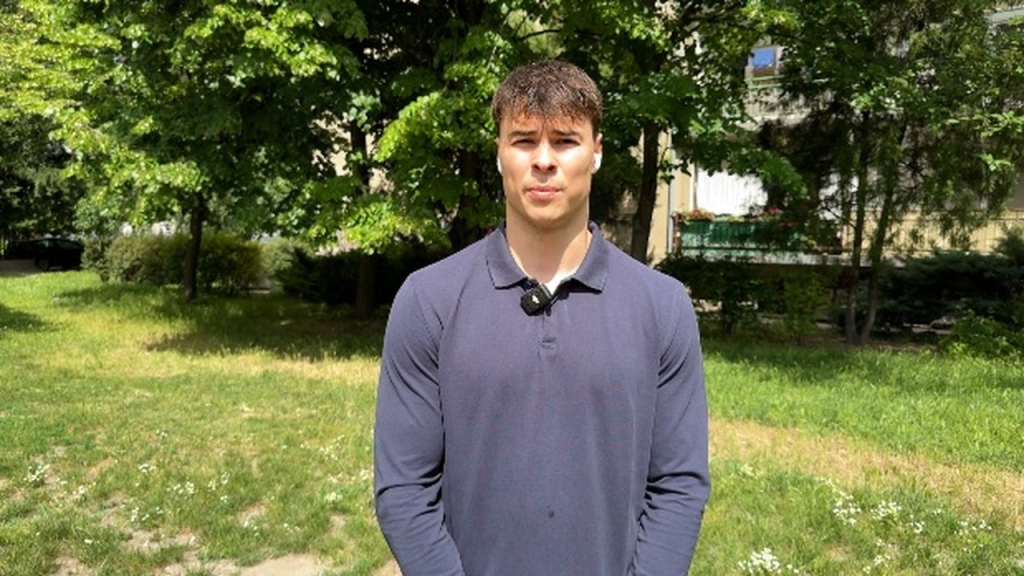
Serbian swimmer Andrej Barna stands outside during an interview.
Bukvić leads Serbia’s women’s line-up
Martina Bukvić will swim the 100 metres breaststroke. Her event covers two lengths and one key turn. The race combines a strong start with a technically sound return.
Bukvić adds a women’s event to Serbia’s programme in Paris. The race will also put her against the leading European swimmers. The first step will be a good qualifying swim and an accurate time.
Breaststroke runs under strict rules for every underwater movement. Judges watch the start, the turn and the finish closely. Clean technique remains vital even in the fastest stretches.
Her presence blends experience with development. Several younger swimmers are led by senior medallists. Every member of the squad enters a clearly defined event.
Paris offers a full week of competition
The European Championships open on 10 August and run for seven days. Morning heats decide who advances to the later sessions. Semi-finals and finals then raise the pressure.
Serbia’s relay has a proven chance of a high finish. Barna arrives with one of the best sprint times in the field. Stjepanović adds a long history of success at that level.
The younger swimmers give the squad a second goal. They gain senior experience in demanding events. Their results also show the depth behind the leading names.
Paris brings these different routes together in a single national team. Serbia will compete in the sprints, the distance races and all three strokes. The relay champions remain the main pillar of the whole squad.
The team combines proven results with first appearances
Serbia’s selected team carries very different international experience. Stjepanović owns European golds, while Barna holds the national record. Maksić is heading to her first major senior championship.
That mix brings both present interest and long-term value. Experienced swimmers enter races with clear results behind them. The younger group learns how such results are built.
The relay most clearly links both sides of the squad. Experienced sprinters race alongside younger teammates in one event. Gold from Belgrade gives the group a shared achievement.
Paris now brings a new pool, new rivals and a full programme. Serbia has races from fifty to one thousand five hundred metres. That breadth keeps the national team involved throughout the championship.