
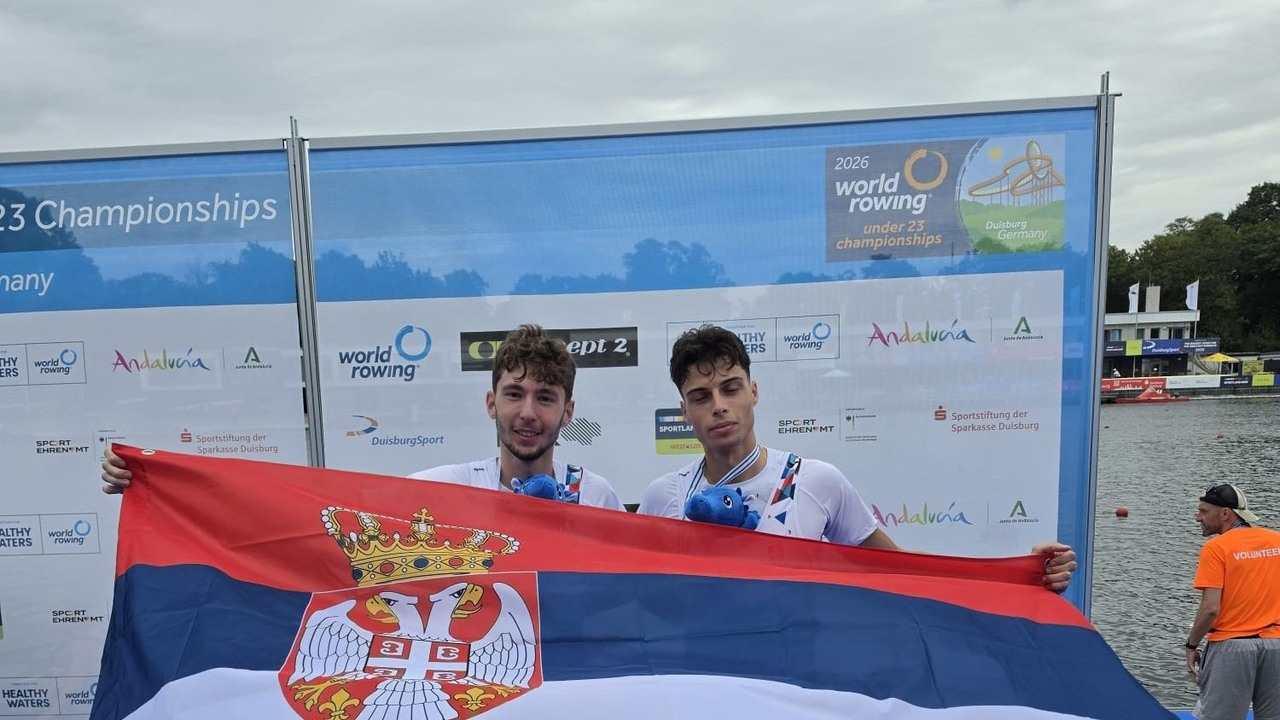
Matija Rajković and Ognjen Ostojić won bronze for Serbia in Duisburg, finishing third in the lightweight double sculls final. It is Serbia’s only medal at the World Under-23 Rowing Championships.
Germany took the title and a French crew claimed silver. The Serbian pair stayed in the medal fight for the whole final and crossed the line as the third boat in the event.
Serbian boat stayed with the leaders
Rajković and Ostojić began the final at a controlled rate and never let the leading crews build a gap that could not be closed. The Serbian boat remained among the contenders for a medal.
Germany claimed the best position early on, while France stayed close and kept up the pressure on the front. Serbia held a clean line alongside those two crews.
Lightweight double sculls demands precise coordination between both rowers, since a small difference at the catch can slow the entire boat. Rajković and Ostojić kept good harmony through the middle of the race.
The crews behind Serbia tried to close the distance before the finish. The Serbian rowers lifted the rate together and protected their advantage as the decisive final strokes began.
Germany went through the line first and France was second. Rajković and Ostojić completed the podium, and the bronze arrived after a race without any major technical error.
One medal from four Serbian crews
Serbia sent nine athletes in four crews to Duisburg. The lightweight double sculls delivered the only podium place, while the other Serbian crews reached finals and classification races.
Mihajlo Dedić and Nemanja Luledžija competed in the pair. They won the B final and placed seventh, missing the main final by a single position.
The four consisted of Danilo Đokić, Mateja Mitrović, Milan Cvetković and Predrag Cvetković. They ended the championships in fifteenth place after racing several times against the leading crews of their age group.
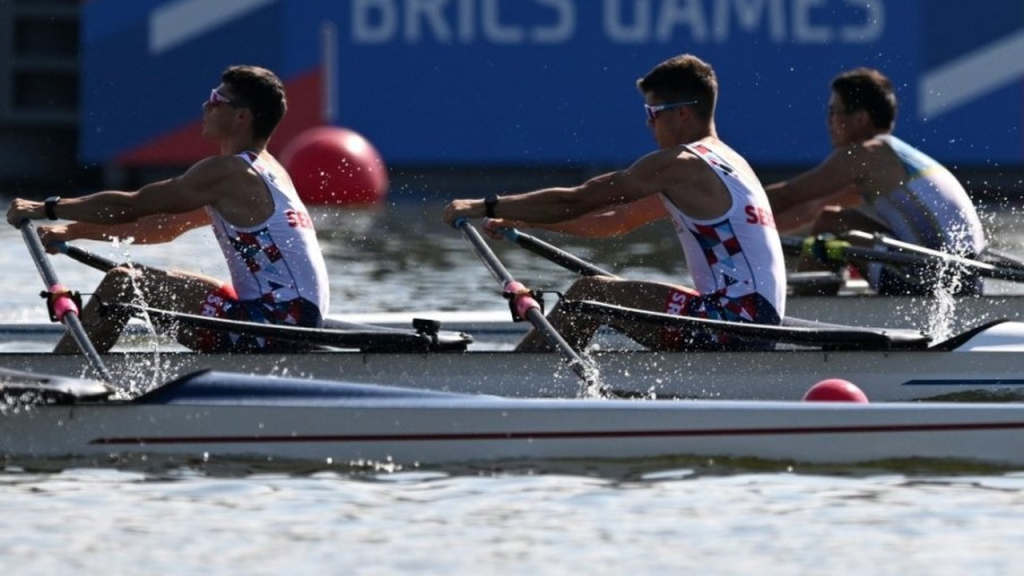
The Serbian double sculls on the course in Duisburg.
Lazar Živanović represented Serbia in the single sculls, finishing eighteenth in the most heavily contested event. In the single, a rower makes every technical and tactical decision alone.
The lightweight double sculls produced the only Serbian medal. Rajković and Ostojić reached the podium while the others got as far as the placement finals, so Serbia goes home with one medal and several completed races.
Matched rhythm brought the result
In double sculls each rower uses two oars and both apply power at the same moment. Uneven work pulls the boat off course and costs speed.
Rajković and Ostojić stayed in sync when the final quickened. Their blades entered the water cleanly during the closing push, so the boat held its speed between strokes.
The lightweight category also requires careful preparation before a race. Athletes respect the prescribed weight limit while preserving their strength, and the medal reflects both that preparation and the performance on the water.
| Rowers | Matija Rajković and Ognjen Ostojić |
|---|---|
| Medal | Bronze |
| Event | Lightweight double sculls |
| Competition | World Under-23 Rowing Championships |
The Serbian crew opened the race at a measured pace and stayed close enough to answer attacks from behind. That start kept energy in reserve for the last part.
The bronze belongs to the pair rather than to any single performance. Every change of rhythm needed agreement in the boat, and that teamwork kept Serbia in third.
Serbia protected third place in the finish
The under-23 championships gathered the leading rowing nations, so the Serbian crew measured itself against wide international competition. Germany and France finished ahead of it.
Rajković and Ostojić now share a world medal at under-23 level. Their double sculls ended behind Germany and France, holding on to third place in the closing sprint.
The bronze was Serbia’s best result in Duisburg. It came after several days of heats and finals, and the crew produced its best when the medals were being decided.
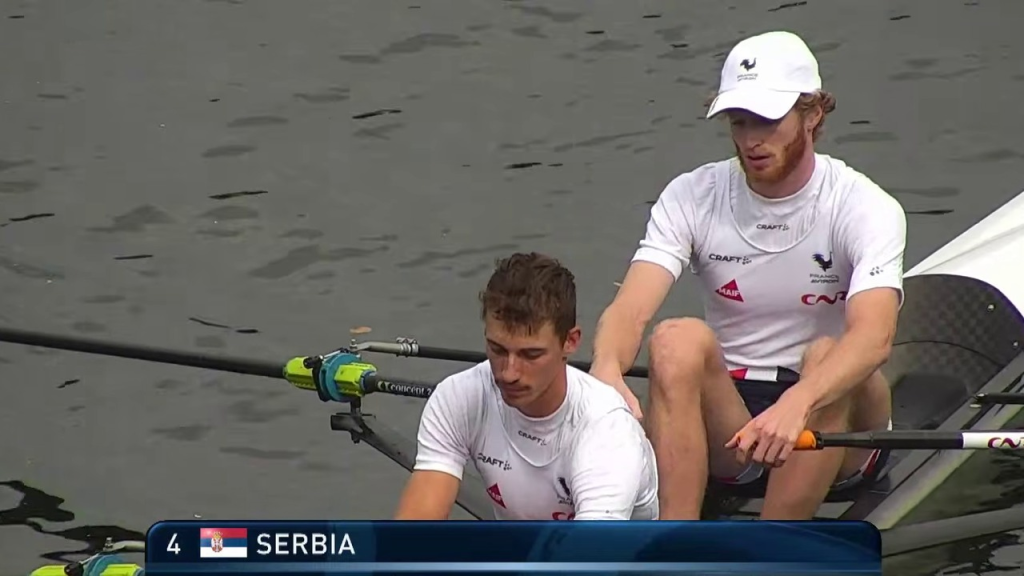
Rajković and Ostojić get ready for the final.
The other Serbian boats completed their programmes. Dedić and Luledžija came closest to another main final, while the four and the single brought experience in other events.
Serbia’s final tally in Duisburg is simple: Rajković and Ostojić won bronze in the lightweight double sculls, and a controlled final carried the Serbian flag to the podium.
Earlier races set up the medal fight
Crews reach the medal race through the earlier rounds, and every start supplies data on speed and technical balance. Rajković and Ostojić carried that work into the A final.
Between races they had to recover and stay within the prescribed weight. Food, water and rest support what happens in the boat, and all those details were part of the medal preparation.
The Duisburg course ran a packed schedule across several events, with crews moving between warm-up, start and recovery areas. The Serbian double got through that routine without any drop in quality.
The final called for a stronger finish than an ordinary placement race. Boats outside the medals had nothing to save and attacked early, but Serbia kept enough speed in reserve to respond.
Germany and France stayed ahead, yet the bronze was under threat. Rajković and Ostojić did not let their technique slip under that pressure, and clean strokes preserved the speed needed for third place.
The medal is another Serbian success in the younger rowing categories, won in the lightweight double sculls at a world championship. Rajković and Ostojić earned it against the best crews of their age.
The two rowers received their medals together after the final, with coaches and support staff joining them beside the course. The Serbian flag stood on the podium behind Germany and France.