
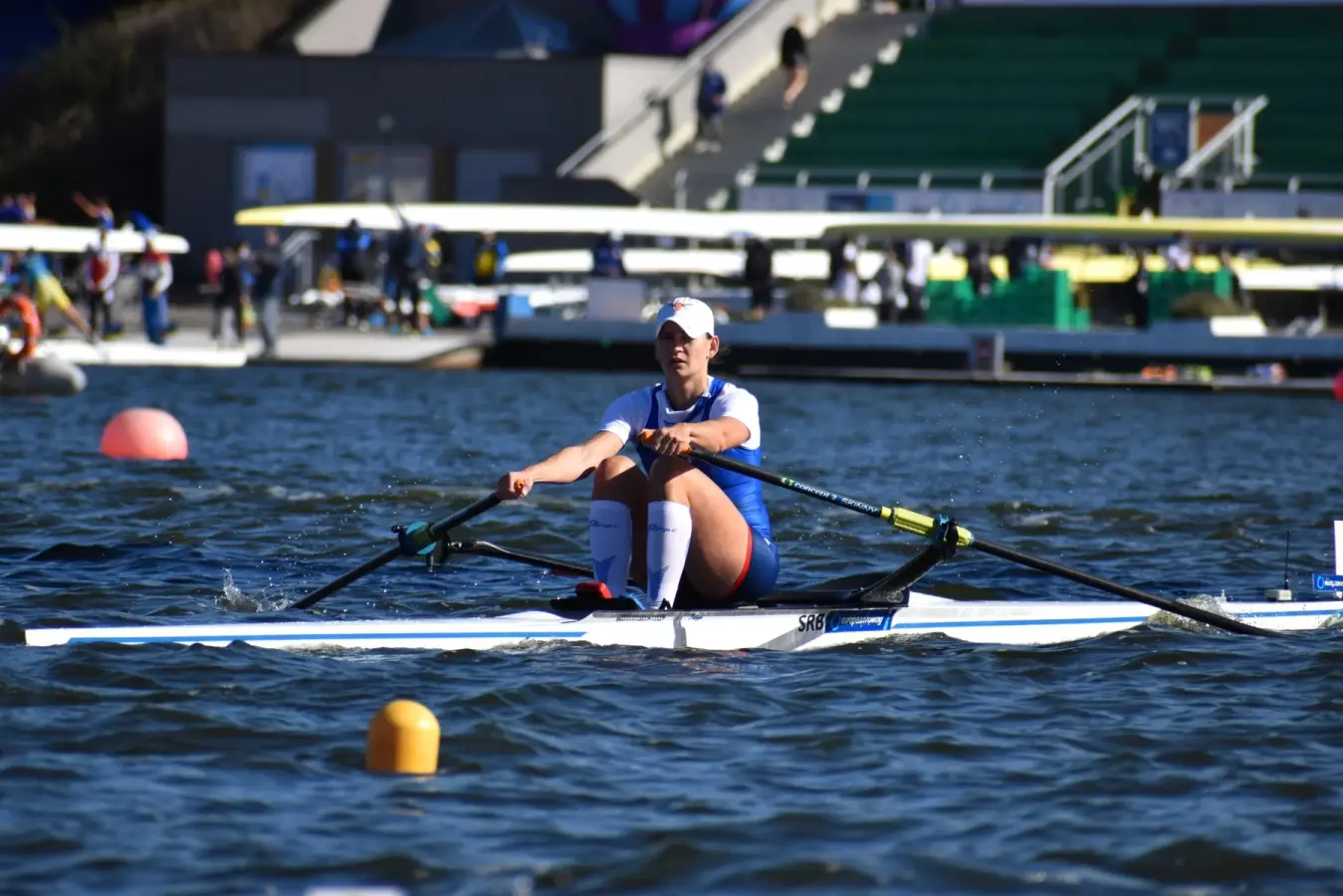
Jovana Arsić earned silver in the women’s single sculls at the Mediterranean Games. She crossed the line in the final in 8:03,87. Greece’s Evangelia Anastasiadou took gold in 7:52,30, and Slovenia’s Nina Kostanjšek secured bronze in 8:07,42.
Arsić steered her own boat from start to finish
In the single sculls, one rower is responsible for direction, rhythm and power from the first stroke to the finish. Arsić had no crewmate to correct an uneven stroke or signal a change of pace. Her time of 8:03,87 applies only to the final in Taranto and should not be compared with results from other regattas, where conditions, course and rivals all differ. What is confirmed is that this performance earned her second place at the Mediterranean Games.
The opening strokes set the pace of the race
A rower needs enough power at the start to get the boat moving, but a sprint that runs too long can drain the energy needed for the middle of the race. After a fast opening, Arsić had to find a rhythm she could hold. From the shore the boat still looks quick, so that transition is hard to spot. In a single scull every stroke links leg drive, body movement and the pull of the arms. A poor sequence wastes energy instead of moving the boat steadily towards the finish.
| Medal | Rower | Time |
|---|---|---|
| Gold | Evangelia Anastasiadou | 7:52,30 |
| Silver | Jovana Arsić | 8:03,87 |
| Bronze | Nina Kostanjšek | 8:07,42 |
The middle section demands patience and a precise line
Small course corrections cost time, particularly in a boat where the rower alone generates all the power. Arsić had to hold her lane and judge the pace of rivals she could not watch constantly. In the middle of a race, a few strokes that are too hard or too soft can upset the plan. A steady rhythm lets the boat keep its speed between strokes and saves energy for the final acceleration. Her time shows she kept control through this demanding stretch.
Official times confirm the medallists
Anastasiadou won in 7:52,30, Arsić was second in 8:03,87 and Kostanjšek third in 8:07,42. The Serbian rower finished 3,55 seconds ahead of the bronze medallist. The winner had opened a bigger gap earlier, while Arsić protected second place over the closing stages.
The final effort has to keep the shape of each stroke
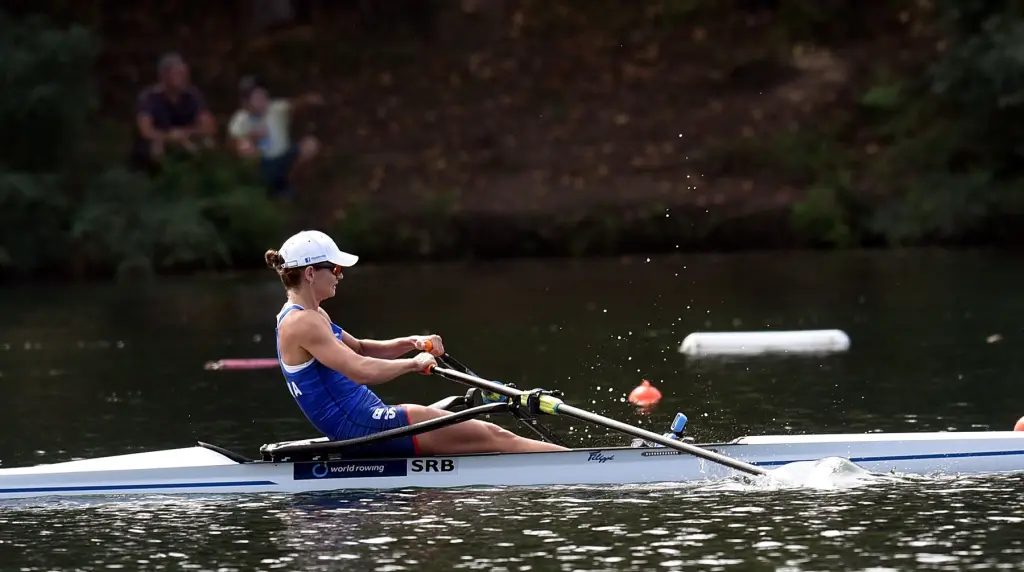
In the last metres a rower raises her stroke rate, but speed falls if the blade enters the water badly or the body opens too early. Arsić’s task was to accelerate without shortening the powerful part of the stroke. Fatigue makes coordination harder while the legs and back are under heavy load. Good enough technique let her stay ahead of Kostanjšek’s closing push and cross the line in second place.
The result gives coaches a new basis for analysis
Arsić has competed at major championships before, but this medal stands on its own. Earlier results show her experience, yet they cannot be added to the Taranto time or change where she finished. The Mediterranean final gives coaches fresh material to analyse her rhythm, starting speed and the final quarter of the course. Footage and split times can show where Anastasiadou pulled ahead and how Arsić kept her advantage over Kostanjšek.
Jovana finished the final in second place
Arsić completed the final with a confirmed silver medal. Her coaching team can now review her start, her rhythm through the middle of the course and her closing acceleration. That data will shape the coming training sessions, while the Taranto result remains an important international success for the Serbian rower.
Breathing has to follow the rhythm of the stroke
In a long race, breathing must keep pace with the effort without disturbing body position. If the upper body lifts too early, the blade stays in the water for less time and the boat loses speed. Arsić therefore had to match the work of her legs, the action of her trunk and the return to the starting position. In the closing stages the stroke rate rises, but the sequence of movements stays the same. Holding that pattern helped her keep second place when fatigue was at its height.
The silver medal confirms a strong finish
Arsić crossed the line behind Anastasiadou and ahead of Kostanjšek. Her gap to the winner shows where there is room to improve, while her lead over the third-placed rower confirms that she held second place. The medal is the product of work across the whole course: a quick start, a stable middle section and accurate strokes in the finish under maximum fatigue.