
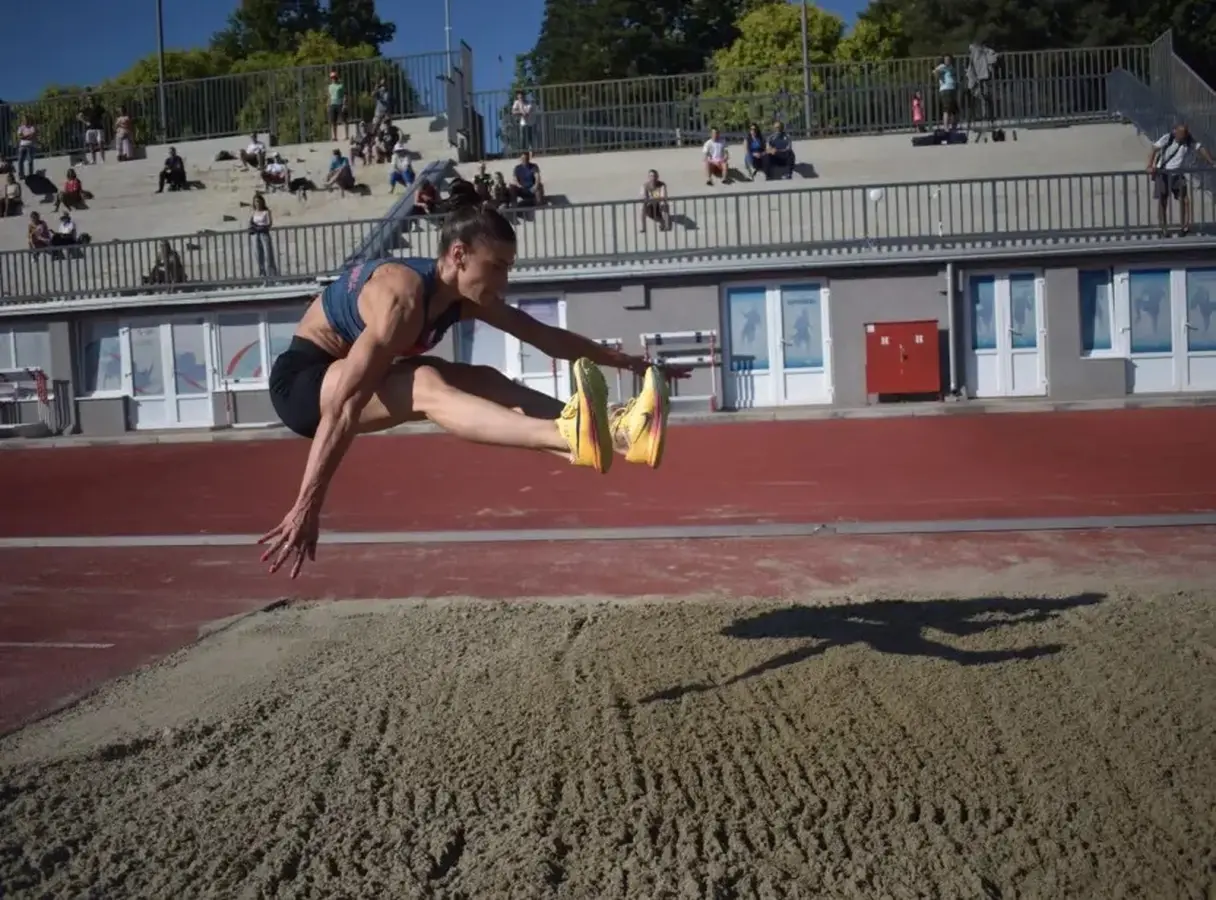
Serbia won two medals in the women’s triple jump at the Mediterranean Games in Taranto. Ivana Španović took second place in the final with 14.09 metres, and Aleksandrija Mitrović was third with 13.69 metres. The two athletes reached the same podium on the strength of two separate best jumps.
Španović turned experience into a consistent result
The triple jump demands a precise rhythm through the hop, the step and the final jump. If one phase lasts too long, the next contact weakens and distance is lost. Španović recorded 14.09 metres, enough for the silver medal. That mark belongs to the Taranto final and should not be confused with her earlier results in the long jump.
Mitrović reached bronze with her own best jump
Aleksandrija Mitrović leapt 13.69 metres to take third place. Her bronze is an individual result, not part of a shared team score. She shared the podium with Španović, but the two athletes earned their places with different best jumps. Mitrović’s mark completed Serbia’s double success in the final.
| Athlete | Medal | Best jump |
|---|---|---|
| Ivana Španović | Silver | 14.09 metres |
| Aleksandrija Mitrović | Bronze | 13.69 metres |
Two athletes among the top three show the depth of the squad
A double podium means Serbia had two competitors capable of a medal-winning mark in the same final. That speaks to the quality of preparation and experience, but a single competition is not proof of lasting dominance. Each athlete’s form changes from one appearance to the next. What this final confirms is that Španović and Mitrović took second and third on the same day.
The best valid jumps decided the medals
The final placings are based on each athlete’s longest legal jump. Španović’s 14.09 metres earned second place, while Mitrović’s 13.69 metres put her third. Shorter attempts helped them judge the run-up and rhythm, but they did not replace the best distances. Two separate results therefore delivered two medals on the same podium.
Three linked contacts leave little room for error
An athlete must keep speed through three connected phases and stay within the rules while doing so. A poor first landing alters body position and makes the next step harder. A medal jump therefore depends on the whole sequence, not only the final take-off. Španović and Mitrović produced valid sequences that gave them their best distances and their places on the podium.
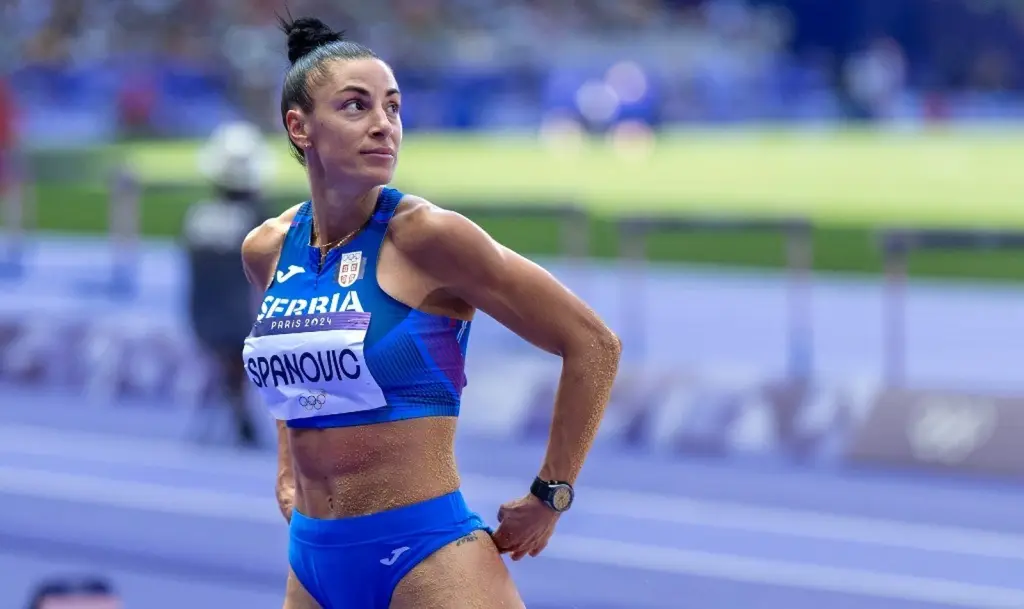
Silver and bronze belong to a completed final
The competition in Taranto is over. Španović finished second and Mitrović third once every attempt had been completed and the distances confirmed. There is no further jump or later phase left in this final. Upcoming tournaments will begin with a new order, while the Mediterranean Games podium is officially closed.
Mitrović’s bronze is a second standout achievement
Španović came into the final with greater international experience, but Mitrović secured her place on the podium with her own 13.69 metre jump. Serbia therefore collected two medals through two athletes and two valid distances. The shared national team links their results, while the official standings record each competitor’s individual contribution.
Preparation continues between attempts
Athletes do not wait passively while others jump. They review the previous attempt, keep their bodies warm and choose one clear correction for the next run-up. Too many new instructions can disrupt rhythm. Španović and Mitrović had to control the time between attempts as carefully as the three contacts within a jump. Their best distances confirm that each found the right sequence for a medal. During that period a coach may point to the take-off position or the rhythm of the run-up, but the athlete takes only a short and understandable message to the runway. This keeps the movement automatic under the pressure of a final. A calm return to the runway helps the next attempt begin without unnecessary haste.
The final standings keep the exact order of results
Ivana Španović’s jump of 14.09 metres was longer than Aleksandrija Mitrović’s 13.69 metres. That difference explains silver and bronze without diminishing either achievement. Both jumps were valid, and both athletes finished among the top three in the same final.