
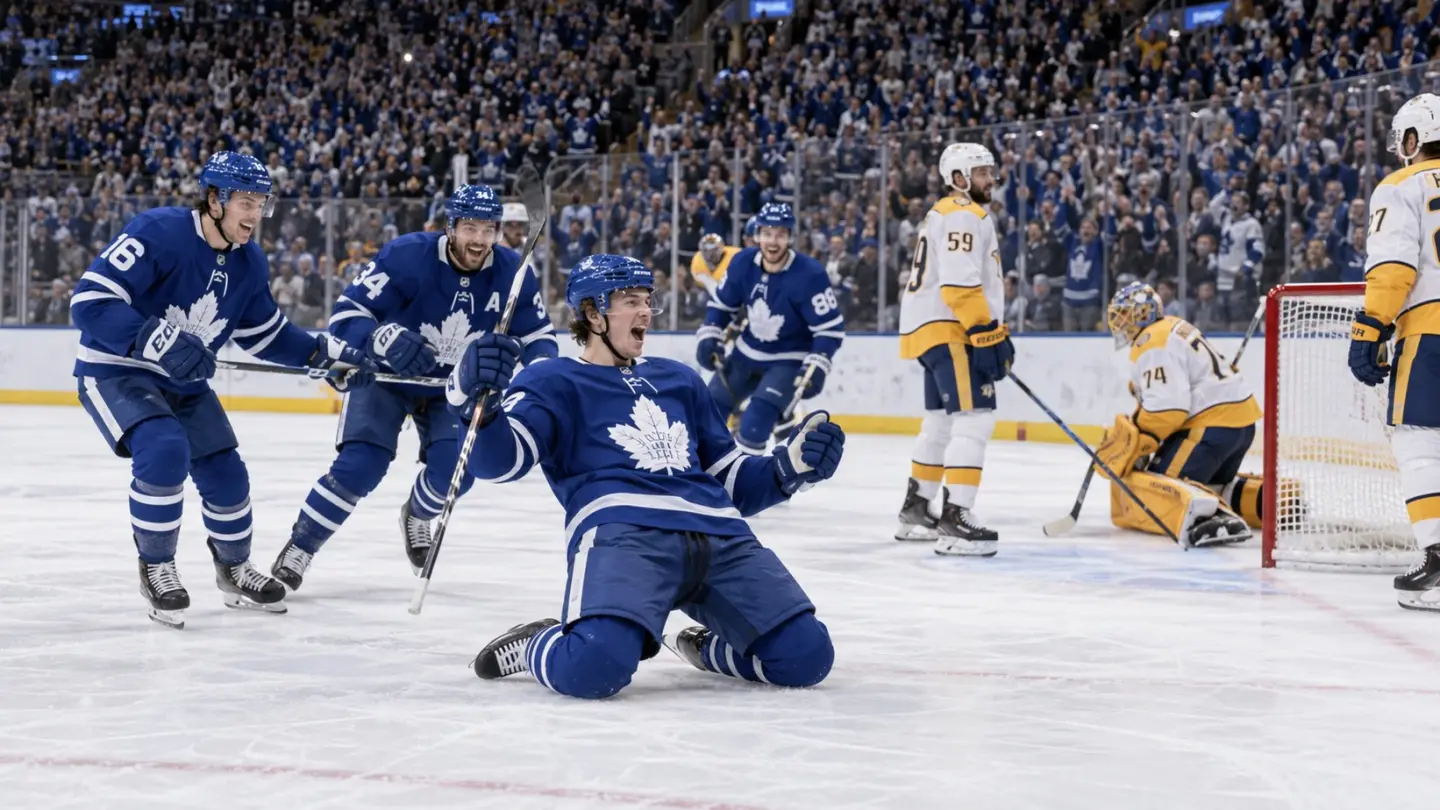
Gavin McKenna scored his first NHL goal and added his first assist as the Toronto Maple Leafs beat the Nashville Predators 5-4 after overtime. The 2026 first overall pick had gone three games without a point, then recorded both of his in the second period. Auston Matthews netted the decisive goal 14 seconds before the end of overtime and finished the night with four points.
McKenna opened his account with an assist to John Tavares roughly five minutes into the second period. About ten minutes later he took a pass from Matthews and rifled a precise shot into the top corner to cut Nashville’s lead to 4-3. The two plays carry different weight: the first shows him reading how the attack is developing, the second shows he can finish a chance himself under heavy pressure.
Toronto had to climb back from a serious deficit, so McKenna did not get his first point in a quiet game. That makes his goal more significant, since it kept the team within reach before the third period. The rookie became the youngest Toronto player to record a first NHL point since Drake Berehovsky in 1990, but more important is how well he fitted in alongside experienced centres.
Two points in the second period freed the eighteen-year-old rookie
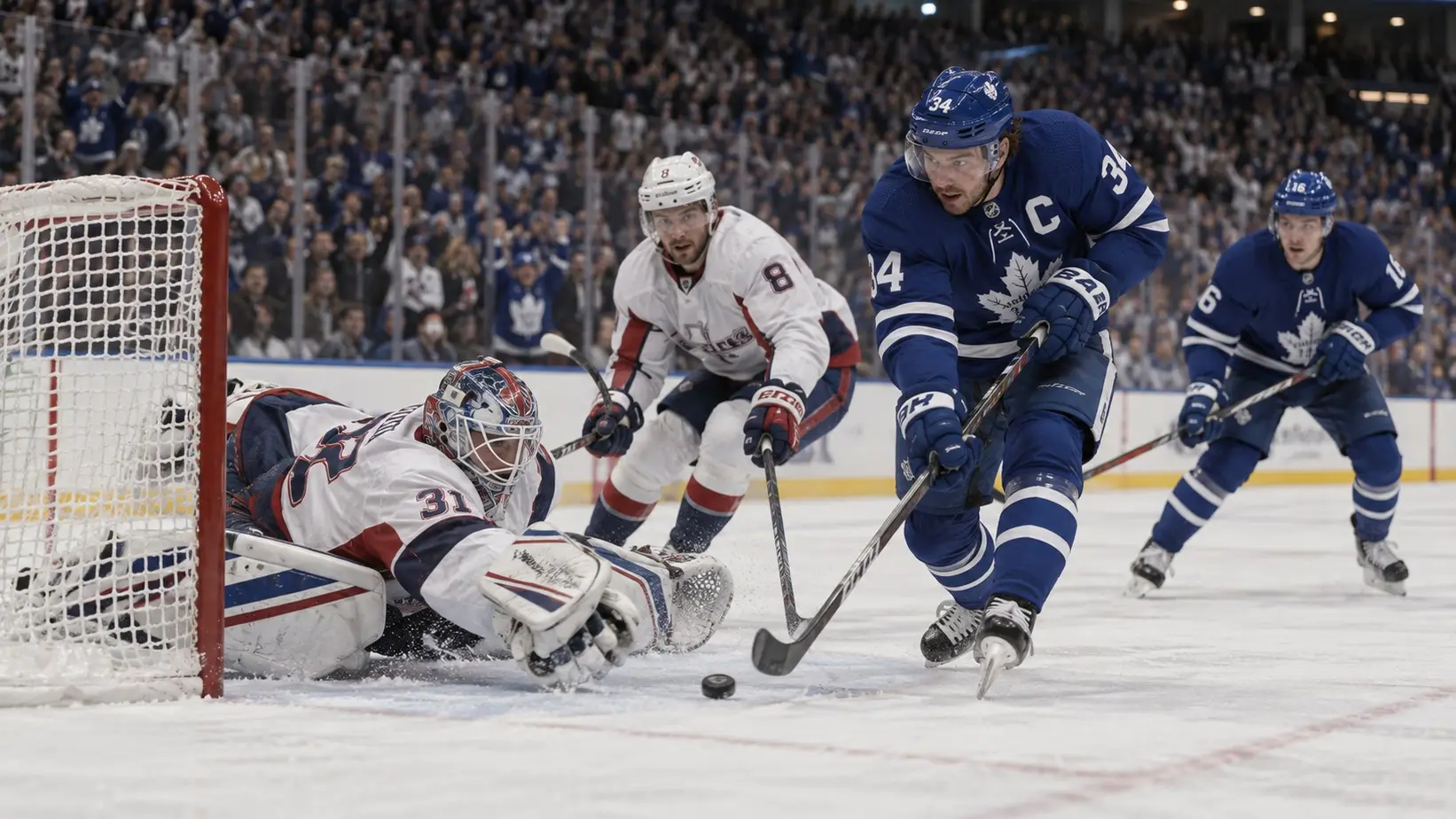
Matthews had three assists alongside his winning goal. In overtime he followed up William Nylander’s shot and picked up a rebound near the right faceoff circle. That sequence shows why a three-on-three finish demands constant movement after the first attempt. Nashville stopped the opening shot but did not shut down the player who followed the puck.
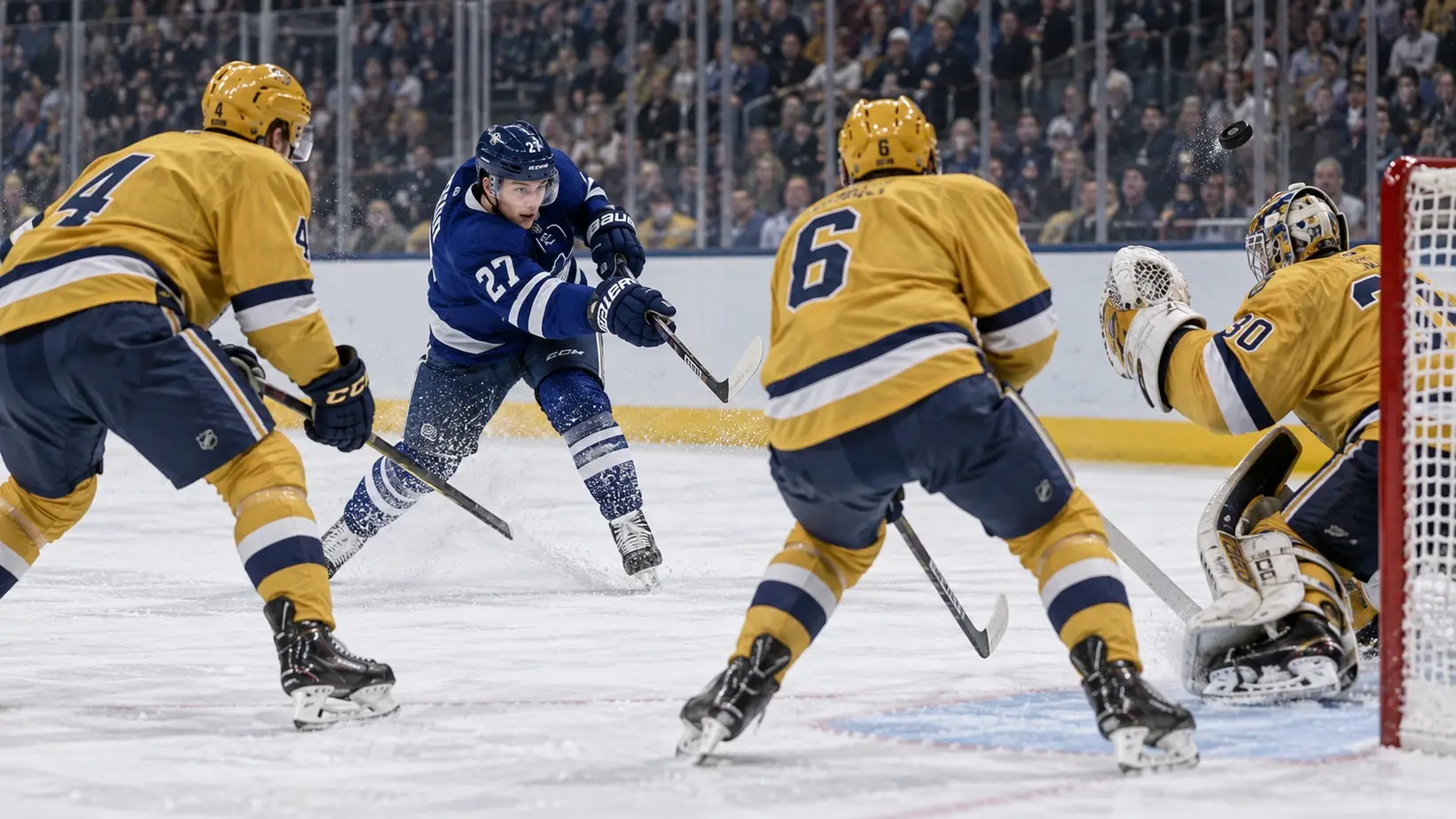
Nylander added a goal and two assists, and Jake Roslovic had a goal and an assist. The spread of scoring allowed Toronto to come back without relying on a single line. Still, four goals conceded remain a warning. The team opened all four of its games with a one-goal margin, which speaks to its fight but also to a lack of calm control.
Anthony Stolarz made 21 saves. The save count alone does not tell the full story of his game, because it is important to separate shots from the point from chances in close range. Toronto will want fewer situations in which the goaltender has to react after a cross-ice pass, particularly when the defence is left caught between covering the shooter and closing down the rebound.
Matthews’s four points turned the comeback into a win
For McKenna, the next step is not to immediately repeat two points but to sustain the number of quality touches. It is worth tracking how often he enters the attacking zone with control of the puck, finds a teammate through the middle and reaches a shot without losing his balance. Such indicators are more stable than a short run of goals and better describe how he is adapting to NHL speed.
Toronto needs to analyse why Nashville reached four goals before the final turnaround. If the problem was turnovers at the blue line, the answer is a steadier third player; if the defence was losing battles in front of the net, a tougher interior position is required. The comeback is valuable, but leaning on it constantly wears down the main players over the long term.
The evening brought McKenna an emotional breakthrough and Toronto two important points. His first goal and assist eased the pressure on the eighteen-year-old first pick, while Matthews once again decided the finish. The most useful next step would be for the team to turn its leaders’ experience into a better start, and to give McKenna room to develop without every game being expected to be historic.
Nashville will take from the defeat the way it let the lead slip and failed to close out the overtime power play. Toronto, meanwhile, must repeat the energy of its comeback without waiting for another deficit. If McKenna keeps earning minutes alongside the leading players, his decisions without the puck will be just as important as his first goal and assist.
McKenna will now draw closer attention from opposing defences, so he must make use of the space that opens up for his teammates. A quick pass after the first pressure can be a better decision than trying to repeat his first goal straight away. His development shows in how he reacts once a rival adjusts its defence.