
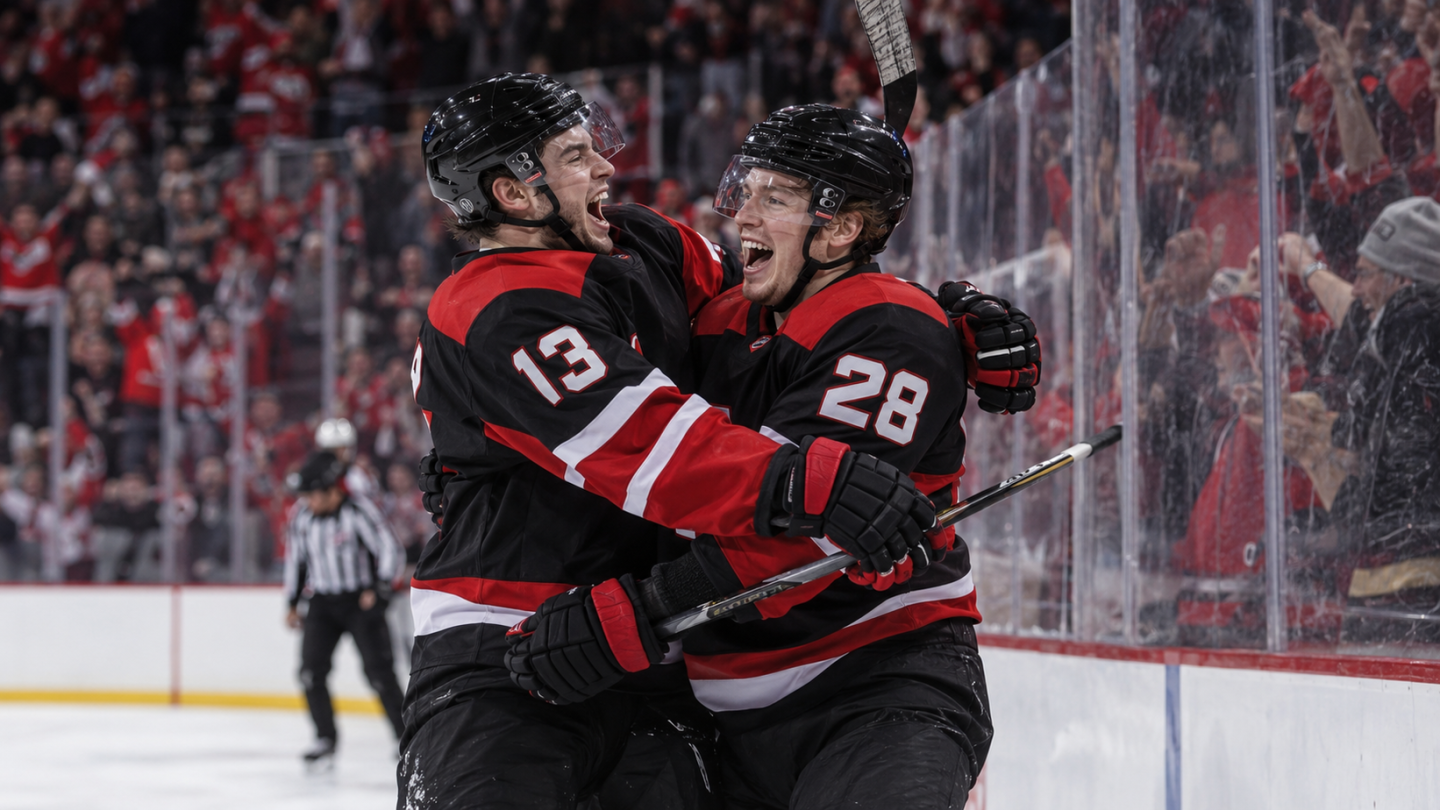
The New Jersey Devils opened their season with a 3-2 overtime win over the Philadelphia Flyers. Jack Hughes scored the decisive goal at 3:23 of extra time, after a quick give-and-go with Jesper Bratt left him with the puck in open space in front of the net.
Luke Hughes levelled the score at 2-2 in the third period with an accurate shot from the top of the circles. His goal gave the home side fresh momentum after a spell in which Philadelphia had been closing off the middle of the ice. Between them, the brothers were directly involved in the two most important moments of the season’s opening night.
For Jack, it was his tenth overtime goal in his NHL career. Only Patrik Elias, with 16, has more in franchise history. New Jersey won a game it did not fully control throughout, but it kept its discipline long enough to get its most creative players into a position to decide it.
A quick exchange between Bratt and Jack Hughes opened up the empty space
The winning move worked because Jack first sent a firm pass towards Bratt, then kept moving straight away. Bratt settled the puck and returned it without a further turn, before the defence could close the lane. In a three-on-three game, a single second like that changes the whole balance of space.
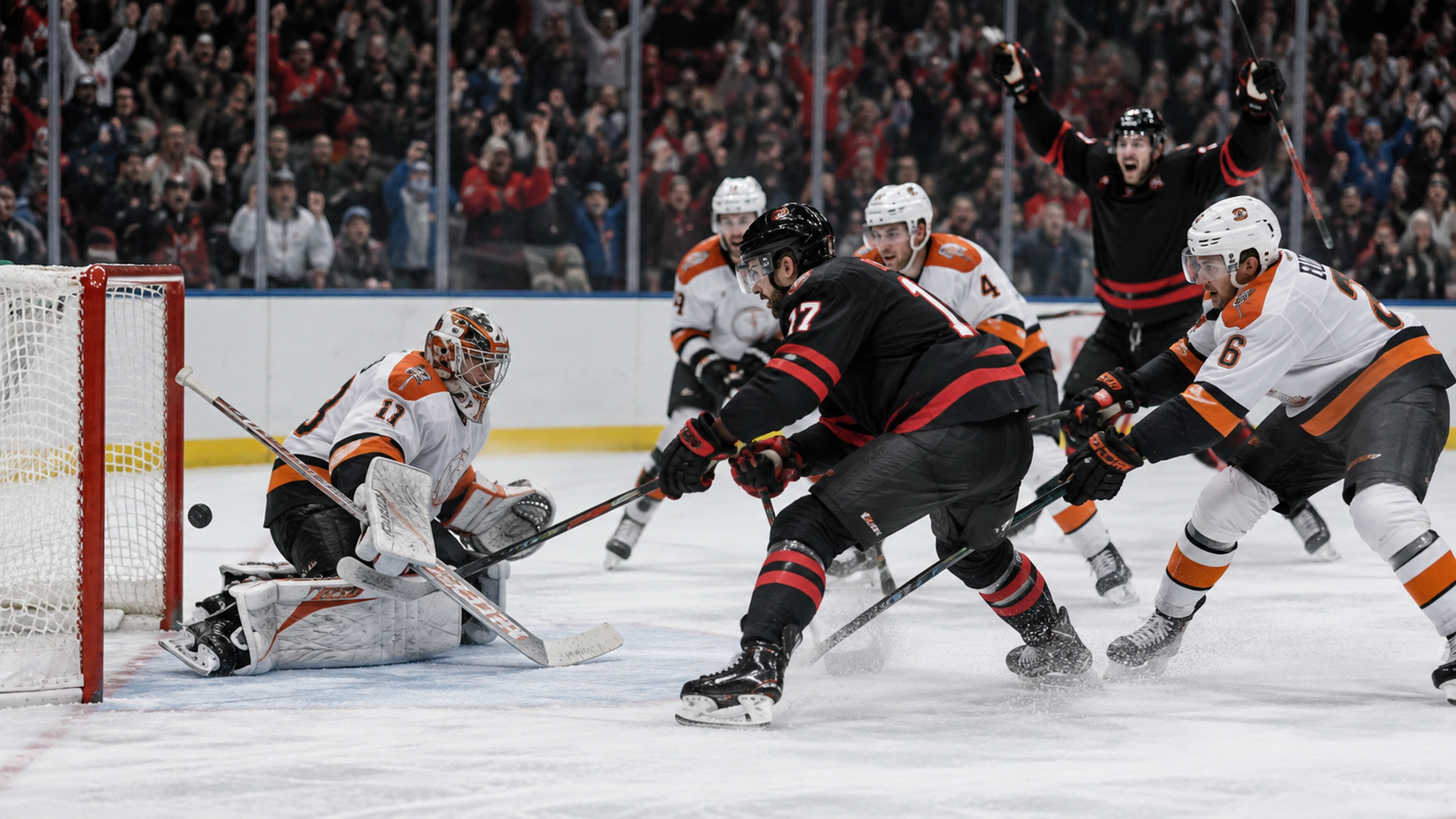
Luke’s goal was the product of patience at the blue line. Rather than firing quickly through traffic, he waited for the screen to shift and stepped a few metres deeper. The change of angle cut down the goalkeeper’s reaction time and showed why a defenceman who can carry the puck brings extra value.
Philadelphia will be pleased with how it defended the central corridor for most of the game. Wingers dropped back deep and the defencemen did not chase contact outside the structure. The problem came when the Devils quickened the second pass, because the handover between zones was then running late.
The win shows the quality, but also room for improvement
It matters for New Jersey that the attack does not become dependent on the Hughes brothers. A long season needs points from the third and fourth lines, especially on nights when opponents shut down the main carriers. The coaching staff will want more traffic in front of the net and more won rebounds after shots from the defence.
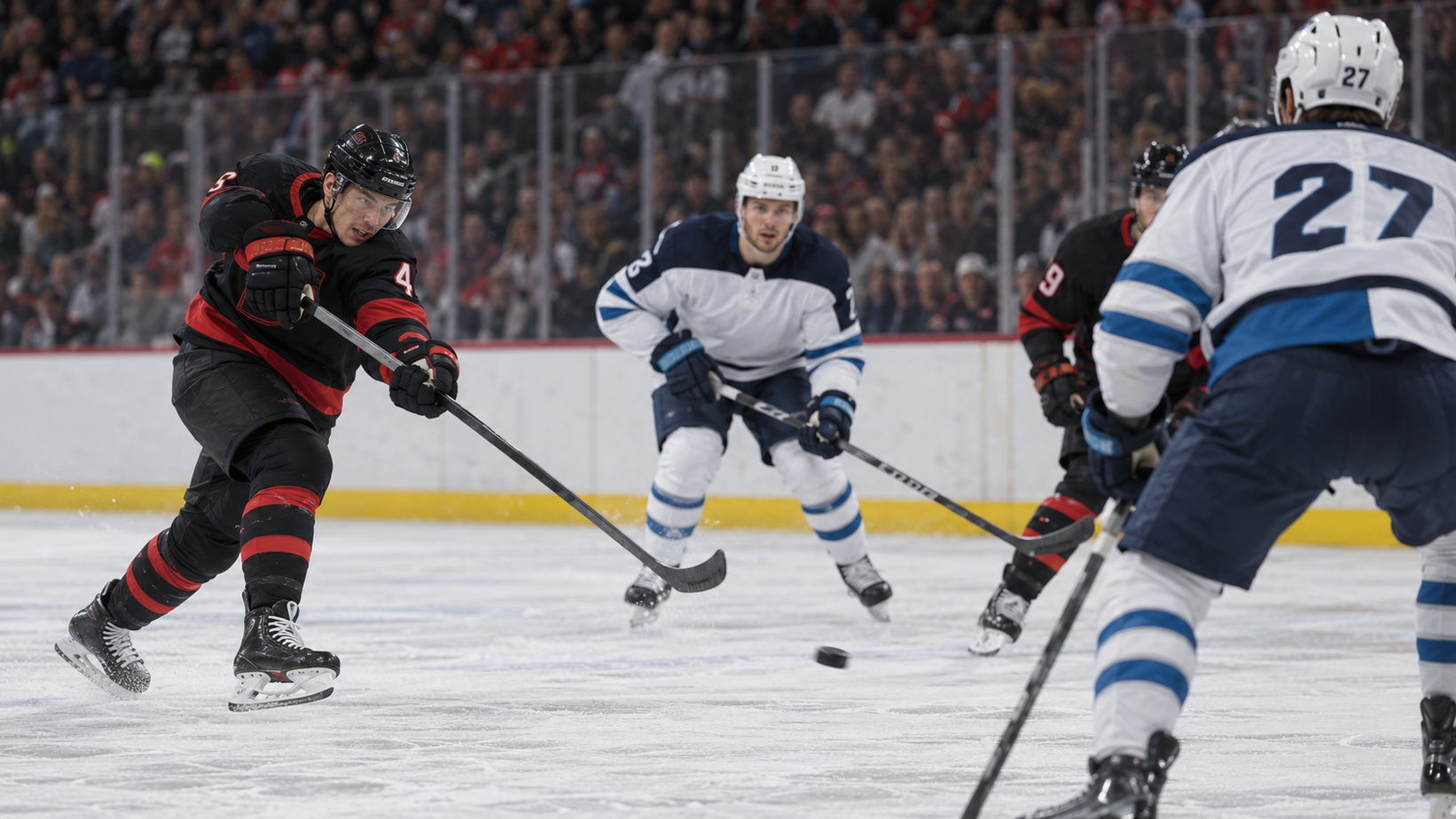
Opening games often bring timing errors, so the result counts for more than a perfect impression. The Devils responded in the third period and did not lose patience after missed chances. Character of that kind can bring points early while the lines are still settling in.
The next test will be sustaining the intensity without leaning on overtime. Jack and Luke have already shown they can decide a game, but the staff now has to build a steadier base around them. If the defence moves the puck out faster, the forwards will get more chances before the opponent sets up.
After the game, the analytics will track zone entries with puck control, the number of shots from central areas and time spent under pressure. If the Devils create chances only when Hughes and Bratt are on the ice together, opponents will find it easier to adjust their match-ups. More even production through the other lines would ease the load on the stars and give the coach more options for pairings, particularly during a run of games with little rest. The next outing or the official record will show how far this conclusion holds under new pressure. The numbers should be read together with the quality of the opponent, the conditions and the decisions taken in key moments. It is important to separate the current result from the longer trend: one success confirms good preparation, but only repetition shows stability. The coaching staff should therefore measure a few clear indicators, compare them with the previous outing, and change only what has proven to be a weak point. That approach protects confidence while still leaving room to improve. The reaction of direct rivals will also matter, since preparation changes as soon as an opponent recognises a successful pattern. For that reason the analysis should also cover situations in which the original plan did not work. The best performance comes when a team or athlete keeps its core strength and makes a small, well-timed adjustment during the event.