
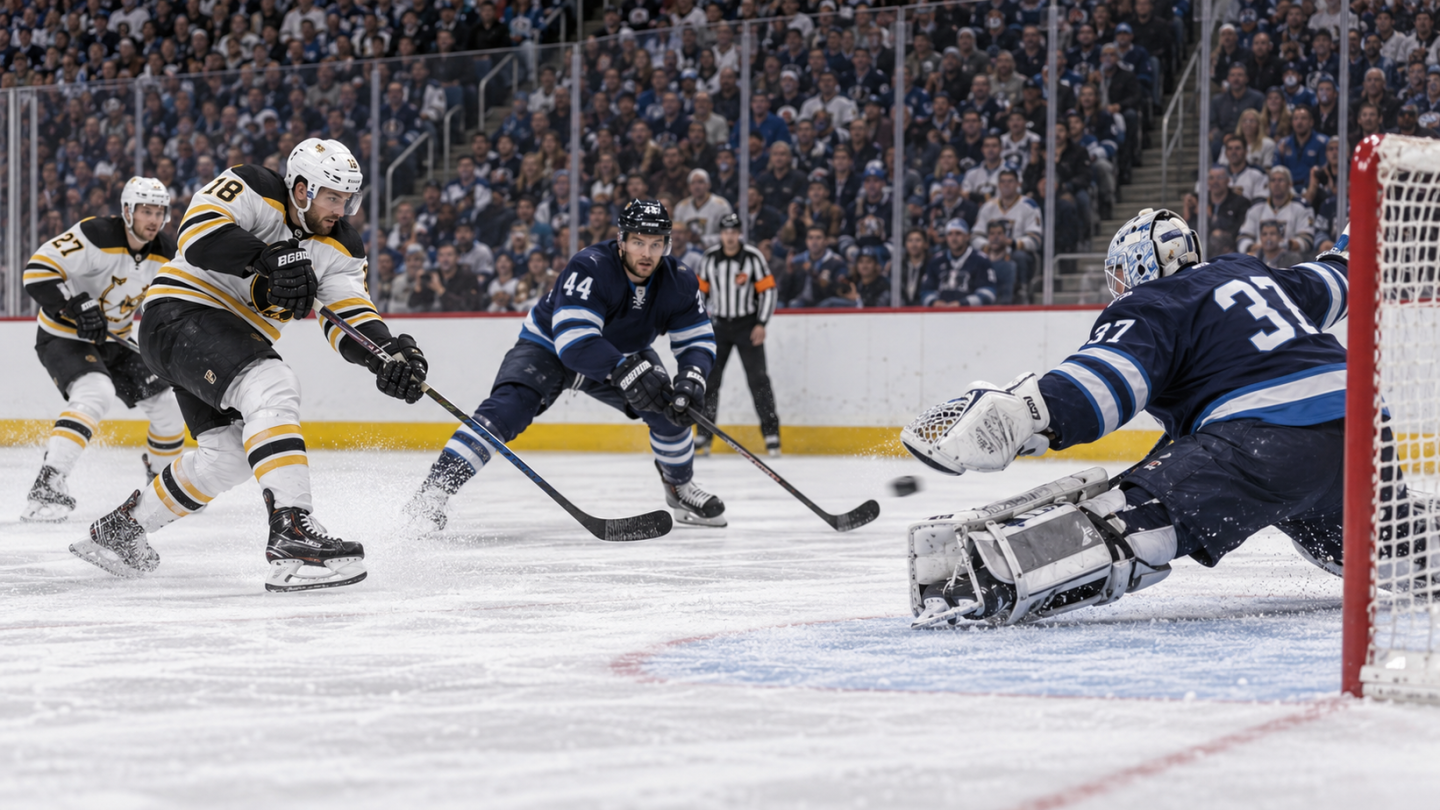
The Boston Bruins beat the Winnipeg Jets 4:3 in overtime, having levelled the score only one minute and 38 seconds before the end of the third period. Elias Lindholm scored the equaliser for 3:3, and Jay-Jay Peterka settled the game after 3:21 of extra time. Boston survived a closing stretch in which the home side came very close to an opening-night win in front of their own crowd.
Rookie James Hagens scored his first NHL goal and gave Boston a valuable contribution from outside the top line. On the other side, Kyle Connor found the net in his ninth straight season opener, extending a remarkable personal run. Goaltender Stuart Skinner stopped 26 shots in his Boston debut, and his steadiness mattered most during spells when Winnipeg controlled the centre of the ice.
Lindholm saved the game, Peterka finished the comeback
The equaliser came from persistence rather than a complicated play. Boston kept the puck in the zone, worked it back towards the blue line and created traffic in front of the net. In that kind of situation the goaltender sees the shot late, and any deflection stays dangerous. Lindholm found space just as Winnipeg were trying simply to clear the puck, which shows how hard it is to protect a narrow lead without applying active pressure.

Three-on-three overtime rewards patient possession and a well-timed change of direction. Peterka did not attack the first semi-open chance; he waited until the opposing structure spread out. A single change of angle then created enough room for the finish. Boston understood well that a lost puck in overtime often means a direct counter, so they raised the risk only once they had a clear numerical or positional advantage.
Hagens’s first goal adds depth to Boston
Hagens’s first goal carries wider value than a single point. The young forward now has confirmation that his rhythm can work against NHL defences, while the coach gains another option for distributing ice time. It is important that his development does not rest on goals alone. Pressure on the forecheck, responsible retreats and clean entries into the zone decide whether he stays reliable even when the final shot does not go in.
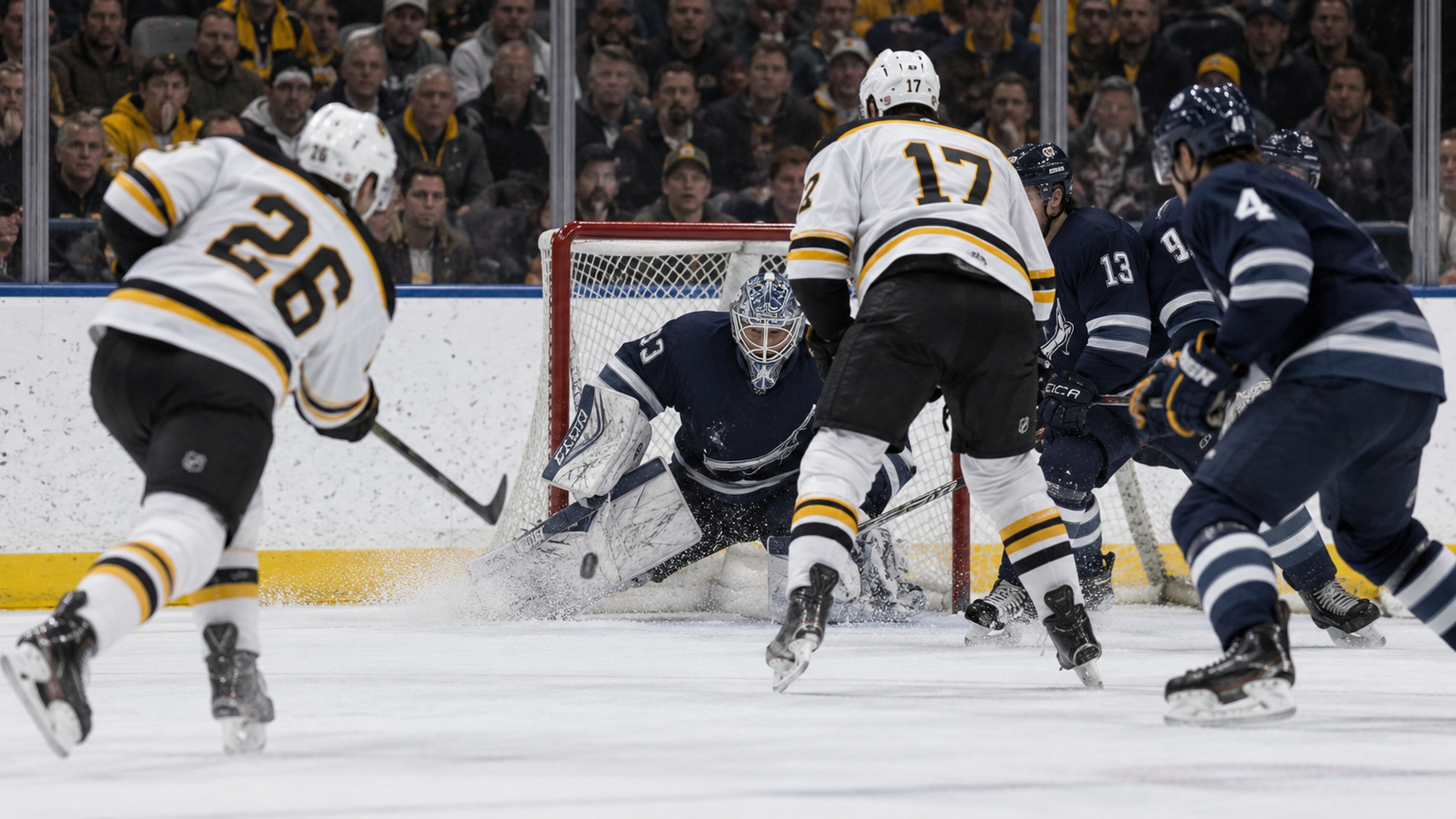
Winnipeg may regret the last two minutes, but their attack produced enough for the game to remain a positive sign. The fix concerns leaving the zone under pressure and managing the puck while holding a lead. Boston, for their part, must reduce the periods in which they rely on Skinner and a late comeback. The 4:3 win shows character and depth, but a more sustainable model will require earlier control of centre ice and fewer quality shots conceded.
Boston’s coach will want Hagens’s success not to raise expectations faster than his role. Rookies need stable linemates, clear tasks without the puck and enough offensive chances to build confidence. Peterka’s winning goal may strengthen his place in extra time, where speed and possession carry extra value. Even so, choosing three-on-three personnel should also depend on rest from the previous shift. Winnipeg will take from the defeat the lesson that the final minutes demand active exits rather than every player retreating around the net. One controlled carry-out can burn time and relieve pressure better than a random clearance. Both teams have positives to build on, but Boston take an extra point because they kept a clearer plan in the key moments.
The number of battles won along the boards will show which side can keep the puck longer without taking an open risk.
Special teams could decide the next meeting even if they did not settle this one. Boston should review their entries into the zone with a man advantage, while Winnipeg need to find a way out of pressure when killing with four skaters. One successful power-play set often lifts the bench and breaks an opponent’s surge. In a tight game like this, a detail away from five-on-five can remove the need for a late equaliser or overtime.