
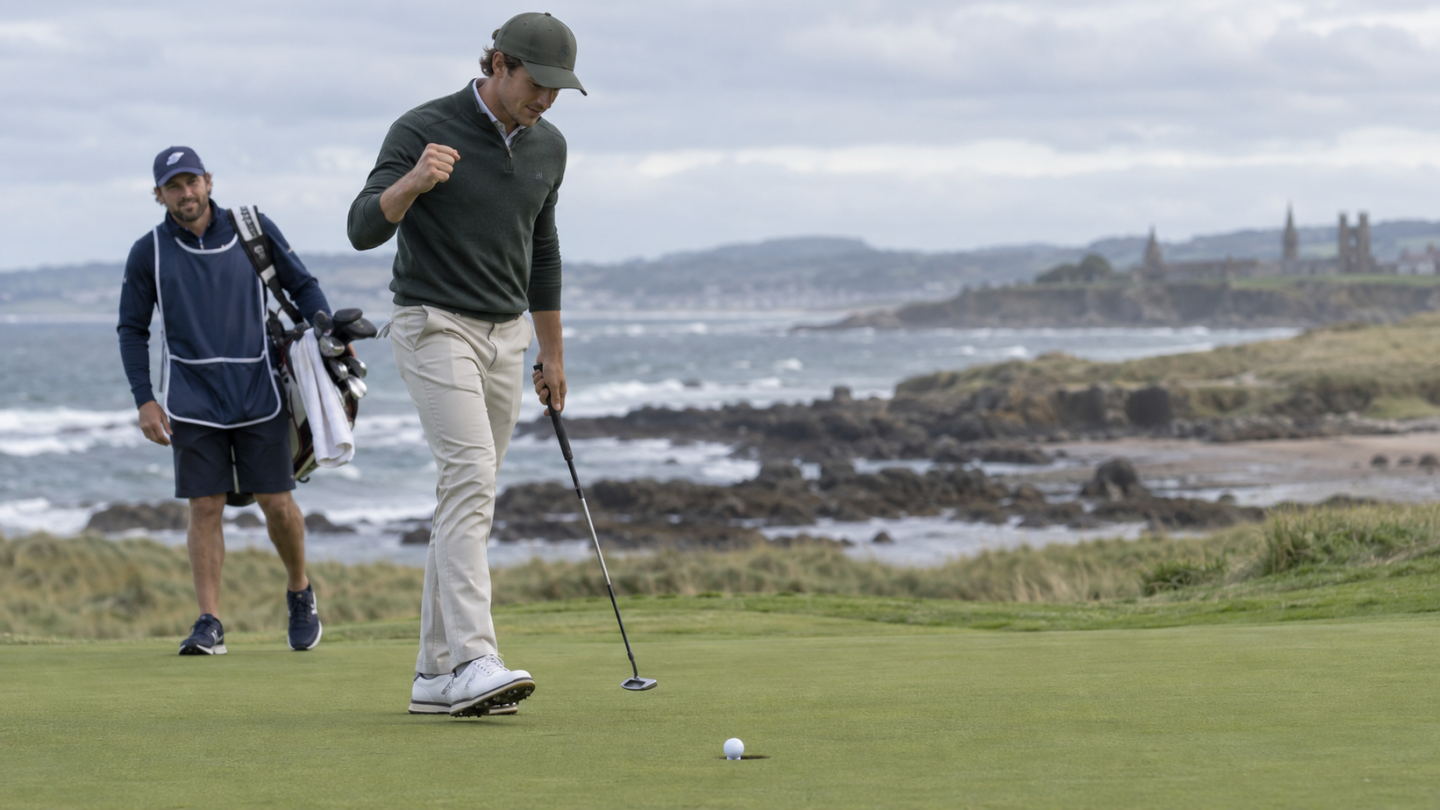
Casey Jarvis moved to the top of the leaderboard at the halfway stage of the Alfred Dunhill Links Championship after a 67 at Kingsbarns. The South African finished with a birdie on his final hole to reach 11 under par, or 133 strokes through 36 holes. That gives him a one-shot cushion, and the two-time DP World Tour winner this season now has a real chance at a third title.
Jarvis opened with a 66 and kept up his aggressive approach without making many mistakes. The event is played across three different links courses, so the same total does not always mean the same level of difficulty. The wind, pin positions and firmness of the greens shift over the course of the day. The true picture of the contenders will only become clear once the leading players finish their rotation and move on to the final round at Old Course.
A closing birdie turned a solid round into a solo lead
The late birdie showed good judgement, as Jarvis avoided trying to force an impossible shot with one swing. Two controlled approaches to the green were enough to give him a good look and take the top spot. On links ground, aggression works best when it is aimed at the wider part of the green and a favourable angle for the next shot. A direct attack at the flag over a bunker often carries more risk than real reward.
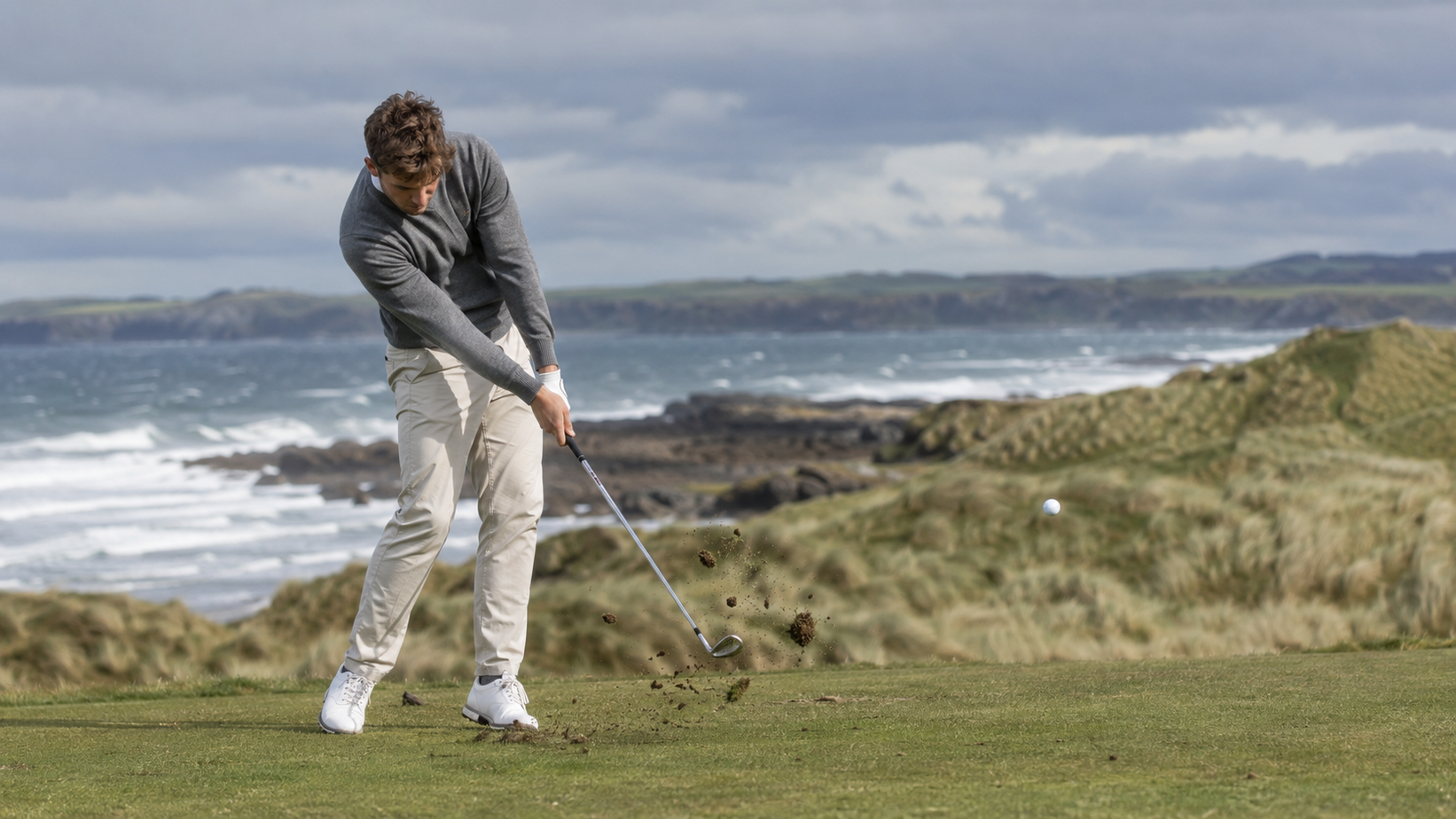
His biggest task in the third round will be not to protect a one-shot lead too early. With half the tournament still to play, rivals have enough time to put together a big run, and the wind can change the difficulty of the same hole within minutes. It is more useful to keep the same club selection and targets that delivered the 66 and 67. Changing the plan just because of his place on the board often creates hesitation in the swing.
Rotating courses rule out judging the field on scores alone
The chase for a third title this season brings extra attention, but it also shows that Jarvis already knows how to handle final-day pressure. Still, the pro-am format has a different rhythm from a regular tournament: long waits and changing partners can break concentration. A clear routine before every shot helps a professional separate his own score from the events around him. In the wind, it is especially important to accept that a good strike will sometimes not finish close to the hole.

A one-shot lead leaves little room for calculation, but it gives Jarvis confirmation that he has adapted well to the first two courses. His next step is to control distance when conditions change and avoid piling up big numbers on a single hole. If he stays patient on the tougher stretches, birdie chances will come on the par fives and the shorter par fours. Only the player who keeps that discipline through all three links rounds will take the title.
Jarvis’s team will pay more attention to the wind forecast than to the leaderboard before play resumes. Practice time on the range should mirror the conditions he will face, rather than serve only as a high volume of shots. A few precise low-flight tests and controlled spin are worth more than a change to the whole technique. On links courses a player has to accept the ball bouncing and use the contours of the ground, especially when a direct route to the flag carries a bunker. If Jarvis stays among the leaders through to Old Course, the pressure from the crowd and the visibility of the scores will grow. At that point, his routine between shots will be his best protection. Two titles this season show he can close out a tournament; the Dunhill Links will test whether he can do it across three courses, changing wind and the unusual rhythm of a pro-am event.
The pro-am leaderboard must not distract Jarvis from his individual plan. The professional and his partners share the event, but the shots for an individual title demand separate focus. His caddie will therefore keep returning attention to the target, the wind and where misses are finishing. If the player starts reacting to the scores of the group ahead or the noise around the green, he loses the routine that carried him to the lead. Calm communication between shots saves energy for the final nine holes.