
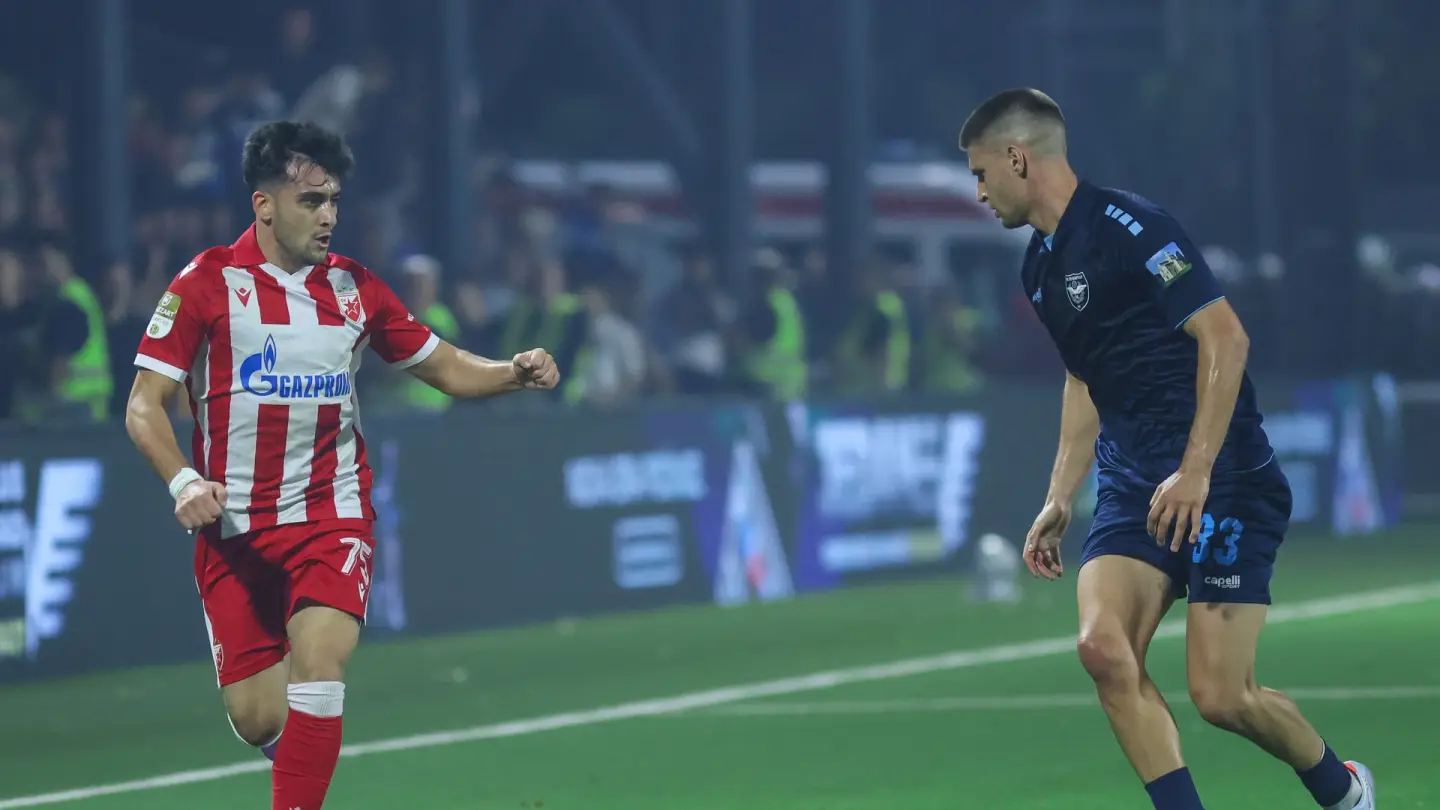
In Pančevo, Crvena zvezda beat FK Zeleznicar 2:1 in a game where patience and control counted for more than relentless pressure on goal. Miloš Veljković put the visitors ahead, Nikola Milikić levelled before the interval, and Loizos Loizu completed the decisive move near the end. This is a match report, not a preview, since the game is over. What matters is how Zvezda restored its balance and found one more clean chance in a tense final stretch. A finish like this rewards a side that did not lose its shape after conceding. The win is therefore useful as an example of how calm possession, timely substitutions and one accurate final decision can turn a difficult match around.
Veljković opened the scoring early
Miloš Veljković scored the first goal and rewarded the visitors for a calm start. The lead let Zvezda manage the space without forcing every attack through the middle.
An early goal brings security, but it can also reduce the intensity of pressing. That is why it mattered to keep the gap between midfield and defence short. After taking the lead, Zvezda had to avoid pulling its midfield too close to its back line. The side kept enough players behind the ball but still had an outlet for the next attack. That shape cuts down on long runs back and keeps control when the home side tries to respond.
FK Zeleznicar made the most of the end of the first half
Nikola Milikić equalised just before the break and changed the course of the match. The home side showed it could punish a move that Zvezda had not fully closed down.
Conceding at that moment can easily cause unnecessary rushing at the start of the second half. The reds had to restore calm possession, win the second balls and hold the opponent back for longer. The equaliser showed that possession alone is not enough if the second ball stays with the opponent. Zvezda had to close the space in front of the penalty area more quickly and divide responsibility more clearly after a rebound. It is a concrete detail the coaching staff can work on in training.
| Turning point | Result |
|---|---|
| Veljković’s goal | Zvezda controlled the space |
| Milikić’s equaliser | The restart began without a lead |
| Changes in the second half | New energy arrived |
| Loizu’s goal | Patience brought the win |
Second-half substitutions refreshed the attack
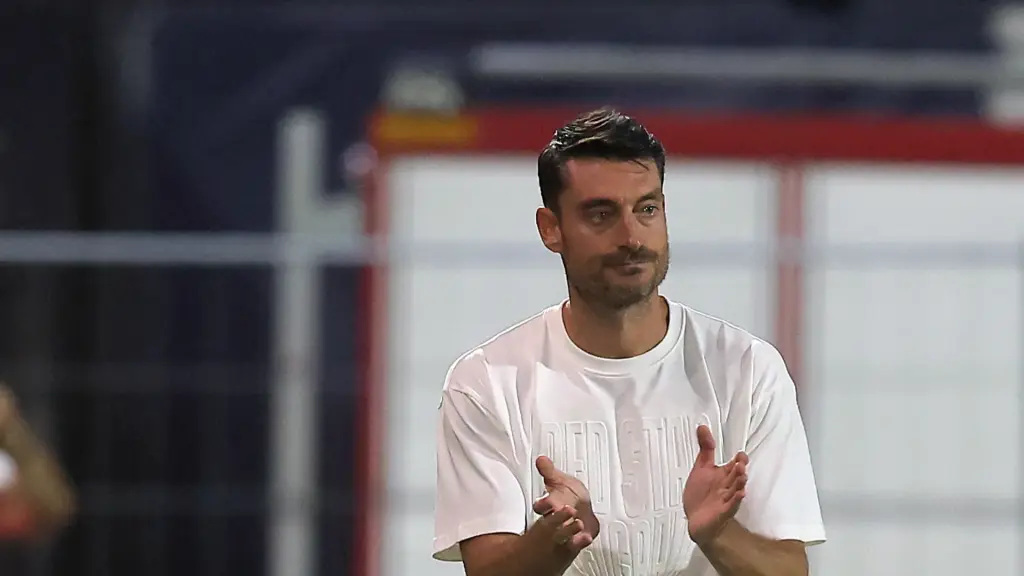
Albert Rijera brought on fresh players while the score remained level. The changes brought energy without disrupting the shape that protected the side from counterattacks.
A substitution has its full effect when the new player’s role is clear to every team-mate. The winning move was therefore the result of shared adjustment, not a lone attempt. Players from the bench were not asked to force a difficult final pass straight away. First they increased the number of safe options around the ball and helped the team push its lines up again. When the home defence had to shift for longer, a more precise final move opened up.
Elšnik and Loizu finished the job calmly
After a cross, Timi Maks Elšnik received the ball in the penalty area and chose a pass instead of a quick shot. The ball reached Loizu, who struck across goal into the far corner.
The move worked because Elšnik kept his composure and Loizu found the free space. That finish confirmed that an extra pass was often a better option than an early shot. The decision that matters most in the winning goal is Elšnik’s choice not to shoot from a poor position. The short pass to Loizu changed the angle of the attack and forced the keeper to react later. The finish looked simple because two good decisions arrived in exactly the right order.
Three points were earned under pressure
Zvezda did not control every minute, and the equaliser created real risk late on. Still, the visitors did not allow the match to turn into an uncontrolled exchange of attacks.
That matters for a side expected to win, because an opponent benefits most when the favourite loses its patience. The win shows a good response, but it does not erase the lapse that preceded FK Zeleznicar’s goal. The closing minutes demanded composure in duels and a clear first pass after winning the ball. Zvezda did not have to keep possession at all costs, but it could not afford to lose the ball in midfield. In this way the side protected its lead without retreating unnecessarily towards its own goal.
The same patience will be needed in the next match
The result and the scorers are confirmed, but the lasting value lies in the moves that can be repeated. A controlled restart, a useful contribution from the bench and a calm final pass make a sound base.
Conceding just before the break gives a concrete task for the work ahead. A fair assessment is therefore that Zvezda deserved the win and also gained a clear area to improve. The win does not mean the match was free of problems. The goal conceded before the interval remains a warning, while the reaction in the second half shows the team can change the course of a game. The most useful conclusion brings those two pictures together: patience brought the win, and better protection of the second ball could make the next one easier.