

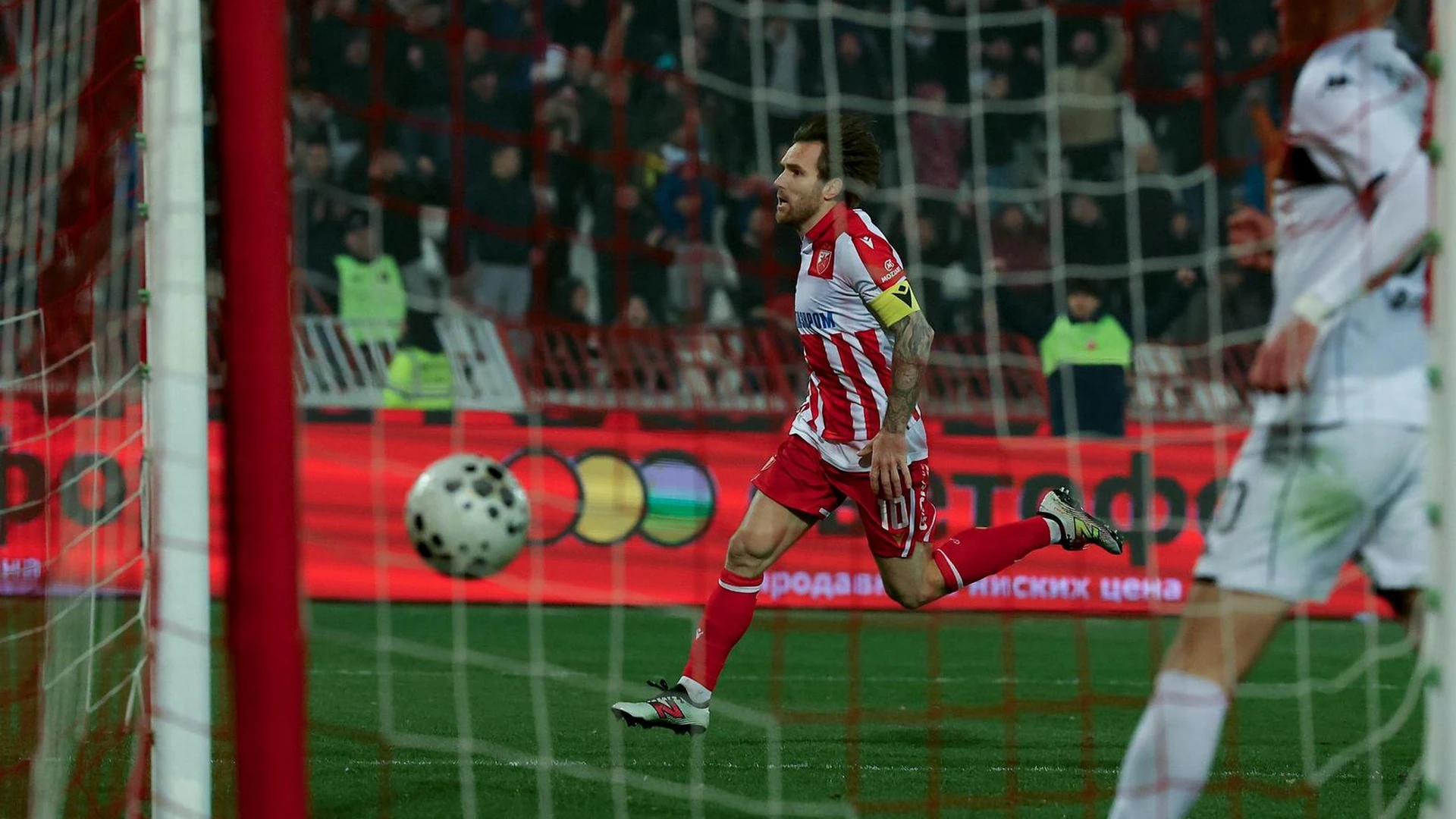
Red Star Belgrade ran out 3:0 winners over Radnički Niš, keeping their good run in the domestic league going. Marko Arnautović scored and set up a goal, and rather than letting up after the opener, the Belgrade side calmly stretched their advantage and kept the match firmly under control.
Arnautović linked up the attack
The experienced forward did not stay tied to the penalty area. He took part in building moves and opened up space for his teammates.
A goal and an assist show two sides of his contribution, but his movement off the ball and his timely pass-offs mattered just as much.
The core fact behind the “Red Star win over Radnički” is clear: Arnautović was directly involved in two goals, and the team controlled the space after taking the lead. Any assessment that starts from a different premise easily blurs what actually happened with what might follow. The safest conclusion remains the one backed by the source and the visible result. Later data may widen the picture, but it should not change a confirmed fact simply because a more dramatic reading sounds more appealing.
A final check on the “Red Star win over Radnički” should separate the confirmed outcome from what still needs watching. The source confirms the event itself, while later data will show how long its wider impact lasts. That distinction keeps the conclusion precise and stops a single unclear detail from altering facts already established. It also leaves room for later updates without suggesting the current account is unfinished.
Red Star kept their composure after taking the lead
The home side did not force the finish from every situation, so Radnički were not handed easy chances on the counter.
Controlled possession allowed the midfield to stay close to the second ball and quickly restore pressure after losing a duel.
The main strength of the “Red Star win over Radnički” is that the attack has more options when the centre-forward links the lines. Its value shows up in concrete decisions rather than broad promises. A useful advantage opens another realistic option, leaves time to react and stays easy to follow under pressure. When it repeats across several similar situations it becomes part of a reliable pattern; if it appears only once, it is a good sign but not conclusive proof.
A reliable assessment of the “Red Star win over Radnički” needs connected evidence. One result can confirm the following: Arnautović was directly involved in two goals, and the team controlled the space after taking the lead. The next check has to track how many clean entries into the penalty area were made without losing balance. The conclusion is stronger when the main strength stays visible: the attack gains more options when the centre-forward links the lines. The risk should not be overlooked either: forcing the finish too quickly can open up a counter-attack for the opponent.
Radnički had to change their original plan
The early deficit forced the visitors to open up more than they wanted, which gave more room between the lines.
Their attempts to pull a goal back quickly did not produce enough clean shots, and every lost ball increased the risk at the other end.
The most important risk in the “Red Star win over Radnički” is that forcing the finish too quickly can open up a counter-attack for the opponent. That weakness starts to matter before the final moment, because it quietly reduces the number of options available. A hasty fix often creates a second problem and makes the original cause harder to find. A calmer analysis pinpoints the moment control was lost, checks the support available and changes only the part that did not work.
Width made the finish easier
Red Star’s wingers stretched the last line and left more room for attackers and midfielders to enter through the middle.
That spread did not depend on constant crosses. It helped the team choose between a return pass and a run into the box.
The practical answer for the “Red Star win over Radnički” is this: keep the gaps tight and pick the moment to accelerate. Sequence matters here: first check the starting position, then carry out the intention, and only then judge the immediate result. That approach does not guarantee success, but it makes the outcome easier to explain and repeat. In this way, one specific weakness does not prompt an unnecessary change to the whole plan.
The result reflects the quality of the play
Three goals and a clean sheet give a clear outcome, but what matters more is that the lead came from repeatable actions.
The next matches will show whether the team can keep the same patience when an opponent stays deeper in a low block for longer.
The clearest yardstick for the “Red Star win over Radnički” will be the number of clean entries into the penalty area without losing balance. A single striking moment cannot answer that question, since it may depend on good timing, a favourable duel or one individual error. Several similar situations show which part remains dependable and which weakens when conditions change. A steady pattern supports the conclusion, while a sudden drop reveals a phase that needs the next correction.