

Železničar beat Mačva 2:0 in Pančevo after a first half without a goal. Substitute Davorin Tošić broke the deadlock late on, then added a second to seal the home side’s win.
The stalemate lasted beyond the break
Železničar and Mačva went into the interval goalless, and the scoreboard stayed blank for much of the second half too. Neither side had taken the lead before the closing stages, so the match was still wide open as it entered its final phase.
The long wait made the first goal weigh that much more. With time running out, whichever team scored first would force the other to change its approach quickly. Mačva had held the balance for a long stretch, but the home side found the answer in the closing minutes.
Tošić changed the game from the bench
Davorin Tošić came on as a substitute and soon put Železničar ahead. His impact came at the most crucial point of the contest: he scored the first goal after a spell in which the starting players had failed to beat the opposing keeper.
The goal changed the home side’s task. Železničar no longer had to search for a way to take the lead, only to protect the advantage it had won. Mačva was forced to chase the game for the first time, and only the final stretch remained for it to respond.
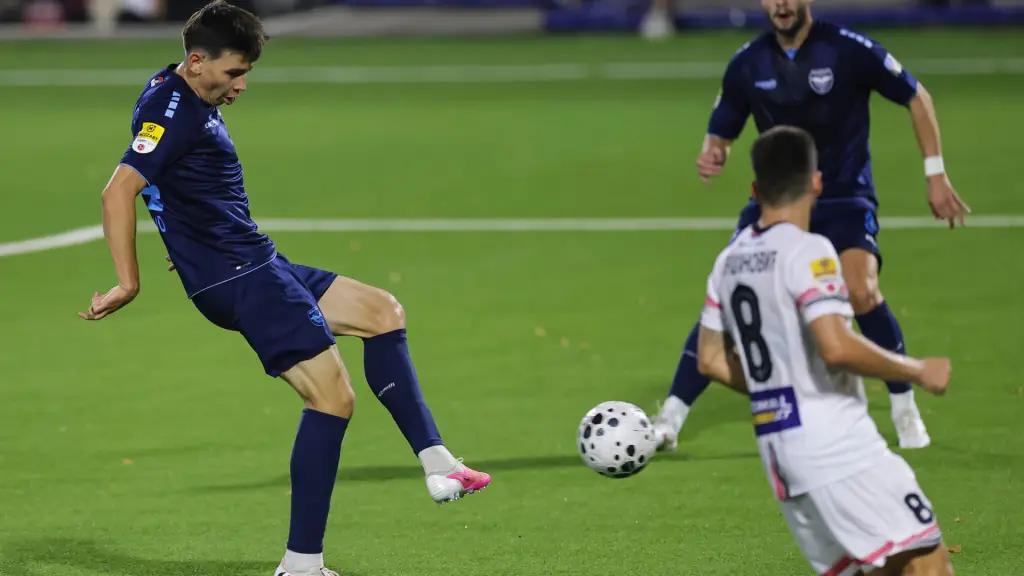
A second goal removed the uncertainty
Tošić struck again shortly after his first, completing a two-goal haul of his own. The lead grew to 2:0, so any single reply from Mačva would no longer have been enough to change how the points were shared.
His two late finishes turned a goalless contest into a clear home win in a short space of time. The first goal created the gap and the second protected it. Železničar did not need another scorer, because the substitute had taken responsibility for both changes in the scoreline.
Mačva’s long resistance earned no point
For most of the match Mačva had been level with the hosts. That position gave the visitors a route to at least one point, but it no longer mattered once Tošić had found the net.
After conceding, the visitors could not find an equaliser, and the second goal made their task harder still. The final 2:0 looks more emphatic than the long goalless spell, yet both belong to the same story: an evenly fought contest settled by two home strikes.

The finish defined the character of the win
This was not a match in which Železničar took early control of the scoreline and simply protected a lead. The home side had to be patient in searching for the first goal, and then used the remaining time to strengthen its position.
For that reason Tošić’s contribution cannot be separated from the result. Without the first goal the stalemate would have continued, and without the second the closing minutes would have carried the risk of a narrow lead. His two goals resolved both problems before the final whistle.
Points from the opening round stayed in Pančevo
The meeting in Pančevo opened the round and ended with three points for Železničar. The hosts combined a goalless first half with a decisive finish, which shows why the flow of the match matters as much as the final score.
Mačva left empty-handed despite being level for long periods. Železničar took the full reward because a substitute changed the scoreline twice. A game that had no scorer in the first half ended with one clear hero.
Patience paid off after a long deadlock
The score stayed level for a long time, so Železničar had to keep searching without the security that an early goal brings. Mačva, for its part, kept the game in a state where it could still expect a point or a chance to win. Tošić’s arrival changed that calculation just as the visitors had less time to recover.
His second goal had a different job from the first. The opener broke the deadlock and immediately increased the pressure on Mačva, while the next one gave Železničar protection against a possible reply. Two moves by the same substitute solved two separate problems: one created a winning position, the other made a comeback far harder.
The home side can be satisfied that it found a solution after a long closed period without forcing every move. Mačva must work out why an organisation that had held firm for so long gave way twice in the closing stages. The final result belongs to Železničar, but the flow of the match shows that the decision came from better execution in the final phase rather than constant superiority from the start. That conclusion gives both coaching staffs a clear basis for analysis without overstating the gap that existed before the first goal.