
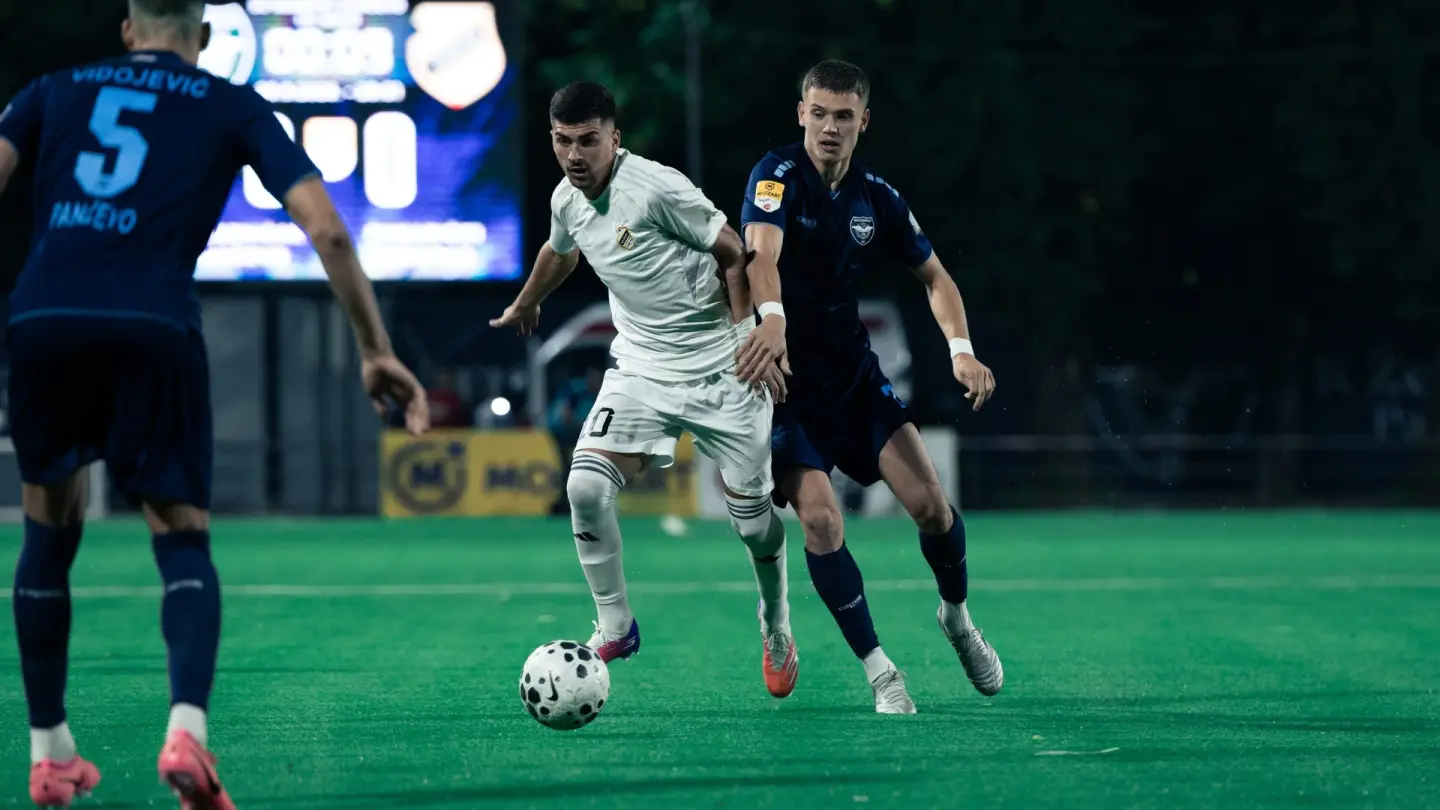
Železničar staged a major comeback in Pančevo, beating Čukarički 2:1. Karel Mustma put the visitors ahead early on, yet reserves Kwaku Karikari and Nikola Jovanović rewrote the final stages. Karikari brought the scores level, and Jovanović followed shortly after with the winner. The turnaround came only after the home side had worked for a long time, with plenty of patience, to find a gap in a well-set defence. The final scoreline rewarded the changes from the bench and sustained pressure, while also showing how quickly a match can shift when fatigue dulls precision at the back. The hosts stayed calm until the last attack and deservedly completed the turnaround.
Čukarički made the most of the first attack
Mustma’s early goal gave the visitors a scoreline they could hold on to. Železničar then had to chase an equaliser for a long time.
Čukarički dropped deeper and looked for space after winning the ball back. A single direct raid changed the plans of both sides. The early lead allowed the visitors to defend the space behind the ball for longer. Železničar therefore had to build attacks without rushing and avoid losing possession in midfield. When the hosts played a heavy pass too early, the visitors got a chance to break quickly. The first half therefore demanded as much patience as attacking energy. Čukarički tried to slow the tempo with longer possessions whenever they won the ball. Železničar had to get back into shape quickly and stop a second wave of attacks.
The home pressure demanded more precision
Železničar took greater risks as the game wore on. Possession around the penalty area was not enough without a good final pass.
The visitors closed the centre and channelled their attacks down the flanks. The score stayed the same for a long time, because pressure does not automatically create a clear chance. Železničar’s pressure became more dangerous only once the wide players and the midfield moved closer to the forwards. The shorter distances allowed quicker recycling of the ball after blocks and more attempts from the same move. Čukarički still protected the middle well, but they had to shift the defensive line from one side to the other more and more often. The hosts used backward passes when a direct cross was not on. This kept possession with them and forced the visitors to repeat demanding lateral movements.
Substitutions changed the closing stages
Karikari and Jovanović brought fresh energy from the bench. Their movement opened up extra targets in the penalty area.
Radomir Koković’s changes made sense, because the team kept sending accurate passes into the dangerous zone. The effect came not just from the number of attackers, but from their clearly defined roles. Karikari’s and Jovanović’s entry changed the movement in front of goal. One attacked the space between the centre-backs, while the other stayed available for a return pass. The home side did not simply add attackers; they gained clearer options in the closing stages. The coach’s changes therefore had an immediate tactical purpose. The fresh players also pressed the visitors’ first pass earlier. Čukarički found it harder to play out of defence and increasingly had to recycle the ball under fresh waves of attack.

Two late goals delivered a complete turnaround
Karikari levelled near the end of normal time. Jovanović won it with a goal in stoppage time.
The short gap between the goals gave Čukarički too little time to restore their shape. Železničar still had to stay composed through the final moments. The equaliser came after a long spell of pressure, and the winner soon changed the closing stages entirely. Čukarički had no time to re-establish their earlier structure. Železničar nevertheless had to remain calm after the turnaround, because an unnecessary foul or a lost ball would have handed the visitors one final chance to respond. The closing minutes were therefore no time for another risky attack. The hosts chose safe passes and shut down the space the visitors could use for a quick reply.
The result reshapes the table
Železničar moved up to 14 points. Čukarički remained on 11 after squandering their lead.
The hosts can take pride in their persistence, but they also need to analyse why the equaliser took so long to arrive. The visitors must correct the end of the match without ignoring the good work from the earlier part. Three points reward the hosts’ persistence, but the analysis should not begin only with the late goals. Železničar can sharpen the quality of the earlier final pass so that next time they do not have to wait for the closing stages. Čukarički should keep the discipline shown in most of the match and divide tasks more precisely when fatigue and substitutions change the rhythm. Both sides have clear material for the next training session. One needs to turn pressure into chances earlier, while the other must hold the agreed shape until the final whistle.