
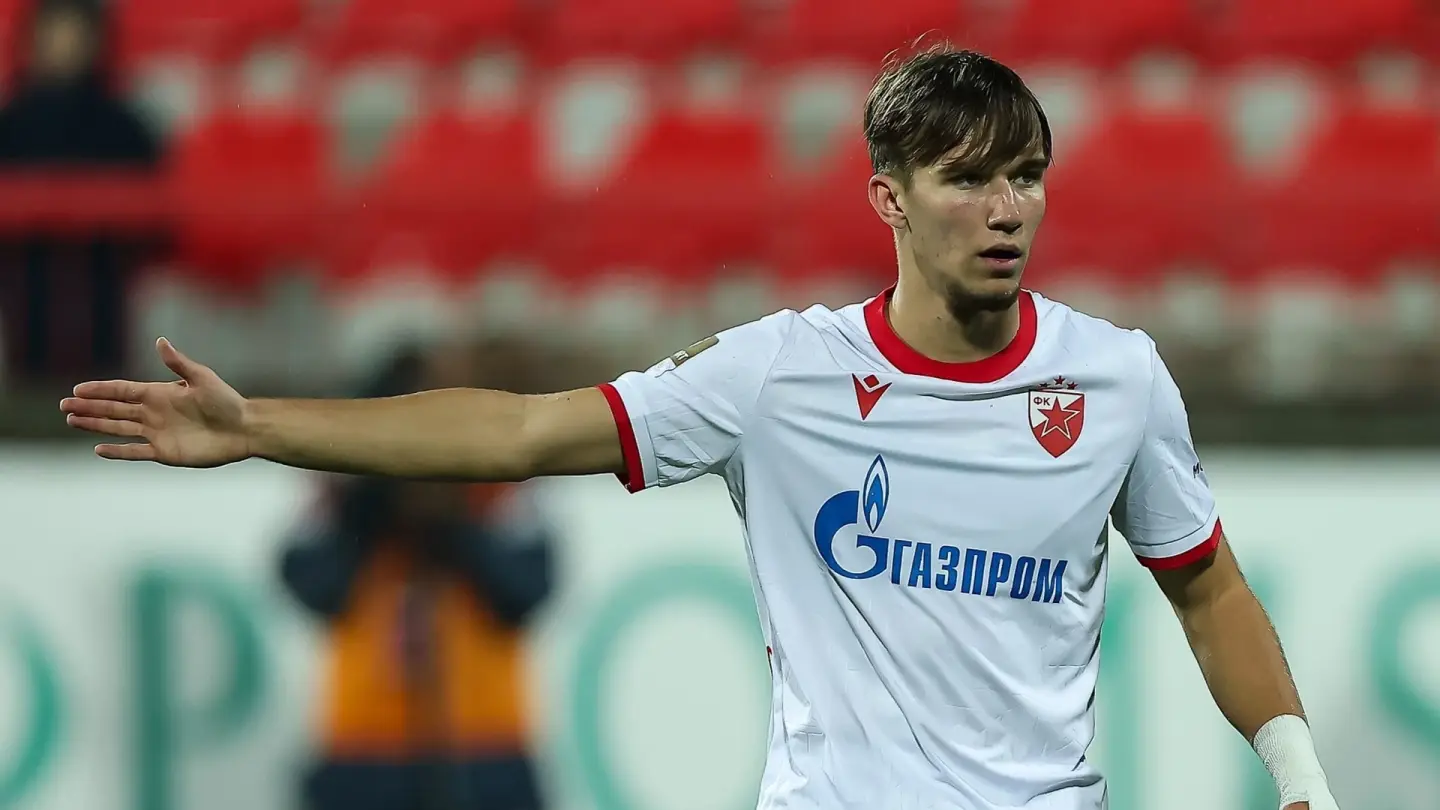
Red Star Belgrade midfielder Vasilije Kostov has been called up to the Serbia squad for four UEFA Nations League A division fixtures. The run of games takes in meetings with Greece, the Netherlands and Germany, before a further match against the Netherlands. The selection does not promise four appearances, yet it throws the young midfielder into a senior setting where speed of thought and technical quality are equally essential.
Kostov steps into a faster world
Senior internationals close down space quickly and punish a slow first touch. Kostov will need to scan the pitch before receiving the ball and know his next decision in advance.
His club experience gives him a foundation, but the national team uses different movements and reference points. Absorbing those details quickly is the first requirement, long before minutes are discussed. Senior international football leaves less time to decide in midfield. Kostov has to look over the space before he receives, recognise where the pressure is coming from and keep possession without slowing the attack. Training alongside more experienced players may speed up the development of those habits even before his playing time becomes clear. Faster processing of information is the biggest difference from the environment he knows at club level. Kostov will be helped if the players nearest him agree simple ways out of pressure in advance. One option short, one behind the first line and a player who protects the ball when it is lost give him a clear picture before he receives. In this way the speed of play grows through preparation, not through a rushed pass.
Four matches demand careful management of workload
The schedule brings more training, travel and recovery into a short period. The coaching staff must separate useful competitive work from excessive load.
A player who does not start can still work at full intensity on tactical tasks without repeating the whole physical effort. Careful monitoring helps both the national team and the club. Four matches within one window create a different problem from a single appearance. Recovery, travel and training intensity can affect a player’s value just as much as tactical fit. Serbia must judge when Kostov’s energy helps the team most and when it is better to keep him fresh for the next game. Managing the load protects the quality of decisions, not only physical freshness. The coaching staff can also watch how he reacts without the ball, especially after an unsuccessful attack. The first few steps decide whether Serbia regains control immediately or has to drop back. For a young midfielder that detail is a good indicator of readiness for senior level, because it demands a decision before the danger becomes obvious.
| Detail | Confirmed information |
|---|---|
| Player | Vasilije Kostov |
| Position | Central midfielder |
| Club | Red Star Belgrade |
| Competition | UEFA Nations League A division |
| Schedule | Four matches for Serbia |
Each opponent poses different questions
Greece may close the middle and turn possession into a patient positional test. The Netherlands bring technical pressure and movement between the lines, while Germany attack quickly after winning the ball.
Kostov’s role may therefore change from one training session to the next. Carrying out simple tasks clearly is more useful than a risky move in every drill. Each opponent may press with a different shape and leave different space around the central midfield. Kostov’s job could be to help in the first phase of the attack, arrive late in the final third or protect a lead. It is important that he understands the reason for a change of role. Trying to repeat the same club pattern in every match would be less useful than adapting to what a particular opponent allows.
The young midfielder need not run the whole game at once
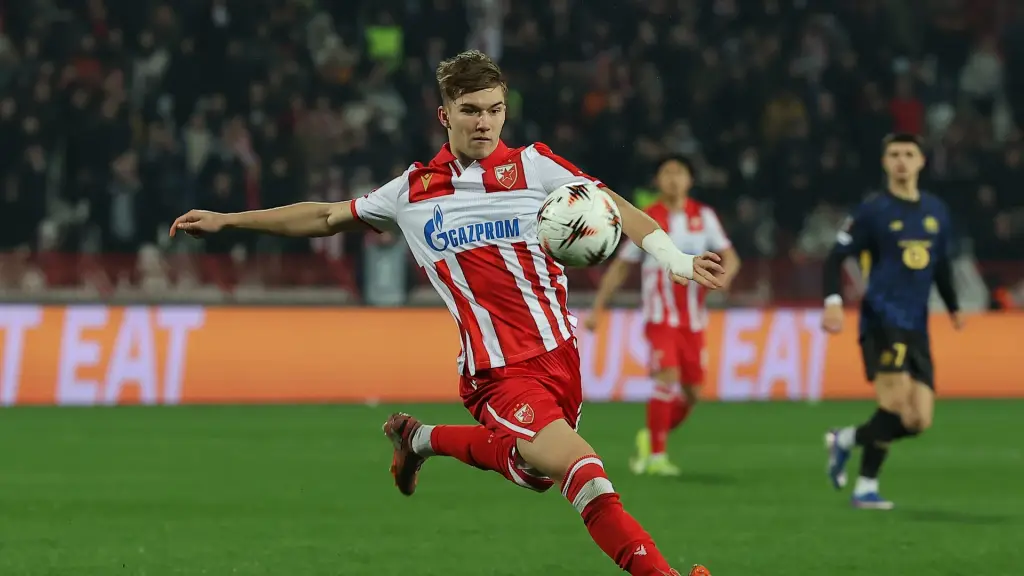
More experienced team-mates already carry responsibility for possession and defensive organisation. Kostov can contribute with good angles of support, pressing after a lost ball and disciplined movement.
Those details make the next decision easier for the main creator. A mature introduction usually starts with reliable work before greater freedom in attack. A young midfielder does not have to control every possession to have a good debut. A secure first pass, timely movement and a disciplined position can help him settle into the rhythm. More ambitious decisions become logical once he has read the opponent and built a connection with the players nearest him. Such an entry into a match reduces risk without limiting his quality.
The call-up is a step, not a settled status
The selection confirms that Kostov’s development has caught the attention of the senior coaching staff. It does not remove competition for places, nor does it guarantee a permanent spot after this camp.
Every training session provides new evidence of how well he understands his tasks and sustains his intensity. The best response is to treat the call-up as current work rather than a reward that ends his development. The call-up recognises his progress and sets a harder test at the same time. Kostov has the chance to show that his decisions stay clear as speed, contact and responsibility increase. This is the beginning of a senior international assessment, not a completed stage of development. The best answer will be the calm application of the coaching staff’s demands, without any need to prove all his qualities in a single move.