
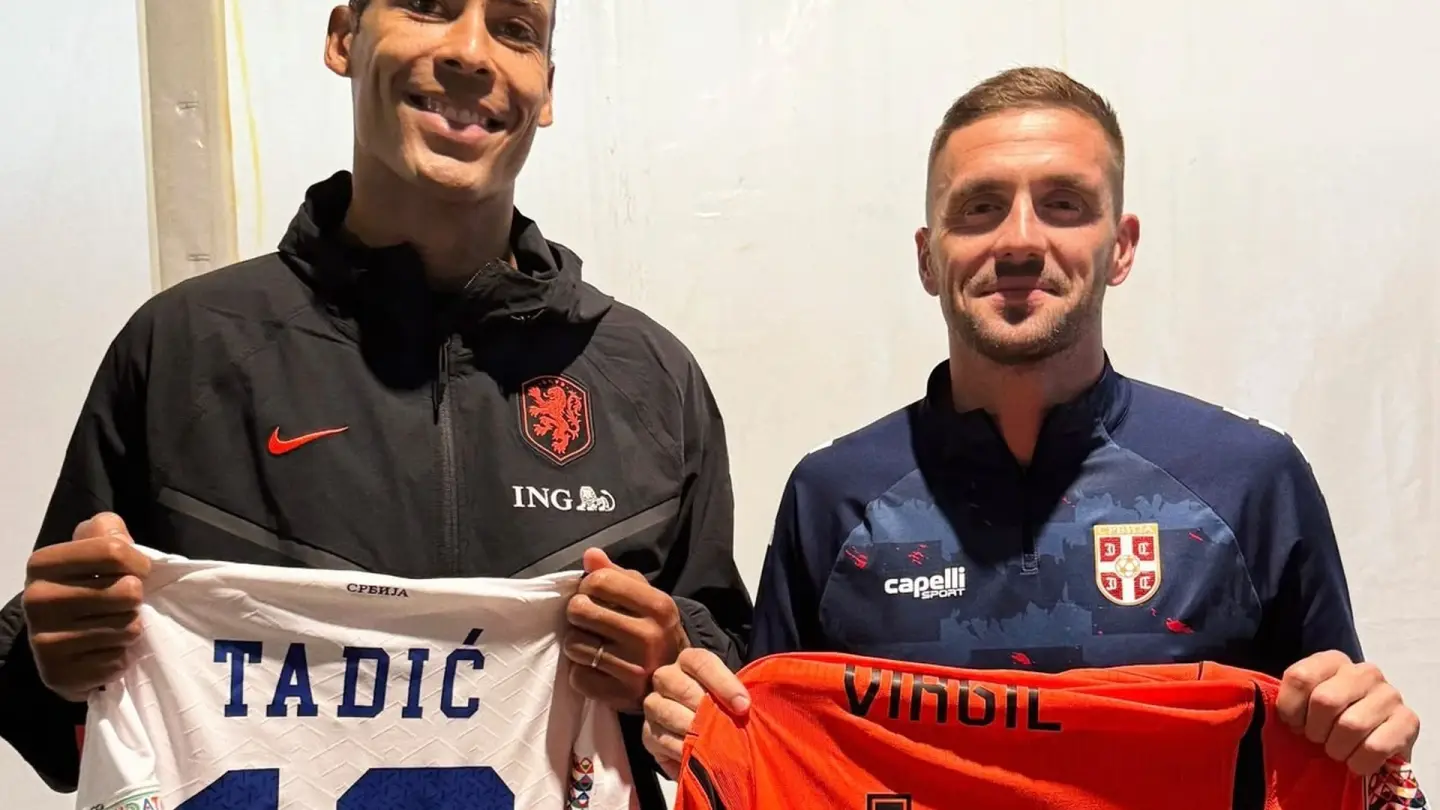
Dušan Tadić and Virgil van Dijk swapped shirts following Serbia’s match against the Netherlands in Belgrade. The two captains once shared a dressing room at Southampton, and their encounter caught people’s attention before the game had even started. Dutch players and members of the coaching staff greeted Tadić, who spent a large part of his club career in that country.
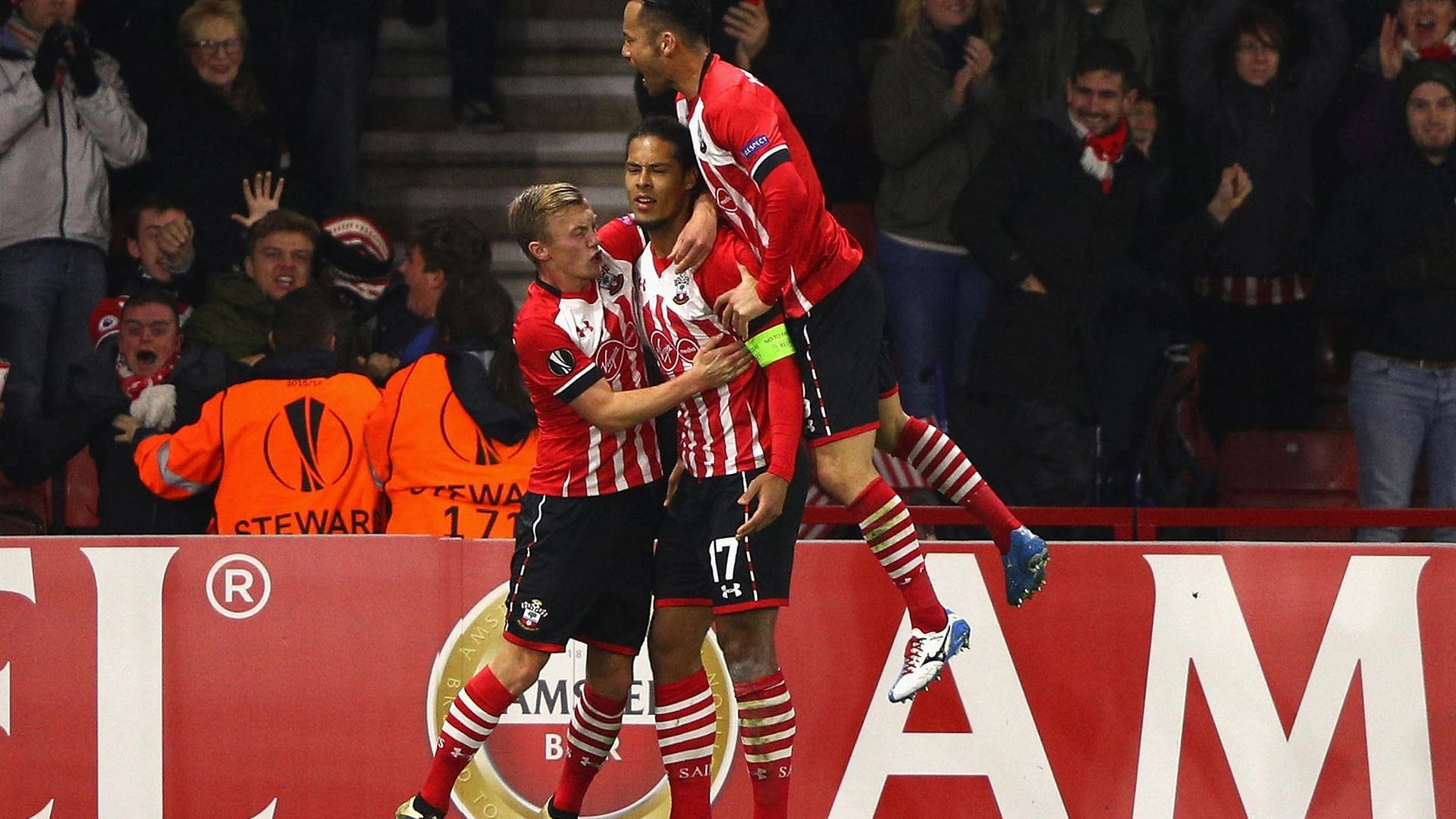
Tadić and Van Dijk once played side by side at Southampton
Tadić and Van Dijk were teammates at St Mary’s before each went on to captain his national side. Their careers later took separate routes, yet a shared spell at the same club creates a mutual understanding that lasts for many seasons. The shirt exchange was therefore not a routine formality, but a moment between two players who know well how the other works and what kind of person he is.
That bond was also visible in how they behaved after a tough match. The Netherlands won, and Serbia went home without a point, yet the captains did not let the result erase their respect for each other. Professional football demands full commitment during the ninety minutes and a calm acknowledgement of the rival once the final whistle has blown. The two things do not contradict each other.
Dutch greetings confirm Tadić’s mark on the Eredivisie
Tadić played in the Netherlands for Groningen, Twente and Ajax, and he now wears the NEC shirt. His deepest impression came at Ajax, where he was captain, the playmaker and one of the faces of a successful European side. For that reason he is recognised not only by former teammates. Players who faced him in the domestic league also acknowledge his influence.
The greetings during the warm-up carried a simple message: a reputation is built over years. Goals and assists are the most visible part, but teammates and opponents remember availability, hard work in training and conduct in difficult moments. Tadić earned his standing in the Netherlands through consistency, so a single return in a national shirt brings back a great many shared memories.
A captain has to separate emotion from the task
There was room for a greeting before the match, but once it began every player had a clear objective. Tadić came on at half-time and immediately took part in reshaping Serbia’s attack. His movement between the lines helped create the move from which Luka Jović equalised. Van Dijk, for his part, organised the Dutch back line and protected the visitors’ lead.
This is an important example for younger players. Showing respect for a well-known rival does not mean avoiding duels or lowering one’s sense of responsibility. On the contrary, the best way to respect an opponent is to play with full seriousness. After the match the result stands, but so does the relationship between people who understand how much work it takes to reach that level.
| Connection | Detail |
|---|---|
| National teams | Serbia and the Netherlands |
| Shared club | Southampton |
| Role | National team captains |
| Tadić’s clubs in the Netherlands | Groningen, Twente, Ajax and NEC |
The shirt swap brought their shared past back into view
Shirts are often exchanged in modern football, but not every moment carries the same weight. Here, national team duty, a common spell in England and Tadić’s long association with Dutch football all came together. That is why the photograph says more than the story of one match. It links several clubs and different stages of two major careers.
For fans, a detail like this offers a broader view of the sport. Players are not sealed off inside the colours of a single team. Over a career they build relationships in several countries, learn languages and share dressing rooms with people who will later become their rivals. That network of experience does not diminish loyalty to a national team. It shows just how interconnected European football is.
Mutual respect does not change the analysis of Serbia’s defeat
A pleasant image after the match should not replace the conversation about the result. Serbia lost 2:1 and must improve how it defends space at key moments. Tadić’s introduction did help, but the side could not equalise a second time. A sporting gesture and a competitive analysis can exist side by side, without one trying to hide the other.
That is precisely the healthiest message from the captains’ encounter. On the pitch maximum effort is required, after the game the value of the opponent is acknowledged, and then each team gets back to work on its mistakes. Tadić and Van Dijk showed a relationship that has outlasted a single season together. Serbia now needs to carry the same consistency into its play in the away fixtures ahead.
Young players can learn from the conduct of the two captains
Tadić and Van Dijk can offer far more than a photograph. Their path shows that a professional changes leagues and teammates, but must keep the same standard of work in every setting. A young international should see how a friendship with a rival stays separate from the battle on the pitch, and how defeat is met with proper conduct after the match.
Such an example needs no long lectures. It is enough for a captain to be the first to meet the demands of training and, after a match, to accept responsibility clearly. Tadić’s standing in the Netherlands did not come from a single gesture. The shirt swap is simply the visible end of years in which he showed the same approach to football at several clubs.