
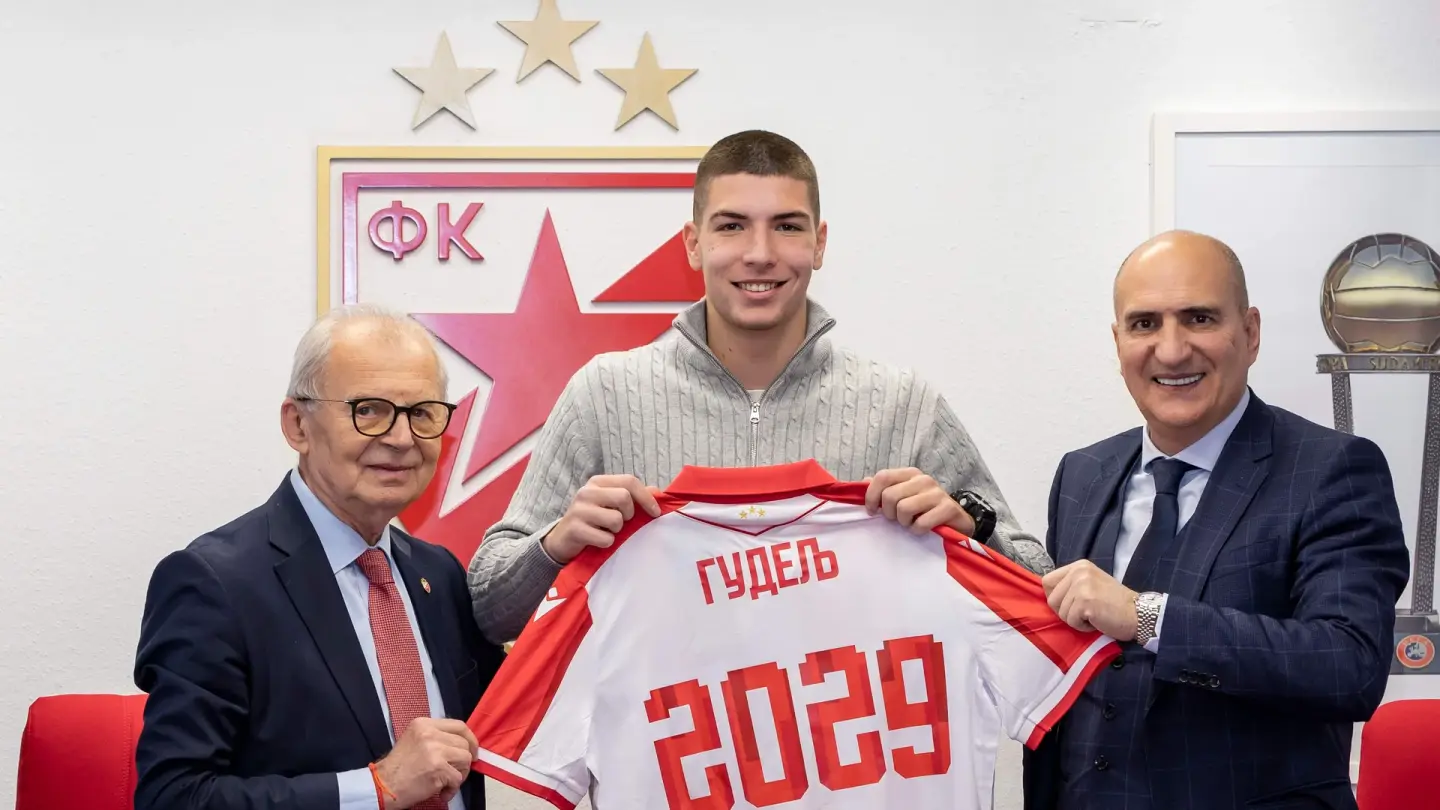
Red Star Belgrade centre-back Stefan Gudelj has been called into Serbia’s youth national team programme for friendly matches as part of preparations for the 2027 European Championship. The call-up is confirmed, while his place in the starting line-up will depend on training and the coach’s plan. Gudelj arrives as a defender used to starting attacks and covering a large area behind a team that often keeps the ball high up the pitch.
The call-up rewards responsibility in the centre-back role
The young defender earns trust first through positioning and communication rather than flashy tackles. Gudelj has to spot danger early, because a lot of space is left behind an attacking side.
That habit matters in a national team, where players have less time to work together. Simple instructions and a secure first decision help a new back line organise quickly. A youth call-up does not reward a single good duel alone. Gudelj must hold his line, judge the moment to step out and talk to players who may have different habits at their clubs. A centre-back’s development also shows in the positions of the team-mates around him. When the defence looks coordinated, his responsibility extends beyond winning the ball in direct contact with an attacker. The first training sessions will be important for agreeing on basic communication signals. Gudelj needs to learn quickly when a full-back expects help, who takes the runs in behind and how the keeper wants the line to move. That clarity reduces mistakes that happen simply because new team-mates do not yet know each other well enough.
Playing out under pressure is part of his role
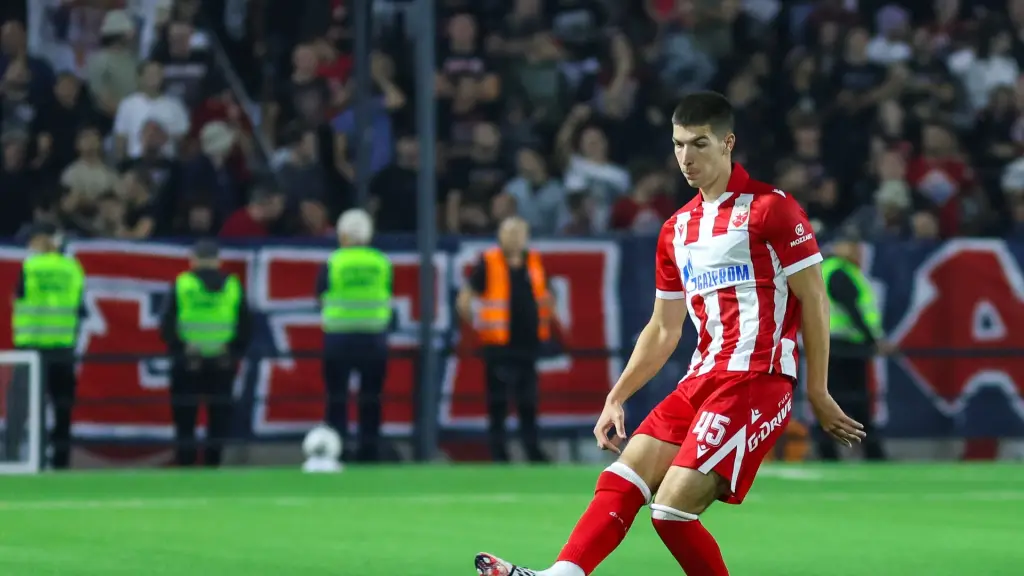
A youth side needs centre-backs who can start the attack without forcing the first pass forward. Gudelj can draw pressure, find a midfielder and offer a new angle straight away.
A pass is only worth it if a team-mate can receive it and carry on the move. Against stronger pressing, a safe clearance remains more important than pass statistics. At international level, an opponent quickly tests a shaky first pass. Gudelj can help with a clear angle to receive, control the ball away from pressure and a simple pass when a risky line is closed. Reliable progression lets Serbia lift the whole team together. The aim is not for every pass to be progressive, but for the next team-mate to receive the ball in a better position and with more time. A good centre-back pass does not have to skip two lines at once. If he draws the first attacker and finds a free midfielder, Gudelj has already helped the team get out from under pressure. That simple decision often creates a better continuation than a long ball played without a prepared second action.
| Detail | Current status |
|---|---|
| Player | Stefan Gudelj |
| Position | Centre-back |
| Club | Red Star Belgrade |
| National team | Serbia youth squad |
| Goal | Preparation for EURO 2027 |
Friendly matches have development value
Warm-up games let the coach check how players work together and how tasks are carried out before the tournament. The result matters, but the coaching staff also tracks distances, breaks and the reaction after losing the ball.
Gudelj could play with a new partner or on the other side of the defence. Adapting without losing basic discipline is one of the main goals of a camp. A friendly has development value when a player is given a concrete task to analyse afterwards. For a centre-back, the height of the line, the reaction to a long ball and the cover for the full-back can all be tracked even when the result brings no points. That kind of feedback prepares the squad for the road to the 2027 European Championship. A general message about better concentration is far less useful than a clear example from a move that was actually played.
Club and national team commitments need to complement each other
The call-up brings travel and a new tactical programme into Gudelj’s schedule. Good communication between the coaching staffs protects his recovery and prevents unnecessary strain.
National team work returns the player to his club with experience against different types of attackers. The benefit is greatest when minutes and physical condition are tracked precisely. Club and country gain most when they manage workload openly. Travel, training intensity and minutes played should be known before he returns to his regular schedule. Gudelj can then gain experience at a higher level without every session turning into a physical test to the limit. Good coordination protects the player’s health and improves the chance that what he learns carries over into club matches.
The opportunity should not be overstated
Gudelj has been given a place in the programme, but he does not have a guaranteed role throughout the whole cycle. Training, fitness and the squad’s needs will decide how the opportunity develops.
Still, the call-up clearly shows that his progress is being followed beyond his club. His next task is to learn the system quickly, communicate clearly and make every intervention understandable to his team-mates. The call-up opens the door but does not guarantee a permanent place. Gudelj has to build new partnerships, accept instructions and stay calm after a mistake. That description does not diminish the achievement, but it places it in the right context. The recognition is earned by his current work, while his future selections will depend on how quickly he can apply the coaching staff’s demands in training and in matches.