
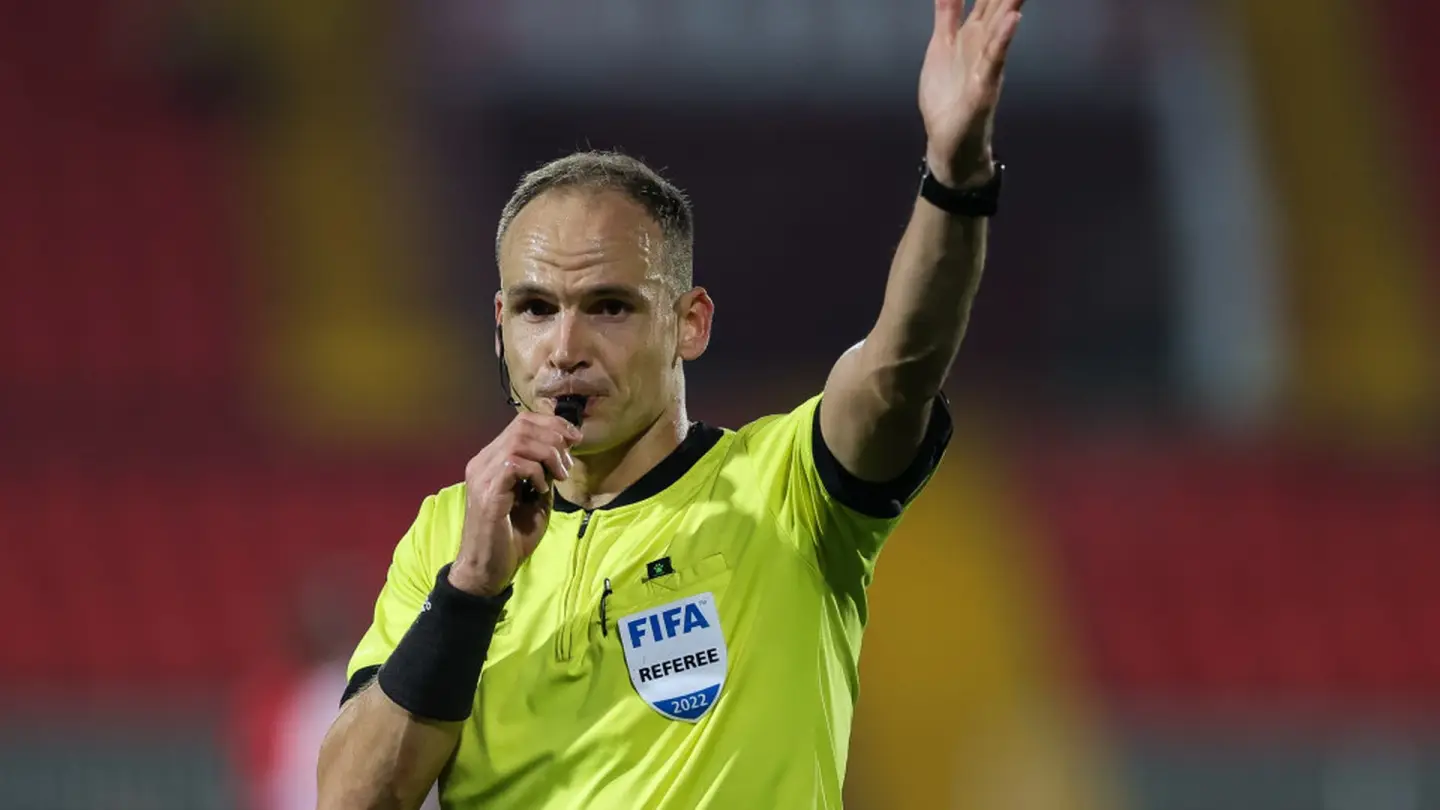
Serbian officials had two international assignments at the end of September. Nenad Minaković’s crew refereed the Scotland v Switzerland match on 29 September, while Ana Minić was an observer at the Lyon v Chelsea clash the following day. One role played out on the pitch and in the VAR room, the other through the assessment of decisions, teamwork and match oversight.
Minaković’s team had to operate as one unit
Nikola Borović and Boško Božović assisted the referee, Milan Mitić served as fourth official, and Momčilo Marković and Aleksandar Živković worked in the video room. Those six names do not represent six separate jobs. Every decision depends on who has the best angle and how quickly they can pass on clear information.
The assistant referees track offside and contact the referee may not see, but they should not take over a situation unless it is necessary. The fourth official oversees the technical areas and helps communication, while VAR checks only the prescribed key decisions. A good team is measured not by the number of interventions but by how timely and understandable they are.
The international tempo raises the cost of a poor position
National team matches bring quick transitions and players used to different styles of contact. The referee must stay close enough to read the intensity of a duel, yet must not block a passing lane or find themselves in the path of a counter-attack. Position is therefore constantly adjusted, even when the ball appears harmless.
The most demanding moment often comes after possession is lost. As players accelerate towards the other goal, the officiating team must simultaneously watch for a possible foul behind the play and the new situation in front of the ball. Radio communication reduces blind spots, but only if the messages are short and it has been agreed in advance who covers which part of the action.
VAR should correct a clear error without taking over the match
Marković and Živković were tasked with checking goals, penalties, direct red cards and cases of mistaken identity. Video does not remove the on-field judgement. It allows an obvious mistake to be reviewed from several angles, while decisions in the grey zone remain with the referee’s original assessment.
Speed of review matters for the rhythm of a match, but it must not outweigh accuracy. The best procedure begins with a clear description of what the referee saw. VAR then looks for the footage that confirms or overturns that picture. Randomly scrolling through a large number of slow-motion replays can make a normal contact look worse than it did at real speed.
| Role | Name |
|---|---|
| Referee | Nenad Minaković |
| Assistants | Nikola Borović and Boško Božović |
| Fourth official | Milan Mitić |
| VAR / AVAR | Momčilo Marković / Aleksandar Živković |
| Observer in France | Ana Minić |
An observer analyses far more than the contested decisions
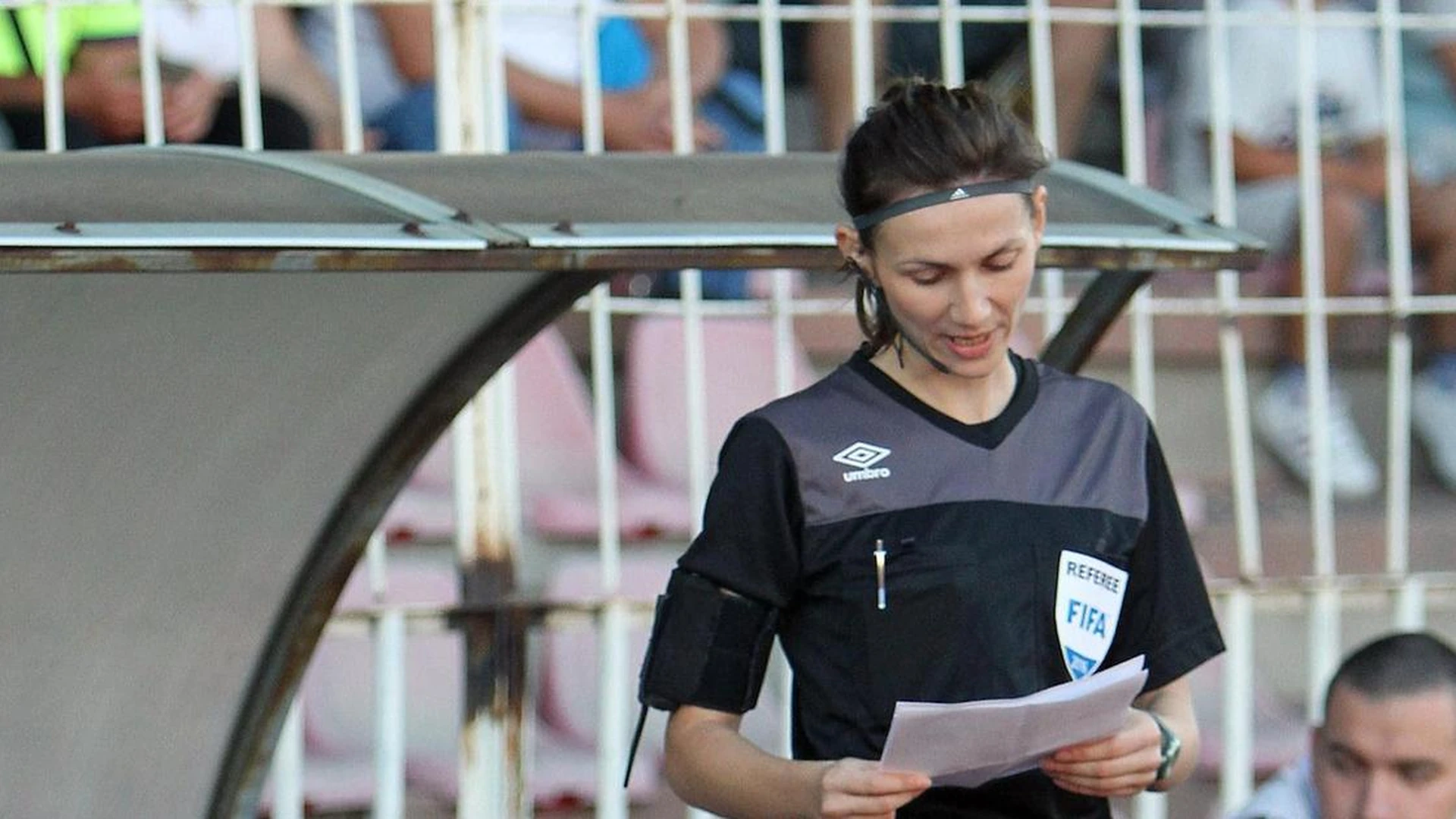
In France, Ana Minić followed the work of the officiating team at the Lyon v Chelsea match. An assessment does not rest only on whether a penalty was given or a card shown. Movement, preventive communication, the application of advantage, the relationship with players and consistency of standards from the first minute to the last are all under review.
The way a referee reacts after a mistake also matters. One missed detail does not have to spoil the whole match, but an attempt to make up for it with an overly harsh decision can create a new problem. The observer therefore looks for stability and the team’s ability to carry on without emotional wavering.
Two assignments strengthen the same development system
Officiating on the pitch and observation belong to the same chain. Experience from an international match provides situations that can later be passed on to younger referees, while quality analysis makes feedback concrete. Saying that a referee should have done better is not enough; it is necessary to show where the angle or the timing of communication should have changed.
For the Football Association of Serbia, appointments of this kind mean a presence at several levels of UEFA work. They are a sign of trust, but also a test under greater scrutiny. Each well-executed assignment improves the chances of new appointments, while the standard must stay the same regardless of the competition’s name or the size of the stadium.
The best refereeing keeps the match in the foreground
The referee’s aim is not to be invisible at any cost, but to intervene precisely when the laws and control of the match require it. Too much tolerance can raise tension, while a string of minor stoppages can destroy the rhythm. The right measure depends on the nature of the encounter and must be understandable to both teams.
The assignments in Scotland and France are now complete, so the work moves on to analysis. Minaković’s team can compare its communication with the footage, and Minić can turn her observations into a report that gives the officiating team guidance. International experience only becomes valuable when the details from one match are used to make a better decision in the next.