
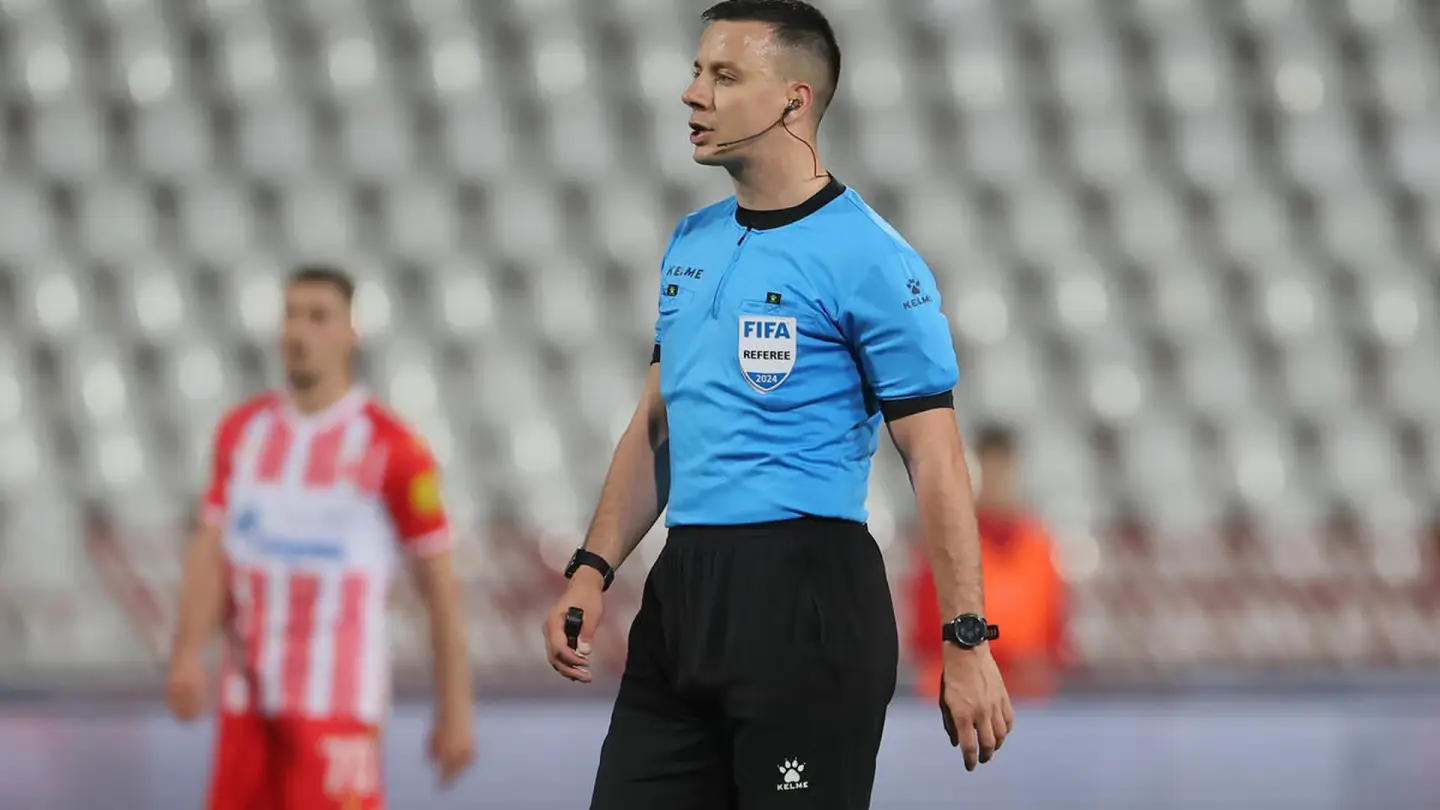
Six Serbian referees were given duties at the UEFA Nations League match between Iceland and Estonia, which ended 1:1. Miloš Milanović refereed, assisted by Milan Pasajlić and Svetozar Živin, with Milan Ilić as fourth official and the VAR team of Aleksandar Živković and Pavle Tomić. The appointments show the Serbian presence across the full UEFA protocol.
The referee sets the rhythm and the standard of the match
Miloš Milanović had to keep the same standard from the first duel to the last minute of added time. In a game that finished 1:1, every decision close to the penalty area carries extra weight. It is essential that players understand early what contact will be tolerated and where the line for a disciplinary sanction lies.
A good standard is not measured by the number of whistles. The referee should stop play when an advantage has been lost, but also let the game run when the attacking side can carry on. That judgement depends on reading the pitch, speaking clearly and being ready to explain a decision without a lengthy dispute.
The assistants guard the line and the wider picture
Milan Pasajlić and Svetozar Živin tracked offside, the ball leaving the field and fouls the main referee could not see well. Their task becomes harder when an attacker and the last defender change direction at the moment of a pass. They must stay level with the line while keeping the contact in view.
Communication over the system has to be brief and exact. Too many words slow the decision, while an incomplete message leaves the referee without a key fact. A well-drilled crew uses agreed terms and knows in advance who takes the call in each zone.
| Role | Name |
|---|---|
| Referee | Miloš Milanović |
| Assistants | Milan Pasajlić, Svetozar Živin |
| Fourth official | Milan Ilić |
| VAR / AVAR | Aleksandar Živković / Pavle Tomić |
| Result | Iceland 1:1 Estonia |
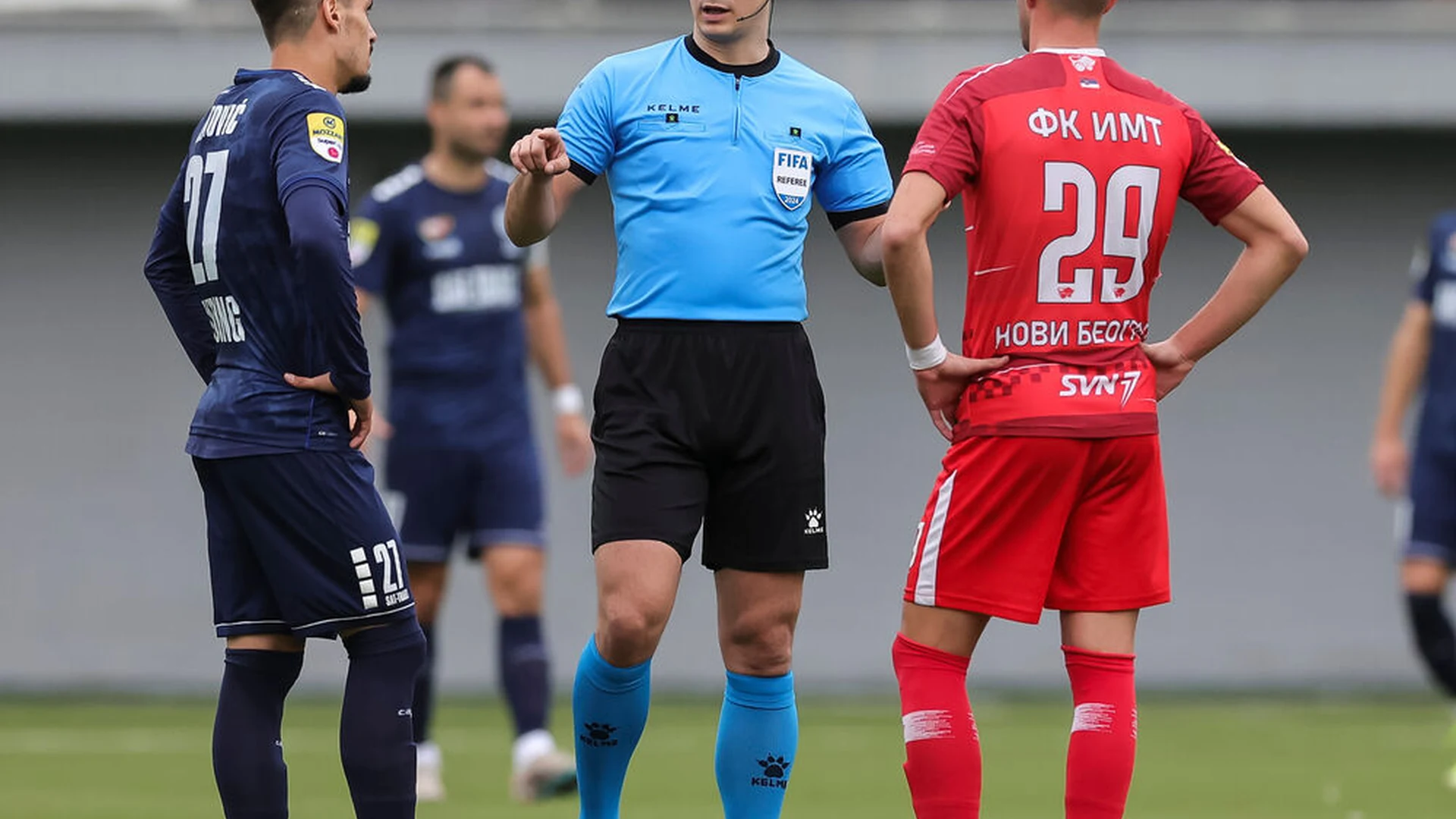
The VAR team reviews only the situations laid down in the protocol
Aleksandar Živković worked as VAR and Pavle Tomić as AVAR. Their role is not to referee every duel again, but to spot a clear and obvious error in the situations the protocol covers. The check has to be thorough without needlessly breaking the rhythm of the match.
The best VAR work often goes unnoticed. When the on-field decision is correct, a short confirmation lets play resume. If there is a serious error, the crew chooses the footage that clearly shows the main referee the important contact, avoiding a string of angles that only adds confusion.
The fourth official keeps order around the benches
Milan Ilić was the fourth official and the link between the pitch, the coaching staffs and the official match record. Substitutions, equipment, bench conduct and the display of added time all pass through his control. Calm work in the technical area helps the main referee keep attention on the game.
In a tight match the benches react more heatedly to decisions and to wasted time. The fourth official must tell apart acceptable emotion from behaviour that crosses the line. An early, clear warning often prevents a later disciplinary problem.
UEFA entrusts new international matches to Serbian referees
A full Serbian crew in Reykjavik shows confidence in the domestic referee school. At the same time, Nenad Đokić was appointed to observe the refereeing at a second international match in Kaunas. An observer does not affect the result, but his analysis guides the further development of the referees.
The value of these assignments shows when the experience is carried back to domestic competitions. Faster communication, a more consistent standard and better use of VAR matter not only on the international stage. Each assignment provides examples that can become part of seminars and preparation for the new generation of referees. An international assignment also measures what does not show in a short report. The refereeing team must review situations together, align its brief messages and prepare for the style of both national teams. Iceland often seeks the direct duel and the loose ball, while Estonia may change the position of its defence depending on the score. Milanović’s team therefore had to hold the same standard regardless of the pace of the match. After the final whistle, internal analysis is important: from which angle the situation was seen best, when an assistant passed on a key detail and whether the VAR check lasted only as long as necessary. Work of this kind builds UEFA’s trust far more than any single memorable decision. Every role, from the referee to the AVAR, has to function as part of the same system. The 1:1 result also meant the standard had to remain stable while both sides sought the decisive goal. In such a phase every contact around the penalty area draws closer attention, and protests from the benches can disrupt the rhythm of communication. Milanović and his assistants had to separate a strong, fair duel from a foul that stops a promising attack. The VAR crew, meanwhile, checks possible red cards, penalties and player identity, but does not get involved in every disputed call. A good international performance therefore does not rest on one photograph that explains it. Its value lies in a series of coordinated decisions, brief checks and keeping the match in the hands of the players.