

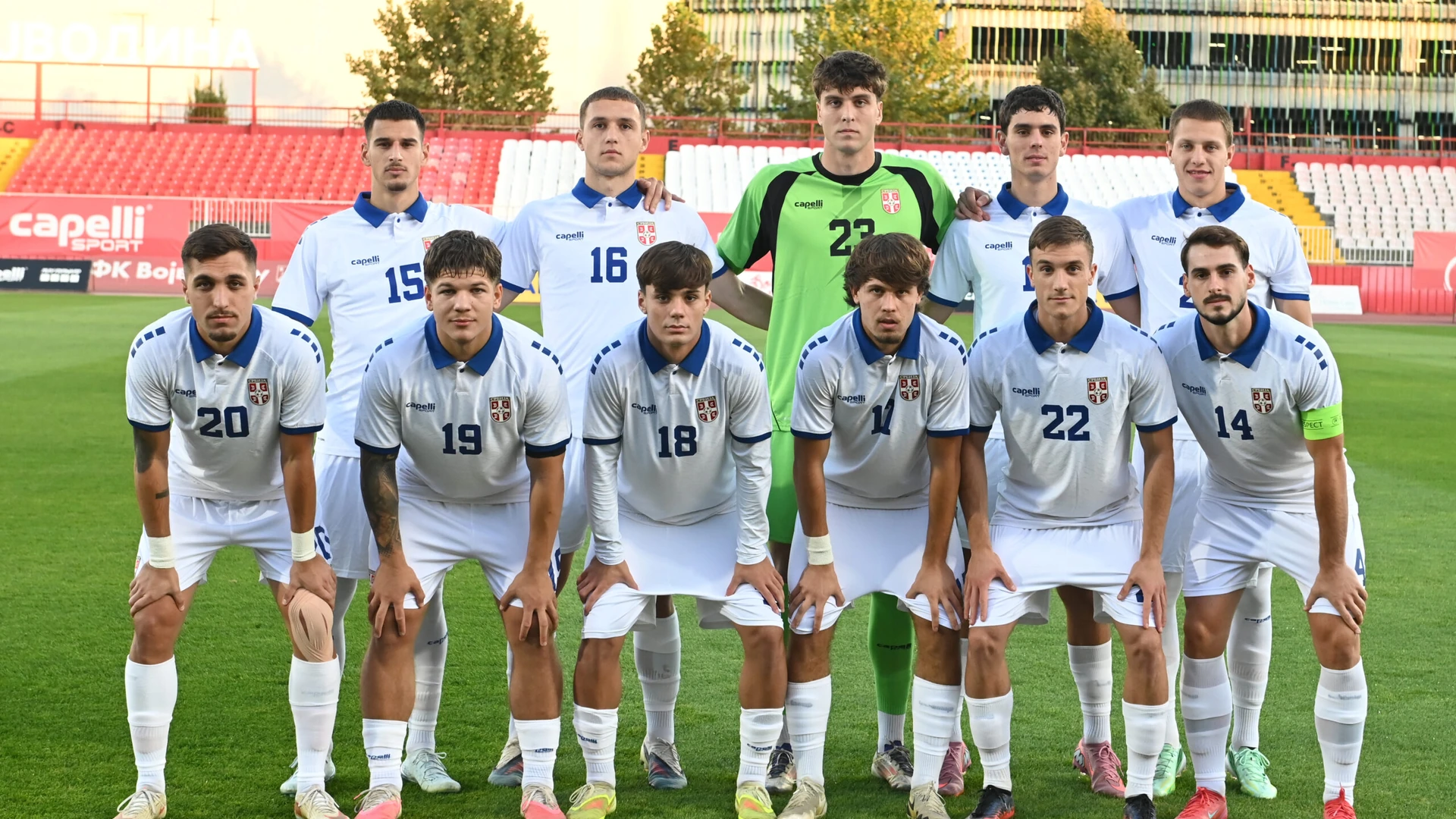
Serbia’s youth national team beat Iraq 3:0 in the second friendly in Stara Pazova. Mihajlo Mijatović scored in the 20th minute, and Andrija Kuljanin and Marko Lazetić sealed the result later on. After two wins over the same opponent, the side now faces two tests against Russia, on 2 and 5 October, both kicking off at 18:00.
An early goal gave Serbia control without ending the contest
Mijatović turned a strong start from the team into a lead in the 20th minute. A moment like that makes a friendly easier, because the opponent has to abandon its opening plan and leave more space. Serbia still did not rush the finish of every attack that followed. They kept their shape and made Iraq spend long spells chasing the ball.
The one-goal advantage held until the break, which was more useful than the scoreline suggests at first glance. A young side has to learn how to manage a period in which nothing spectacular happens. That is when discipline gets tested: both full-backs cannot push high together, and a midfielder must stay available for a safe pass back.
Three scorers show the finish did not hinge on a single role
Kuljanin made it 2:0 in the 71st minute, and Lazetić set the final score six minutes later. The goals came in quick succession, once Iraq had to take risks and Serbia’s fresher legs could attack the wider spaces. It matters that the finishing was shared among different players, because a defence cannot then focus all its attention on one forward.
Spreading the goals around does not mean every attack was equally good. The coaching staff will look for situations where the final pass came late or the man on the ball chose the harder option. A 3:0 win gives them the calm to make that review. The purpose of a friendly is not only the result but also finding moves that can be repeated against stronger pressure.
The clean sheet began well in front of the last line
Iraq failed to turn their spells of possession into many clear chances. Serbia’s midfielders closed off the central pass, so the visitors often had to go towards the touchline. There the full-back and winger could press the ball together, with no need for a centre-back to leave his zone and open space behind him.
A zero on the scoreboard does not mean every detail is settled, though. Against Russia the speed of the first pass and the quality of the runs will be higher. That is why every situation in which Iraq reached a second ball or a cross deserves a second look. A defence improves before a mistake becomes a goal, and friendlies offer exactly that opportunity.
| Event | Detail |
|---|---|
| Final score | Serbia U21 3:0 Iraq |
| Mijatović | 20th minute |
| Kuljanin | 71st minute |
| Lazetić | 77th minute |
| Next tests | Russia, 2 and 5 October at 18:00 |
Two games against the same opponent had development value
The repeat fixture let the head coach change roles, share out minutes and see how players react when the opposition already knows the basic patterns. In the second match Iraq could prepare a response to what they had seen earlier, so Serbia had to find a different route to space. That is closer to tournament conditions than a single isolated friendly.
Mental discipline matters for the players too. After a first win it is easy to feel the result will repeat itself. Serbia did not allow that slip. From the start they took responsibility for possession and kept pressing even when the second goal was slow to arrive. That habit will be needed against sides that punish every pass played without full concentration.
Russia will test the speed of decisions under heavier pressure
The matches on 2 and 5 October come without a long window for fresh preparation. Recovery and a clear split of minutes will matter as much as tactical training. Players who carried more of the load against Iraq need not automatically start both of the next games. The friendly cycle should supply information about the depth of the squad, not just the best eleven.
Russia will probably press the first pass more aggressively and give midfielders less time. Serbia must therefore know in advance where the free man is when the opponent sends a second player into the press. One pass through the first line can open up the whole pitch, but only if the reception of the ball and the movement of team-mates begin before the pressure arrives.
The result is a good base, and the next step is repeatability
Two wins over Iraq confirm that Serbia were able to impose a difference in quality. Three goals and a clean sheet in the second game give the team confidence, but real progress will be measured by whether the same principles work when the opponent answers with a stronger tempo. Particular attention will go to playing out of the press and defending space after a lost ball.
Mijatović, Kuljanin and Lazetić got their names on the scoresheet, and the whole squad has a clear starting point ahead of Russia. In the coming tests there is no need to chase the same goal tally. What counts more is that Serbia stay organised, create chances from rehearsed movements and keep their composure when a match goes longer without a change in the score.