
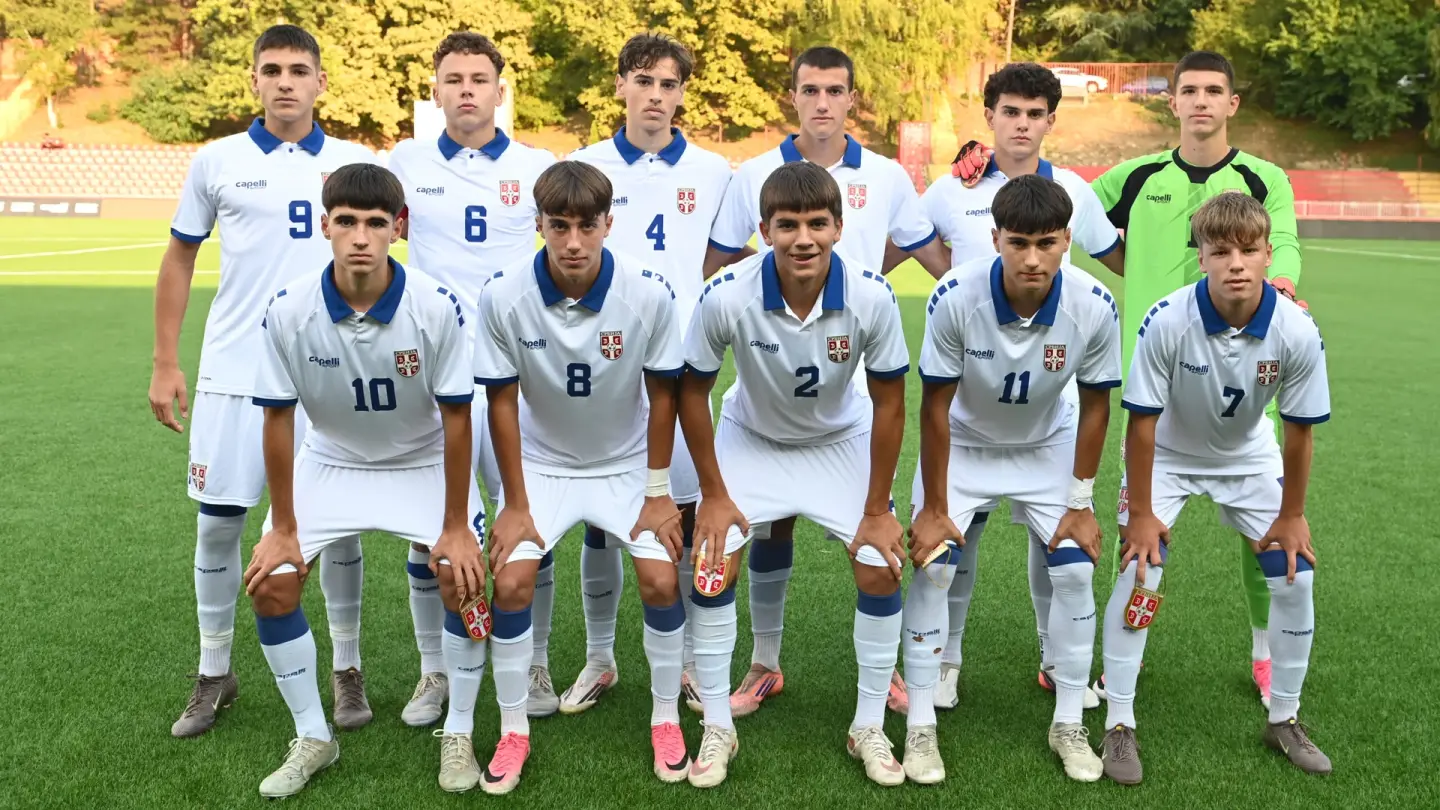
Serbia and Slovakia’s U17 sides played out a 1:1 draw in Ub in the first of two friendlies. The visitors went ahead through Blaščik, and Đorđe Đorović levelled just minutes after taking the field. Serbia then played on with a man fewer, which turned the closing stages into a valuable test of discipline and of holding a result.
The first half stayed goalless, but not free of battles
Both sides tried to win space in midfield from the opening whistle. Serbia looked to play passes into the forwards, while Slovakia often pressed the player on the ball from two directions. That tempo left little time for a calm build-up to the final pass. The defensive lines usually managed to close off the approach to goal before the attack could gain a clear advantage.
For a young squad, a game like this has value even without many big chances. Players learn when to accelerate and when to keep possession and restore the team’s shape. Serbia did not allow a few lost balls to turn into constant pressure. On the other side, the final action of the moves lacked the precision needed to create a gap before the break.
Slovakia made the most of the first spell after the interval
The visitors went ahead in the 52nd minute through Samuel Blaščik. He came on at the start of the second half and quickly brought energy to the Slovak attack. At that moment Serbia were slow to drop back towards their own goal, so the opponent had enough time to finish the move without another pass. The goal conceded showed just how important the first minutes after the break can be.
The response was not panicked. Head coach Radovan Krivokapić made several changes in the 61st minute and refreshed the attacking positions. Rather than long balls without a clear target, Serbia kept looking for space through movement between the lines. This let the substitutes settle into the rhythm of the match straight away, instead of simply chasing the score with individual runs.
Đorović equalised three minutes after coming on
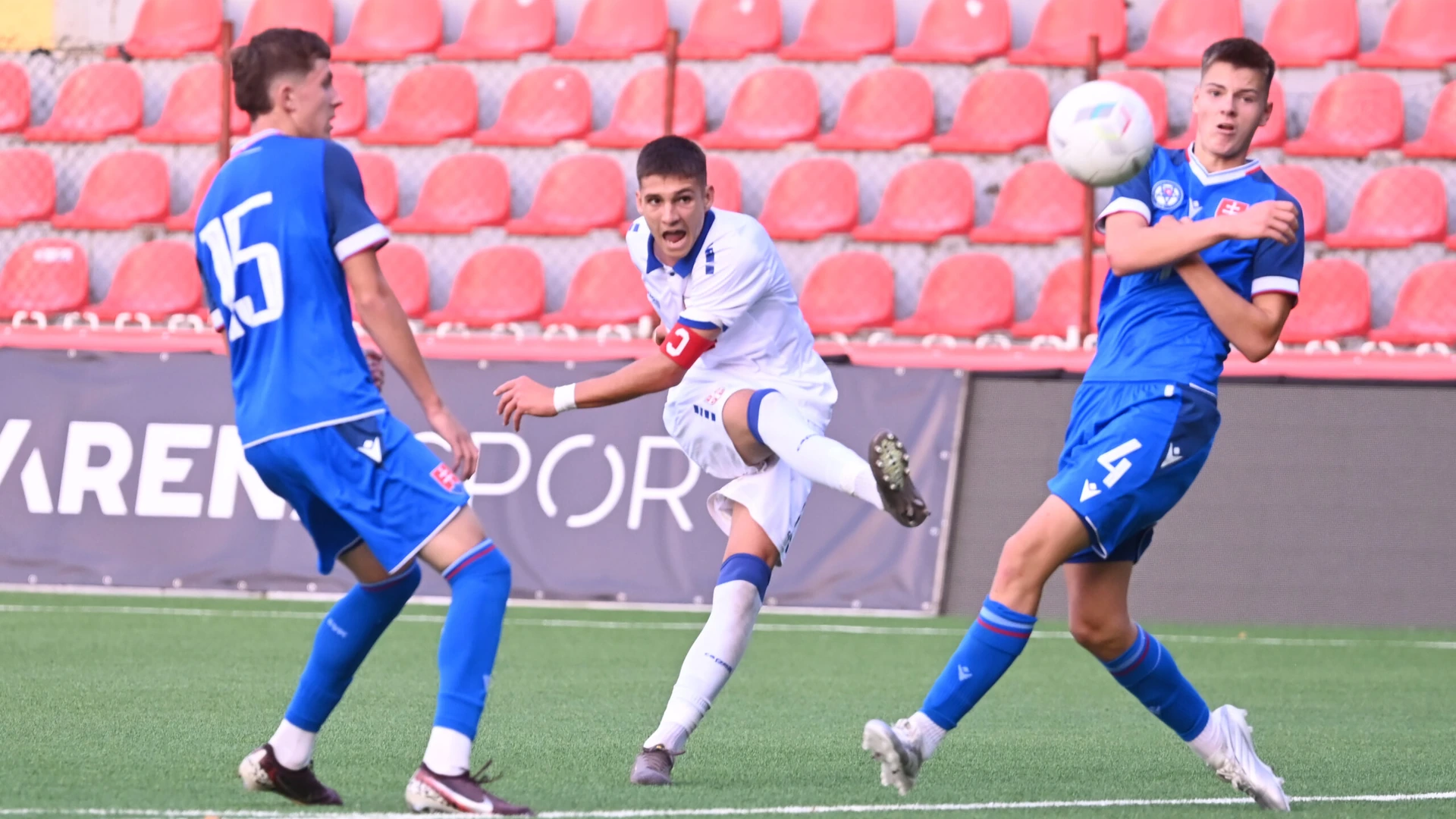
Đorđe Đorović replaced Aleksa Prijović and scored the equaliser just three minutes later. His introduction changed the height of Serbia’s last line, as Slovakia had to pay more attention to the space behind their full-backs. The goal rewarded the good reaction of the whole team, as well as the readiness of the young forward to look for a finish straight away.
A goal from the bench gives the coach important information before the next test. At youth level, it is not enough to judge only the starting line-up. It is necessary to see who can read the tempo of a match from the bench and apply a task quickly. Đorović did exactly that: he did not try to touch the ball in every move, but waited for the moment when he could influence the result.
| Item | Detail |
|---|---|
| Result | Serbia U17 1:1 Slovakia U17 |
| Serbia goal | Đorđe Đorović, 64th minute |
| Slovakia goal | Samuel Blaščik, 52nd minute |
| Red card | Toković, 65th minute |
The red card changed the final twenty-five minutes
Soon after the equaliser Serbia were down to ten men when Toković was shown a red card. The side had to tighten the gaps and choose their moments more carefully to leave their block. The wide players could no longer push high at the same time, and the central midfielders took on more of the space in front of the defence. Slovakia enjoyed more of the ball but could not find a winning goal.
Holding a draw with a man fewer was not the original plan, but it offered a useful competitive scenario. Young players had to communicate while tired and accept simpler solutions. Rather than unnecessary dribbles near their own goal, the priority was a clean first pass or a safe carry out of defence. Experiences like these are hard to gain in training alone.
The second match should show how quickly the squad learns
The same opponents will meet again in Ub, so the coaching staff will be able to check the conclusions from the first game straight away. Serbia need to recognise sooner when a fresh Slovak player comes on, and in attack they can make better use of the movement that preceded the equaliser. Facing the same opponent again is no drawback when the second game brings clear changes to the plan.
The 1:1 result gives a realistic picture. Serbia showed character after conceding and organisation while down to ten, but there is room for a calmer start to the second half. Most importantly, progress should not show only in the final score. A better first pass, fewer lost balls in midfield and timely reactions to the opponent’s changes will be more precise indicators.
The substitutions showed the value of the whole group
The number of changes in the second half showed that the coach wants information on the entire squad. A player who starts on the bench must receive a clear task, and a starter needs to understand that a substitution is not a punishment. When both parts of the squad accept the same principle of play, competition raises the level of training instead of creating fear of mistakes.
Đorović’s goal is a good example. He took his chance, but the draw was also preserved by a defence that worked with a man fewer. For that reason the analysis should not single out only the scorer. The useful conclusion is that different roles can decide the same match: the substitute brings the goal, and the rest of the team confirms his value through organisation.