
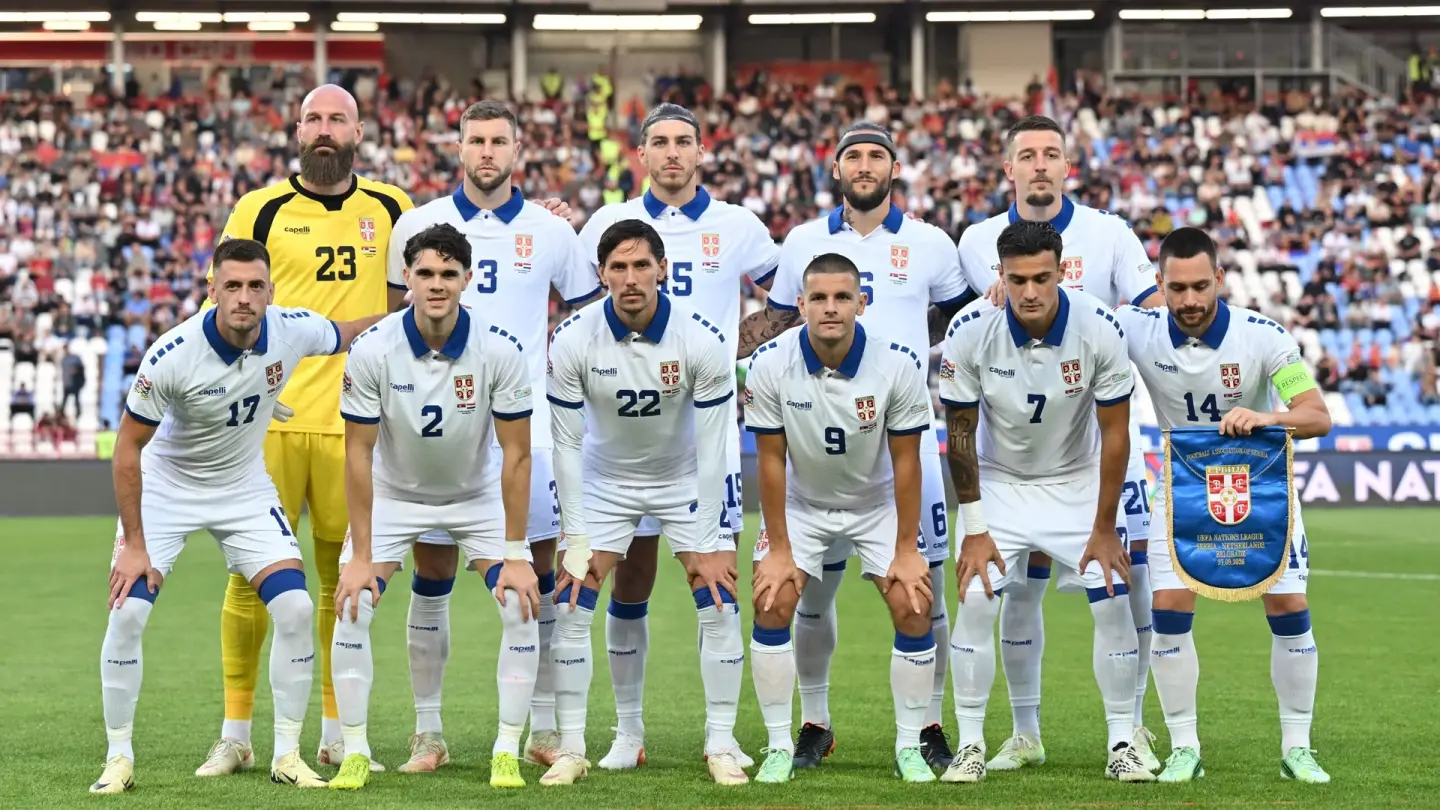
Serbia’s national football team fell 1:2 to the Netherlands in the second round of the top tier of the Nations League. Early in the second half Luka Jović wiped out the advantage that Sem Steijn Merdink had handed the visitors from the spot, but the Dutch forward decided the match with a second goal. Serbia displayed more resolve than in their opening game, although that improved performance has not yet been turned into a first point.
Serbia opened well but were not rewarded on the scoreboard
For the first half hour the hosts managed to steer play towards the flanks and keep the Netherlands from slipping easily into central areas. After a run down the right, Nedeljković found Joveljić at the far post, but Verbrugen stopped the attempt. It was an opportunity that could have changed how the visitors went on with the game.
Control was not complete, yet Serbia looked more secure in their shape. Gudelj and Lukić offered cover in front of the back line, while the wide players had a clearer link to the attack. The problem lay in the final pass once they had won space. When an opponent survives a good start without conceding, every subsequent lost ball becomes an invitation to swing the rhythm.
A penalty gave the Dutch a match that did not come easily
In the 30th minute a penalty was awarded after a duel between Terzić and Samerville close to the goal line. Merdink took responsibility and put the visitors in front. Whatever one makes of the contact, Serbia had to stay organised after the decision, as the Dutch immediately tried to exploit the hosts’ emotional dip and double their lead.
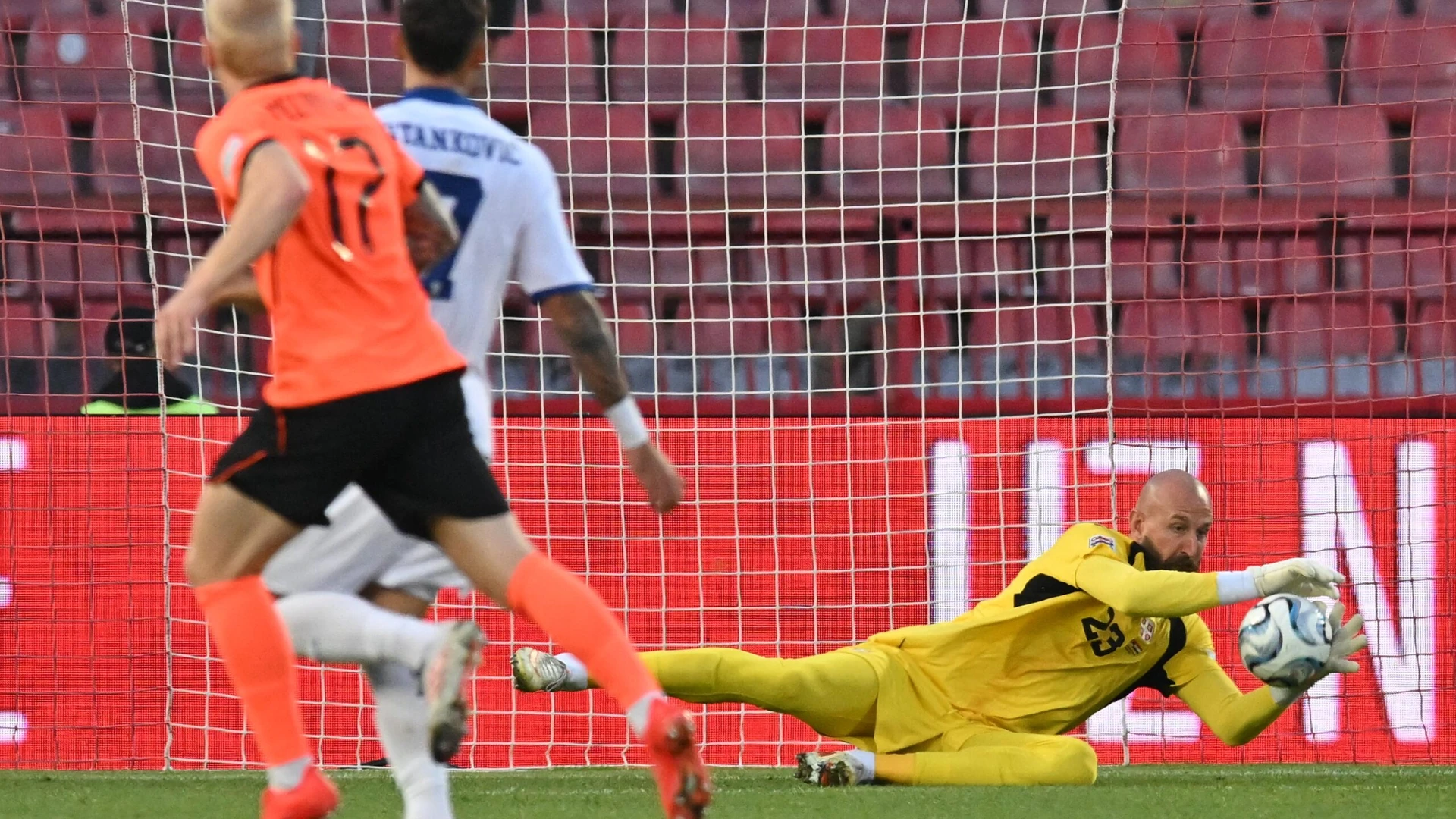
Vanja Milinković-Savić stopped Damfries one on one and kept the score within reach. That save mattered as much as Serbia’s later goal. Had the Netherlands gone two goals up, changes at half-time would have had to be far riskier and the room for counter-attacks by the visitors would have grown considerably.
Tadić and Jović changed the attacking picture at once
At half-time Veljko Paunović brought on Dušan Tadić and Luka Jović. Already in the 47th minute a move went through Tadić, Saša Lukić provided the assist, and Jović scored from his second attempt to make it 1:1. The substitutions brought more than fresh legs; they brought players who knew where to accelerate the attack and who should occupy the penalty area.
Jović’s goal showed the value of continuing a move after the first setback. Serbia did not stop when the initial effort failed but kept enough players around the ball to give the attack a second chance. Such persistence is useful, but it must be backed by cover behind the ball. Otherwise every extra player committed in the final third raises the risk when possession is lost.
| Event | Minute | Player |
|---|---|---|
| Netherlands take the lead | 30 | Merdink, penalty |
| Serbia equalise | 47 | Luka Jović |
| Winning goal | 69 | Merdink |
| Final score | 90 | Serbia 1:2 Netherlands |
Merdink’s second goal punished a brief lapse in concentration
In the 69th minute the Netherlands found Merdink again and regained the lead. Serbia had pushed their lines higher to build on the momentum after the equaliser, but the gap between midfield and the last line did not always stay the same. The visitors used that space to prepare the final pass rather than being forced into a hurried cross.
Defending against a side like this does not end with the first duel. It requires tracking the forwards’ movement and closing the line for the second ball. Merdink was calm in the moment of decision both times, which earns the Dutchman individual credit, but it leaves Serbia with a collective task: after a second ball is lost, the reaction of every line must be simultaneous.
A better impression cannot replace points
Against the Netherlands Serbia looked braver and more connected than in the defeat to Greece, yet the second match also ended 1:2. Progress shows in the way the team responded after falling behind and in the number of phases in which it competed on equal terms with a strong opponent. The table, however, does not measure impressions, so the next analysis must focus on the details that repeatedly cost points.
The most important moments come straight after the score changes. After levelling, Serbia had the energy of the crowd and the option to slow the game through possession, but they stayed open. The wiser choice is not necessarily to drop back; it can be a longer attack that forces the opponent to defend again and lets the home structure return to its proper shape.
The foundation is there, but the finishing needs more precision
Paunović now has evidence that Tadić and Jović can quickly change the course of a match, and that younger players can handle demanding minutes. The next step is for that quality not to depend solely on the reaction from the bench. The starting line-up must more often turn good pressure into clean shots and prevent the opponent from undoing a long spell of work with a single decision.
The defeat to the Netherlands is therefore no reason to abandon the approach, but it is a warning that bravery needs a tactical framework. Serbia reached a equaliser, forced the visitors to find a new answer and stayed in the game to the end. For a similar performance to bring points, there must be fewer lapses in concentration and calmer choices once momentum has been built.