
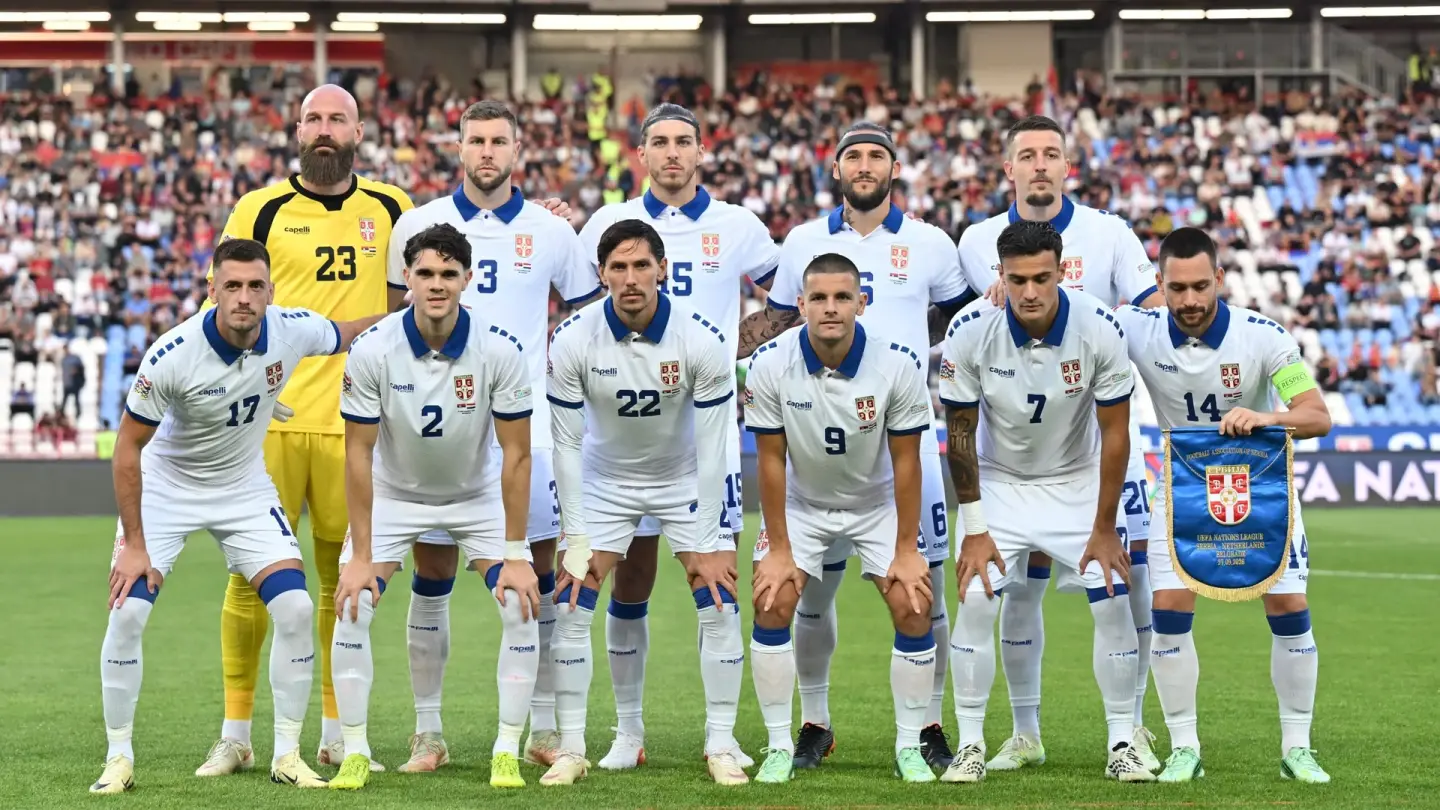
The Serbian national team offered a brave and organised resistance to the Netherlands, but lost 2:1 in Belgrade. Luka Jović cancelled out the lead Noa Merdink had given the visitors from the penalty spot early in the second half. The Dutch striker then took advantage of a brief lapse in concentration from the home defence once more to set the final score.
Serbia controlled the match for half an hour
The home side did not enter the game intending only to defend their own box. The full-backs pushed high enough, and the midfield tried to draw out the Dutch pressure with short passes. The best early chance came down the right, when Kosta Nedeljković sent a cross towards Dejan Joveljić. The finish was direct, but goalkeeper Bart Verbrugen stayed well positioned and stopped the shot.
The Netherlands had more possession in that phase, but the ball did not immediately produce clear chances. Serbia closed the space between the centre-backs and the holding midfielders, so the visitors often circulated around the block without a final pass. That balance shows the hosts could play against a strong opponent without constantly dropping back. The problem only arose when a duel on the edge of the action changed the course of the match.
The penalty changed the mood on the pitch
Referee Simon Marčinjak awarded a spot kick after contact between Aleksa Terzić and Christian Samerville. The ball was already heading towards the byline, which made the decision seem harsh from Serbia’s point of view. Merdink took responsibility and gave the Netherlands the lead in the 30th minute. The goal did not come from a long spell of dominance by the visitors, but it forced the home side to take more risks afterwards.
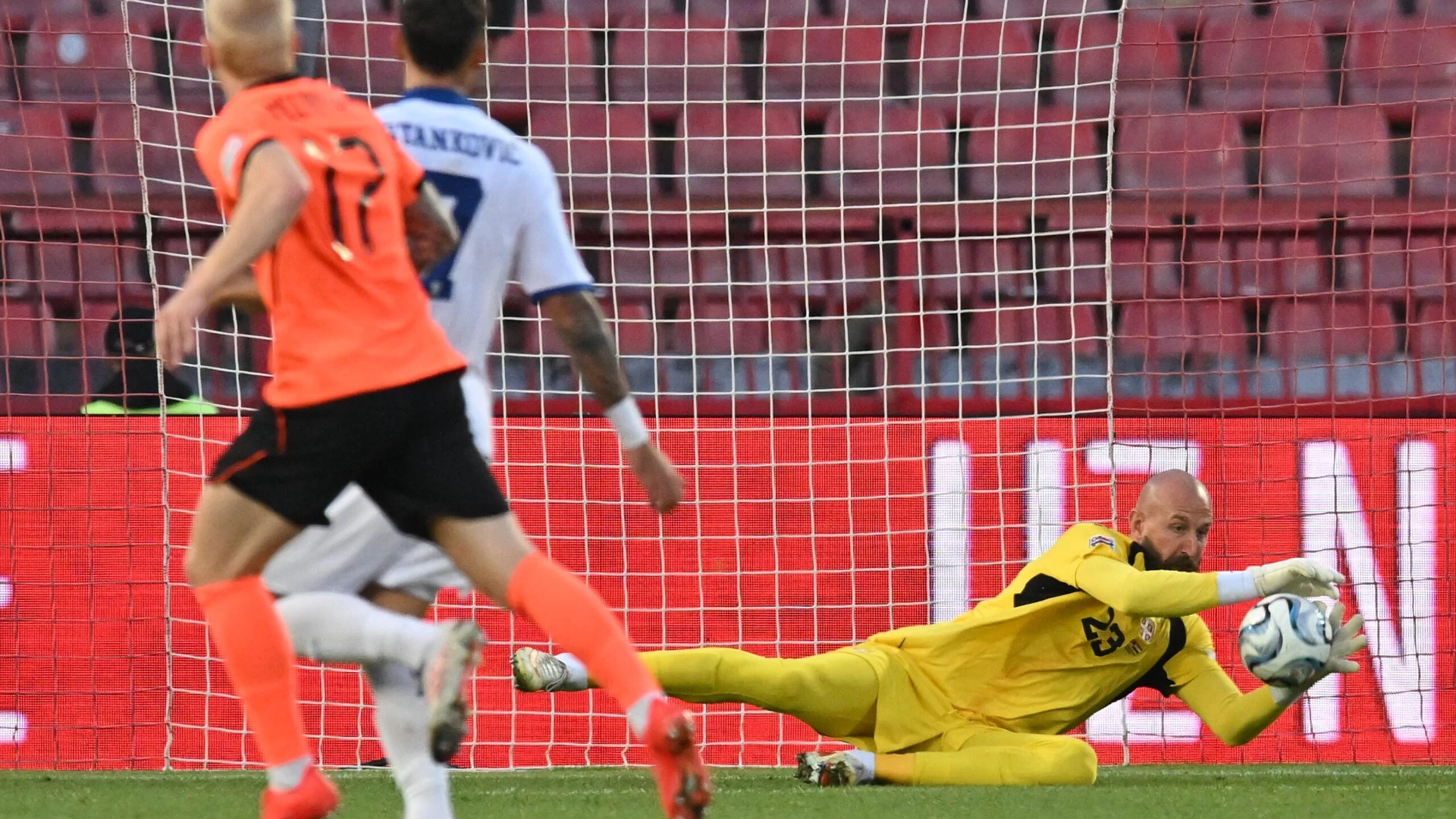
The Netherlands soon had another big opportunity. Denzel Dumfries got clean through on Vanja Milinković-Savić, and the Serbian goalkeeper saved the one-goal deficit with a well-timed rush off his line. That save was important because it kept Serbia in the match until the break. Rather than chasing two goals, the coaching staff could prepare a clear change for the start of the second half.
| Key event | Detail |
|---|---|
| Final result | Serbia 1:2 Netherlands |
| Serbia goal | Luka Jović, 47th minute |
| Netherlands goals | Noa Merdink, two |
| Half-time score | 0:1 |
Two changes brought an immediate equaliser
At half-time Veljko Paunović brought on Dušan Tadić and Luka Jović. The change immediately increased Serbia’s presence between the Dutch lines. Tadić linked up the attack, Andrija Živković stayed involved in the move, and Jović sent the ball into the net from a scramble in the 47th minute. It was a goal from a striker who did not give up after his first shot was blocked.
The equaliser showed how much a bench can change the character of a match. Serbia gained a player who can receive the ball under pressure and a striker who stays in the danger zone after a rebound. The move was not perfectly clean, but it came from having more home players in the final third. It is a useful pattern for upcoming matches in which Serbia will need to react quickly to an unfavourable score.
An open space punished Merdink’s second goal
After the equaliser Serbia tried to keep the pressure on, but did not cover every lost ball in the same way. In the 69th minute the Netherlands found the space behind the last line with a long pass. Guus Til picked out Merdink, and the striker calmly finished for 2:1. The home defence reacted late in that situation, even though the earlier flow of the game did not suggest a long spell of Dutch dominance.
Details like these decide matches at the highest level. A good block for most of a game is worth little if the line loses its shape even once. Serbia tried until the end to make things happen through Filip Kostić from distance, but did not create another chance of the same value as the equaliser. The late pressure had energy, but lacked a calm pass before the shot.
Serbia must close the space better after losing the ball
The defeat should not be presented as a success, but it is important to separate the result from the quality of individual phases. Serbia showed it can close the central area, create a chance down the flank and lift its attack with changes from the bench. At the same time, it conceded two goals from situations that could have been better controlled. Progress must therefore be measurable through less empty space after a lost ball.
Two away matches follow, first in Munich against Germany and then the return against the Netherlands in Eindhoven. In those games it will be important to keep the boldness of the first half hour and distribute risk more precisely. Jović’s goal confirms that Serbia has an answer in the penalty area. The defence now has to ensure that a good attacking spell also brings points.