
Serbia’s U17 national team claimed a 1:0 win over Japan in Doha to advance to the first knockout round of the FIFA U17 World Cup. The decisive moment arrived as early as the 11th minute, when Dragan Anokić coolly converted from the spot. Rather than chasing a second goal at all costs, Serbia focused on keeping their shape and closing down space in front of their own box.
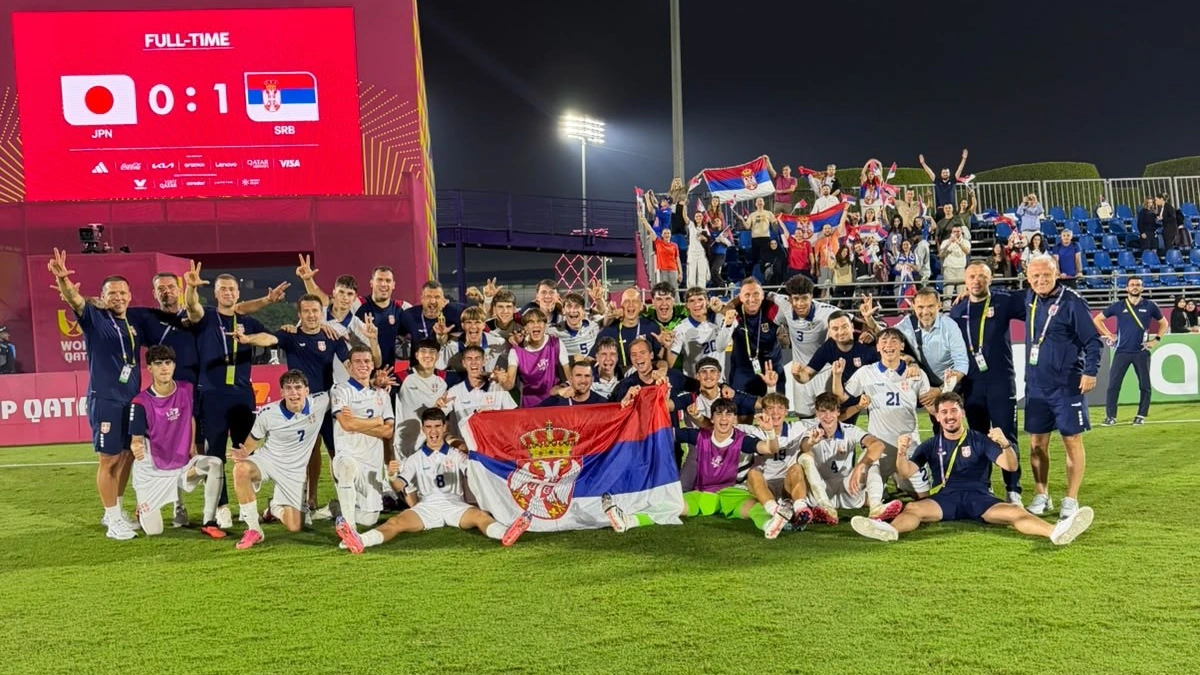
The result is made more impressive by the quality of the opposition. Japan came into the tournament as Asian champions and enjoyed the majority of possession for long spells. However, the Serbian players did not allow that control to translate into a large number of clear chances. The lines stayed compact, and goalkeeper Savo Radanović dealt confidently with anything that came his way.
Early goal shaped the contest
Serbia struck from one of their first meaningful attacks. The penalty allowed Igor Matić’s side to immediately implement a game plan that suited them: Japan were forced to push their defensive line higher, while Serbia’s forwards waited for space to exploit on the break. Such an approach required patience, as any unnecessary movement from a single player could open up a route through the middle.
The Japanese team attempted to pull Serbia’s midfield out of position with short passing combinations. Whenever the ball went wide, the nearest player pressed, while the rest cut off the return pass into the centre. As a result, the opposition were often forced into crosses from unfavourable angles instead of being able to carry the ball into the penalty area.
Discipline earned a place among the last 32
The pressure increased towards the end, but Serbia never lost sight of their core tasks. The centre-backs did not leave their zone without support, the full-backs tracked runners, and Radanović remained composed when dealing with high balls. The team preserved their slender lead without resorting to panic clearances.
The victory secured Serbia’s place in the last 32. In the knockout rounds there is no room to recover from a bad day, so the experience gained against Japan will be invaluable. The cadets demonstrated that they can withstand long periods without the ball and still pose a threat when the opportunity for a more direct attack presents itself.
The next opponent will bring a different kind of challenge, but the foundations remain the same: a compact team, clear communication, and a rational choice of when to attack. Serbia did not earn their qualification through a high volume of shots, but by converting one crucial moment into a goal and then defending that advantage for almost 80 minutes without losing tactical discipline.