
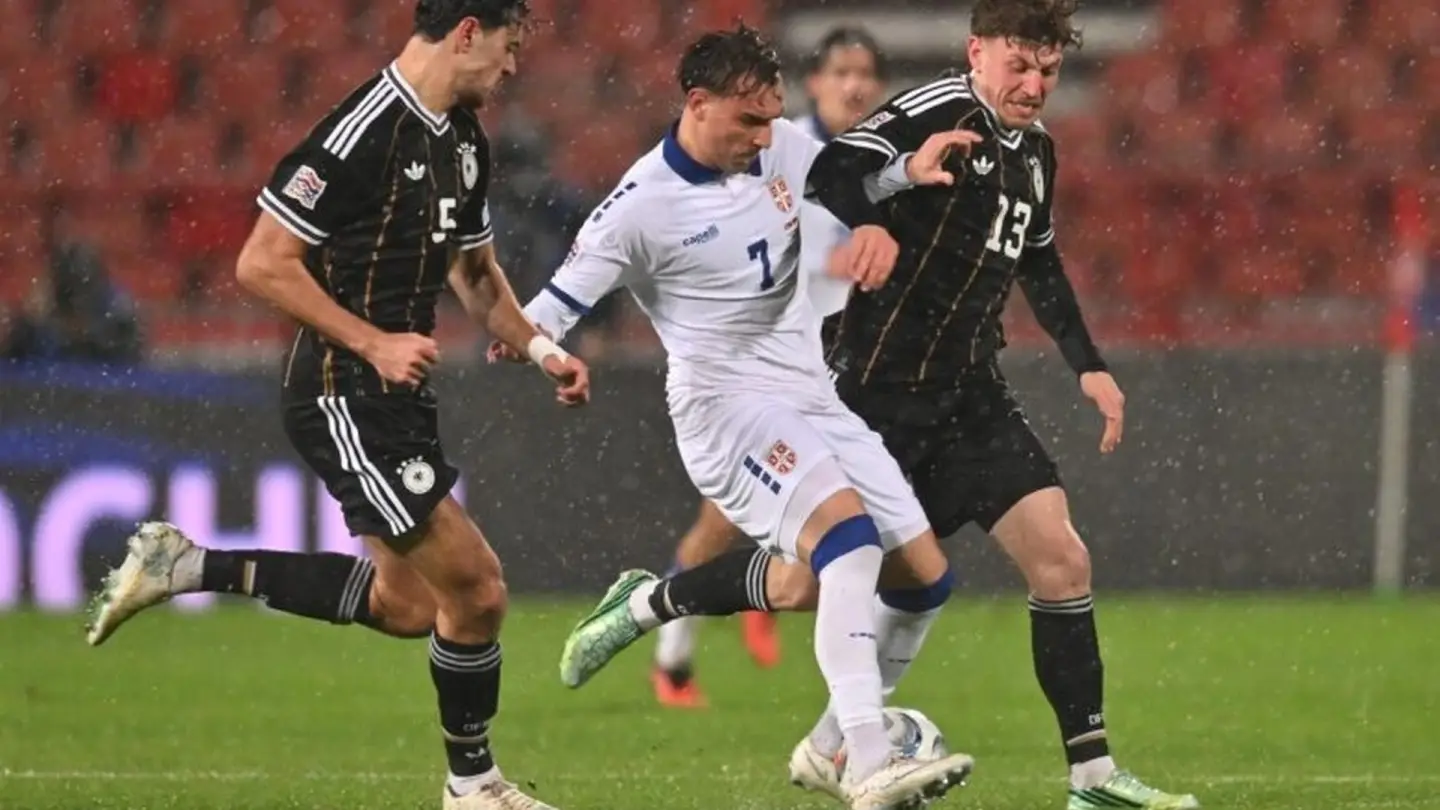
The visitors kept the ball more carefully and used the space between Serbia’s lines. After the break the home side played more directly and reached the penalty area more often, but it could not complete a comeback. The closing stages were harder still, as Serbia were left with nine players.
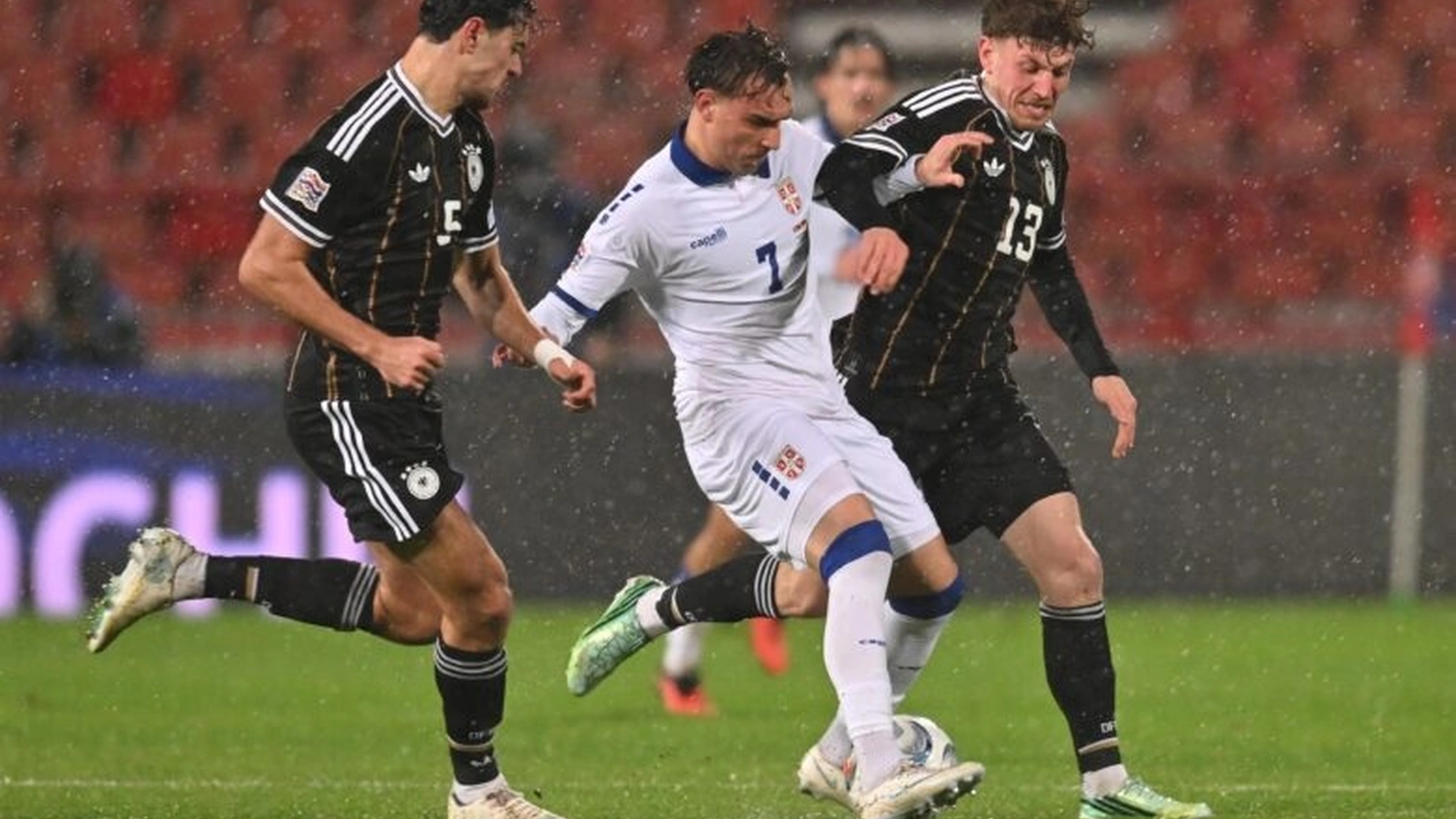
The match was played on 13 November at the Rajko Mitić Stadium in Belgrade. Children under 14 were in the stands, while a attendance restriction applied to other supporters. Head coach Veljko Paunović started with Dušan Tadić and Lazar Samardžić in midfield, just behind the striker.
Germany took an early lead
The first goal came after an unfortunate reaction from Srđan Babić, who put the ball into his own net. Florian Wirtz doubled Germany’s lead in the 14th minute. Serbia tried to respond down the flanks, but in the first half they found too little room for a clean shot.
Germany scored a third early in the second half. Brajan Gruda finished the visitors’ move in the 50th minute. Six minutes later Babić scored at the other end to make it 1:3. That goal lifted Serbia’s play, but the home side did not create another major chance.
- Srđan Babić scored an own goal first and then found the net for Serbia.
- Florian Wirtz and Brajan Gruda were the scorers for Germany.
- Serbia finished the match without Vukašin Dragojević and Andrija Živković.
The final round will decide Serbia’s position
Dragojević was sent off in the 76th minute. Živković was dismissed late on after a protest. With two men fewer, Serbia could no longer press Germany’s defence seriously. The score did not change before the final whistle.
Serbia play Greece on 16 November in Volos, away from home. That fixture determines which side is better placed in the fight to avoid relegation from Nations League A. If Serbia qualify for extra matches, they will be played in March of next year.
Paunović will have to change his line-up before that game because of suspensions. The physical condition of the players who logged heavy minutes against Germany will also matter. Serbia must tighten their defence after losing possession, since Germany created their greatest danger from quick counterattacks.
The defeat did not close the path to the extra matches for survival, but Serbia can no longer afford another mistake. The side in Volos needs a more organised performance and better control of midfield. Their final position in the group will only be known after the last round.