
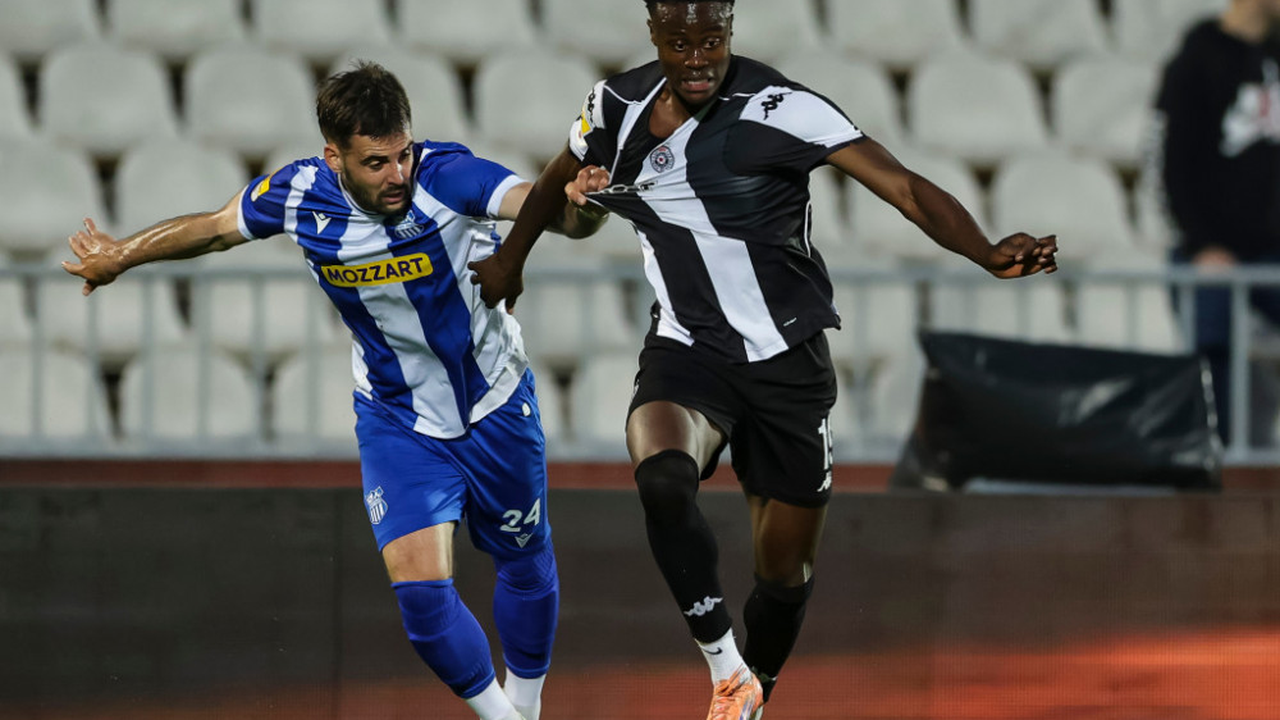
The 2026/27 Serbian SuperLiga will have 14 clubs. It is a transitional year ahead of the cut to 12 participants. The regular phase consists of 26 rounds, with every club meeting each other once at home and once away.
After round 26, the top six teams move into the championship play-off, while the remaining eight go into the relegation play-out. Each group then plays a single round-robin. Clubs in the upper group have five more matches to play, and sides in the lower group have seven.
How the regular phase works
Fourteen clubs produce a double round-robin schedule of 26 games per team. Because the number of participants is even, no side has a bye in the regular rounds. The table after that stage decides the split, and points earned carry over into the overall standings.
The two groups will not have the same number of clubs. In the play-off each side plays five more matches, while in the play-out the figure is seven. The official calendar has the season ending on 16 May 2027.
The regular phase contains 182 matches in total. After the split, the upper group adds 15 and the lower group 28 fixtures. The full season therefore comes to 225 matches. A club from the top six will play 31 league matches, while a team in the lower group will play 33, as it gains two extra rivals after the split.
Kick-off is on 17 July
The opening fixtures are played on Friday. Red Star Belgrade host Mačva, and Železničar face Radnički from Niš. Both games are scheduled for 20:00. The remaining matches of the first round follow over the weekend.
The autumn half runs until 6 December. The league resumes on 6 February after the winter break. These dates come from the calendar of the Football Association of Serbia, and individual kick-off times may still change for broadcast reasons.
Points from the first 26 rounds carry into the closing stage. They are neither shared out nor reduced, so a strong autumn still matters in spring. The split changes opponents and the number of remaining games, but it does not erase what a club has already earned.
Why the season is a transition
The federation has decided to reduce the number of clubs gradually, from 16 to 12. A season with 14 participants sits between those two formats. At the end of the campaign, four clubs will leave the top flight, while two places will be filled by sides promoted from the division below.
As a result, the 2027/28 SuperLiga will feature 12 teams. The fight at the bottom will therefore not hinge on just one place. The exact procedure for entry and relegation is set out in the official competition rules.
The SuperLiga start is also being followed through Teleoptik’s preparations for the First League.
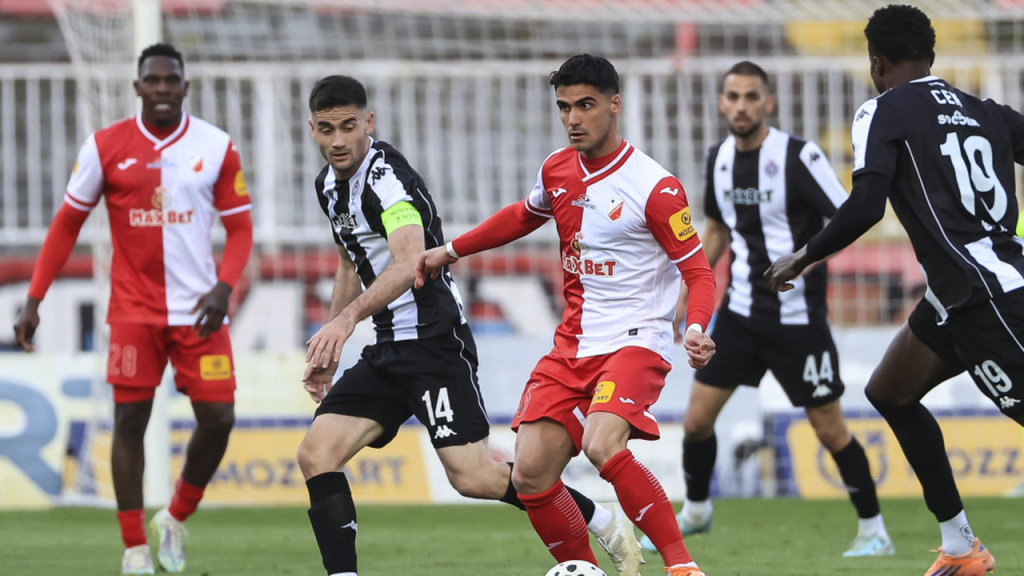
Vojvodina and Partizan players during the 2025/26 Serbian SuperLiga
Cutting the league to 12 clubs raises the stakes at the bottom. Four teams must leave the SuperLiga, and two must come up from the level below. That is a bigger change than an ordinary season. Clubs around the middle are watching both the sixth place and the gap to the relegation zone.
| Signal | Meaning |
|---|---|
| Number of clubs | 14 |
| Regular phase | 26 rounds |
| Split | Six clubs in the play-off, eight in the play-out |
Sixth place splits two races
After 26 rounds, sixth place becomes the dividing line. The club above it continues in the group for the top places and plays five more matches. The first team below the line enters the group for survival with seven more games.
No side has a guaranteed place in a group in advance. The split is determined by results from the whole regular phase. Early points are worth the same as late ones. With fewer clubs, each rival is met only twice before the split.
After the split, not every club will get the same number of home and away matches. Each group plays just one round. The official schedule determines who hosts in particular pairings. That does not change the points on offer, but it affects travel and preparation for the closing stage.
Changes to how matches are run
The league’s management has also presented changes covering refereeing, VAR, player registration, equipment and medical arrangements. These concern how matches are organised. They do not alter the points system or the division into two groups.
The new rules do not by themselves guarantee better football. They set common procedures for clubs and match officials. Quality will still depend on players, coaches, pitches and decisions. The season will show how the changes work in practice.
A smaller number of clubs does not automatically mean less pressure. In the upper group, every match is against one of the top six. The lower group has more rounds and more head-to-head battles for survival. The transitional season therefore produces two different finishes, both emerging from the same 26 opening rounds.
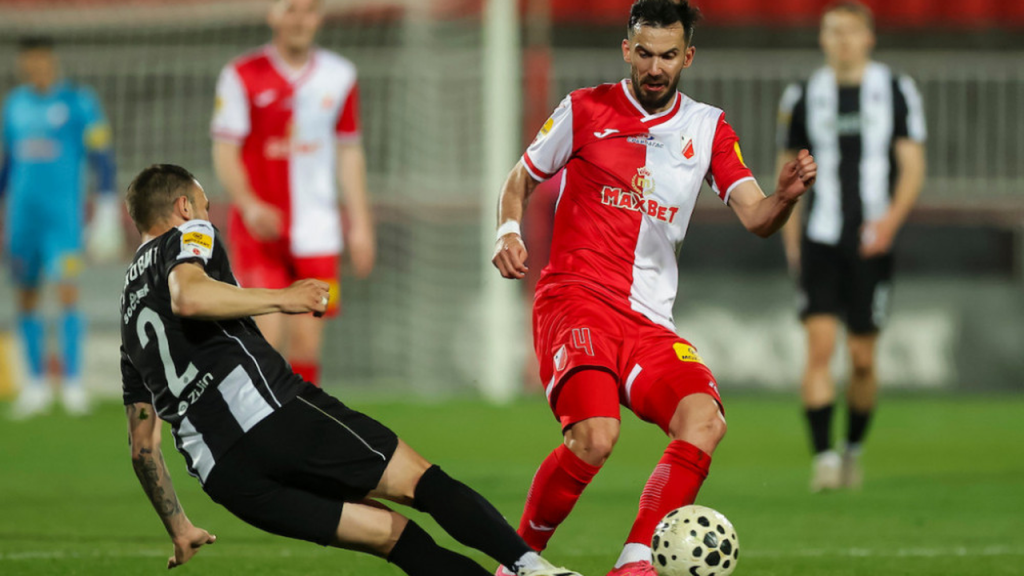
Vojvodina and Partizan players during a SuperLiga match at Karađorđe
The key facts before the start
The confirmed framework is 14 clubs, 26 rounds and a split of six plus eight. The upper group plays five additional matches, and the lower group seven. A move to a league of 12 participants is planned after this season.
Red Star Belgrade enter as defending champions, but everyone starts on zero points. The first round settles neither the top nor survival. It opens a transitional season in which two separate races take shape only after round 26.
The total number of matches per club is not the same after the split. Teams in the play-off finish with 31 games, while clubs in the play-out reach 33. That gap arises because the groups have six and eight members respectively. It does not mean the lower section is worth more, only that it contains two extra rivals. When comparing season statistics at the end, the different number of appearances will need to be taken into account. The same principle applies to player minutes, goals and team wins. The whole format contains 225 matches from the first round to the end of both groups.