
The Football Association of Serbia has presented the most important changes to the Laws of the Game for the 2026/27 season. The new rules are meant to protect the rhythm of matches, reduce time-wasting, improve player conduct and make it easier for referees to manage stoppages.
The changes are based on decisions of the International Football Association Board and take effect on 1 July 2026. Some competitions may apply them earlier, particularly if they start before that date. Serbian clubs, coaches, referees and players therefore need to prepare before the new domestic season begins.
GOALKEEPERS HAVE EIGHT SECONDS TO RELEASE THE BALL
The most visible change concerns a goalkeeper who controls the ball with their hands. The permitted time rises from six to eight seconds, but the sanction becomes more practical. If a goalkeeper exceeds the limit, the opposing side is awarded a corner kick rather than an indirect free kick.
During the final five seconds, the referee will use a visible hand count. The change gives the goalkeeper realistic time to find a team-mate, while setting a clear consequence for deliberately slowing the restart.
Situation: Goalkeeper controls the ball with the hands
Decision from the 2026/27 season: Eight seconds at most
Situation: The time limit is exceeded
Decision from the 2026/27 season: Corner kick for the opposing team
Situation: Final part of the limit
Decision from the 2026/27 season: Visible five-second countdown
SUBSTITUTIONS AND INJURY STOPPAGES WILL BE MORE TIGHTLY CONTROLLED
A player leaving the pitch for a substitution must do so without unnecessary delay. Unreasonable time-wasting can be punished with a yellow card. The aim is to stop substitutions being used as a way to consume a large part of injury time.
The rule on treating injured players has also been tightened. A footballer who has received treatment on the field must generally stay off the pitch for a set period before returning. The competition may set a period of up to one minute.
The changes for the 2026/27 season focus on match rhythm and player conduct.
There are exceptions, including a situation where a player is injured by an opponent’s start that earned that opponent a yellow or red card. The rule is meant to cut unnecessary stoppages, but not to penalise a player who genuinely needs help.
THE EIGHT-SECOND LIMIT ALSO APPLIES TO SOME RESTARTS
Throw-ins and goal kicks must be taken within eight seconds once the team is ready to restart. The referee may again show a visible countdown over the last five seconds. If a player does not take the restart in time, the ball can be awarded to the opponent through the appropriate decision.
The same drive for quicker play is seen in referee drop balls. As soon as the players are in position, the referee should restart play without delay. This removes long stoppages where the ball is ready but neither side wants to continue.
THE MOST IMPORTANT CHANGES AFFECTING MATCH RHYTHM
- Eight seconds for the ball in a goalkeeper’s hands
- Visible countdown before the time expires
- Stricter sanction for slow substitutions
- Time limit for throw-ins and goal kicks
- Quicker referee drop balls
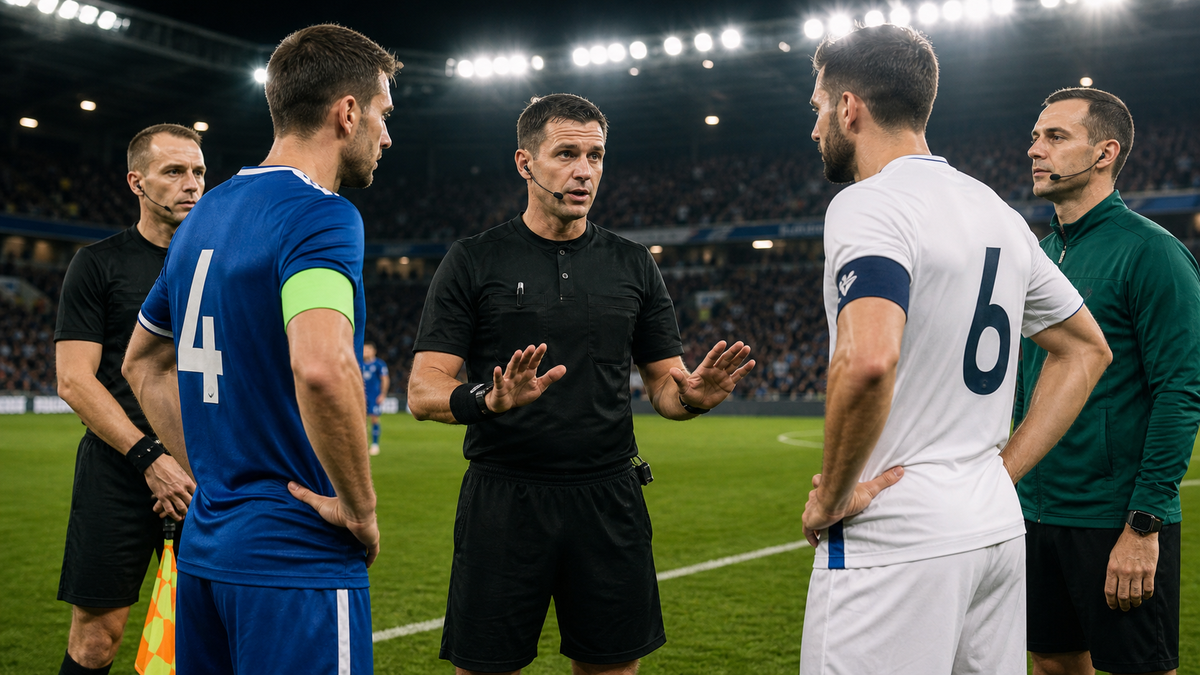
CAPTAINS GET A CLEARER ROLE IN TALKS WITH THE REFEREE
Competitions may apply a principle under which only the captain approaches the referee during important explanations. Other players must move away when given such an instruction.
This does not ban normal communication during a match. The aim is to prevent a large group of footballers gathering around the referee. A player who refuses to move away may receive a yellow card.
As the principle is introduced by the competition organiser, Serbian clubs must check the specific regulations of the league or cup in which they compete.
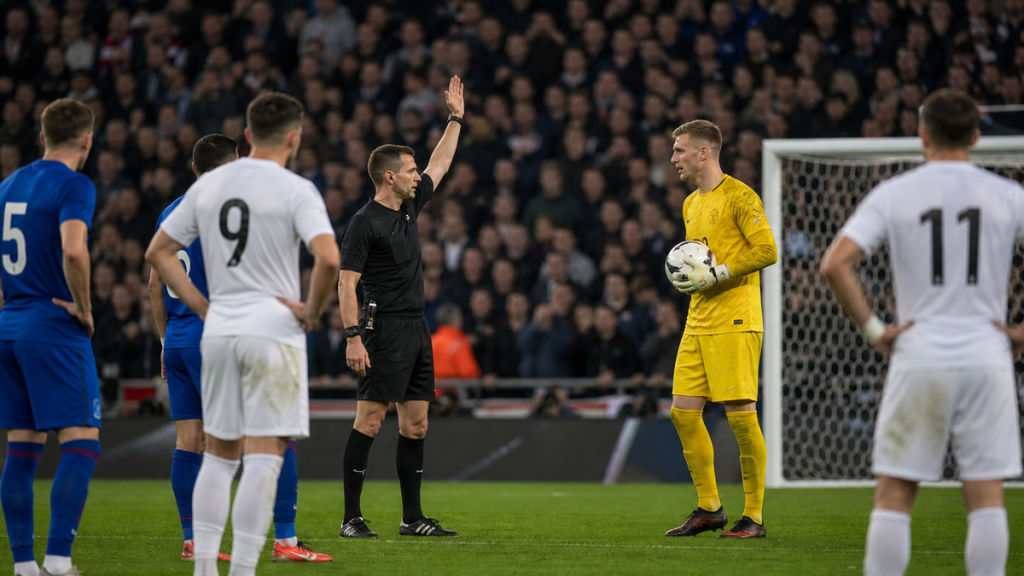
The goalkeeper has eight seconds before the opponent is awarded a corner kick.
ACCIDENTAL CONTACT BY A TEAM MEMBER HAS A NEW SOLUTION
If a member of the coaching staff, a substitute, a substituted player or a sent-off player accidentally touches a ball that clearly leaves the pitch, the referee may award an indirect free kick without automatically showing a card. Deliberate interference remains punishable.
This distinction allows the referee to separate a harmless accidental touch from an attempt to influence play. The position and movement of the ball will be important when judging whether it has clearly crossed the boundary.
VAR IN COMPETITIONS GAINS LIMITED NEW OPTIONS
Competitions that use VAR may allow a check of a wrongly shown second yellow card and of cases of player identity mix-ups. VAR may also intervene over a clearly wrong corner kick decision, but only if the check can be completed immediately without delaying the restart.
This does not mean every decision becomes subject to review. The focus stays on clear errors with serious consequences, while the organiser chooses which permitted options to introduce.
WHAT SERBIAN CLUBS NEED TO PREPARE
- Goalkeepers must organise their distribution faster and more confidently
- Substituted players must leave the pitch immediately
- Captains need to understand their new communication responsibility
- Coaches must study the specific VAR rules of their competition
THE NEW RULES TARGET LOST TIME AND CROWDING AROUND THE REFEREE
The changes for the 2026/27 season do not alter the basic tactics of football, but they may strongly affect how matches are managed. Teams that regularly slow restarts or surround the referee will face clearer sanctions, while well-organised sides can benefit from the quicker game.
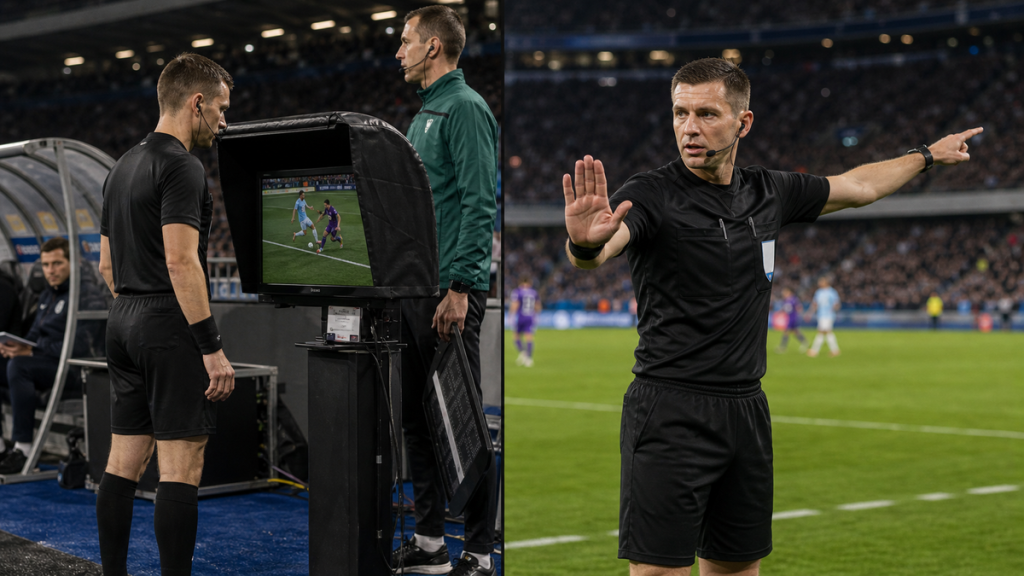
Competitions may introduce limited additional VAR review options.
For Serbian football, preparation starts well before the first official match. Referees need a consistent standard, and clubs must explain the changes to every player. The goal is a faster game with fewer unnecessary stoppages and clearer communication.