
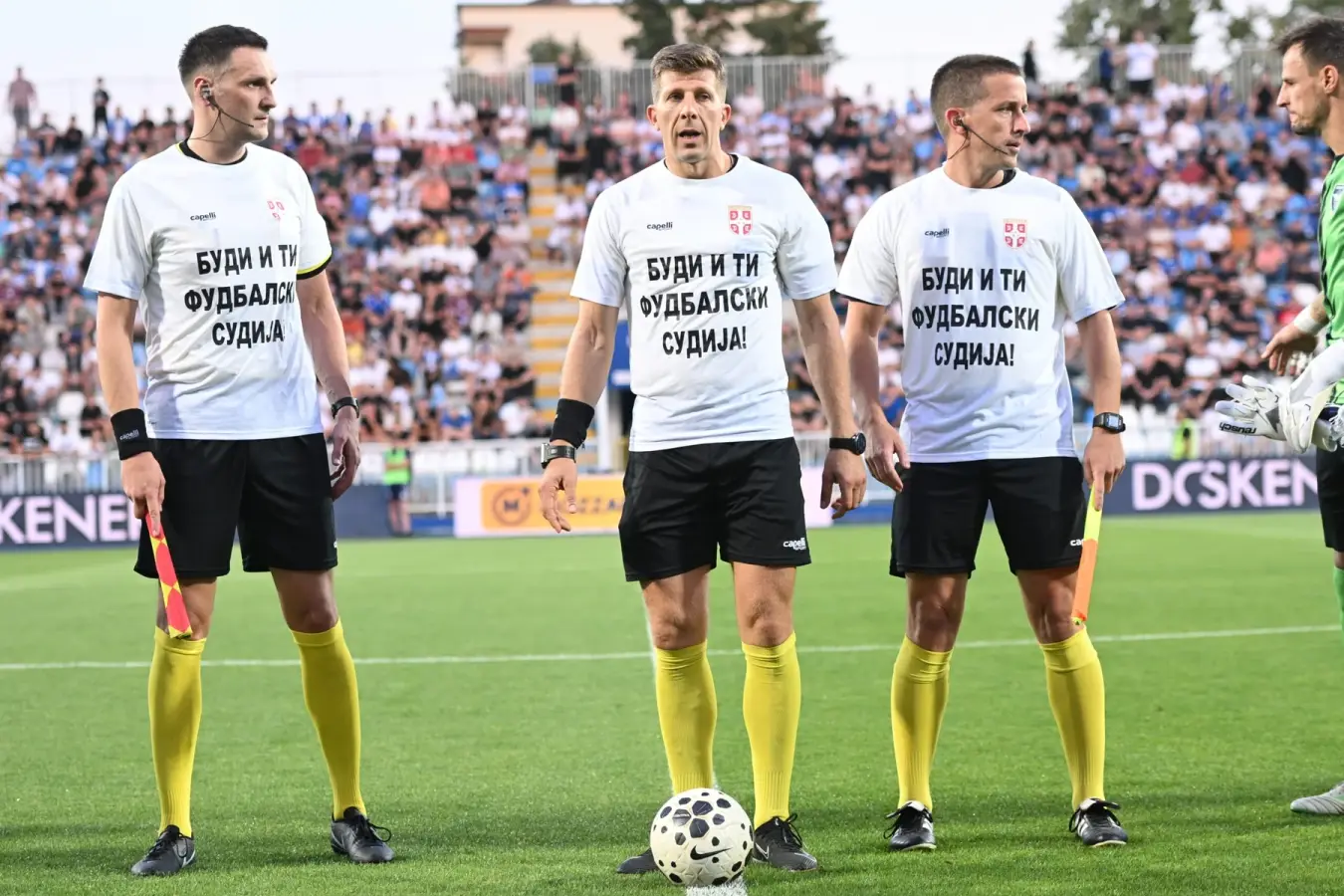
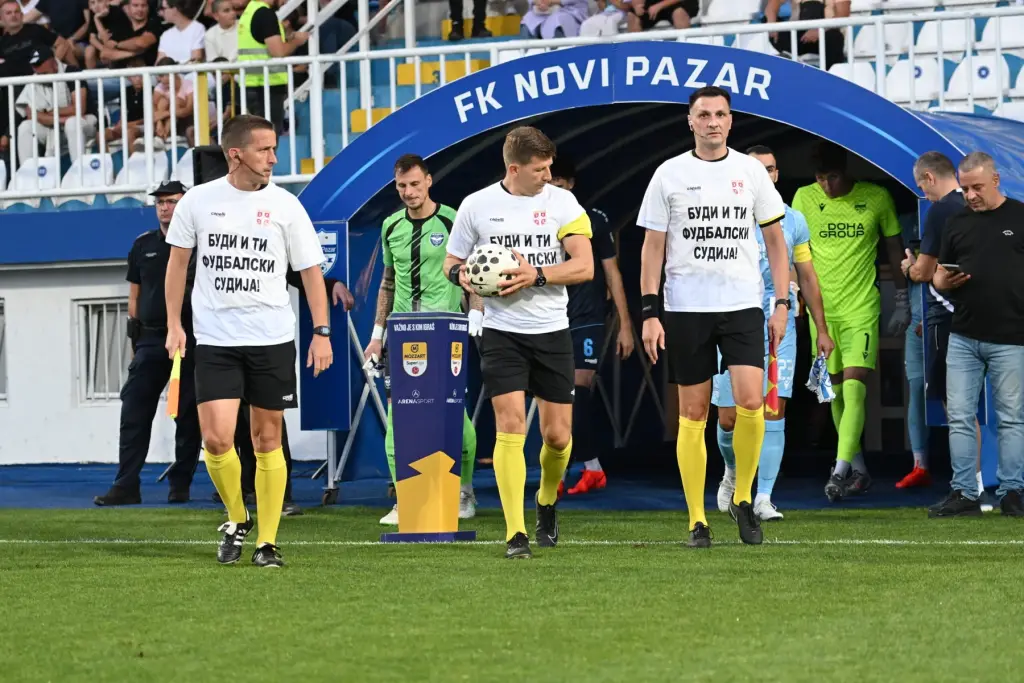
The Football Association of Serbia is continuing its support for the UEFA Be a Referee campaign. Referees will come out before the matches of this round wearing shirts that call on young women and men to learn about the refereeing role. The FSS will also show a promotional spot on TV Arena Sport channels and point interested people towards regional associations that run schools and handle local applications.
Being visible makes the first step easier
Young players and supporters see referees every week, yet they often have no idea how someone gets into the job. The pre-match message links the invitation to a familiar setting. Refereeing is not a hidden administrative task. The referee is on the pitch, makes decisions under pressure and works as part of a team with assistants. That visibility can turn general interest in football into a concrete question about training and entry requirements.
The invitation is open to both young women and young men
The FSS explicitly invites young people of both sexes to get to know refereeing. Such wording matters, because a new female candidate should not feel like an exception. Local schools still need good instructors, a safe environment and a clear path for development. The shirt opens the conversation, while the experience after applying decides whether the newcomer stays in the programme and builds confidence.
| Part of the campaign | Confirmed activity |
|---|---|
| Message on the pitch | Referees wear Budi fudbalski sudija shirts |
| Intended audience | Young women and men |
| Television | FSS promotional spot on Arena Sport channels |
| Applications | Information through five regional associations |
Regional associations provide the practical details
The national announcement lists contacts for Belgrade, Vojvodina, western Serbia, eastern Serbia and Kosovo and Metohija. That way an interested person gets a nearby first address rather than a single point of contact for the whole country. A candidate can ask about the start date of a course, the age requirement, the documents needed and the route to a first match. These details may vary from region to region, so an official contact is more reliable than an old social media post.
Training links the rules with managing a match
Knowing the Laws of the Game is the foundation, but a new referee also has to learn movement, communication and physical preparation. A correct decision is harder to explain if the referee is far from the incident or gives an unclear signal. Training should therefore combine classroom work, practical exercises on the pitch and matches under a mentor. Video analysis shows how the viewing angle changes the information available. The campaign only gains real meaning when the invitation leads into a full learning process.
Arena Sport takes the message beyond the stadium
The FSS promotional spot will be broadcast on Arena Sport channels. Television reaches viewers who will not attend this round’s matches and gives the message more time than a brief appearance by the teams. The spot should steer interest towards official information about applying. A memorable slogan is useful, but the viewer also needs to know who to ask. The link to regional contacts stops interest from fading before the next step.
A mentor can shield newcomers from the first pressure
A first competitive match brings faster decisions and stronger reactions than any training session. An experienced mentor can help with preparation, follow the referee’s movement and explain a difficult moment after the game. The review has to separate an understandable beginner’s error from a decision that needs immediate correction. Support does not remove responsibility. It gives the candidate a fair way to understand a decision and fix it before the same pattern repeats.
New candidates help the whole calendar
Football needs enough trained referees for senior, youth, women’s and regional leagues. A shortage means longer journeys, less recovery time and can send a beginner into a difficult assignment too early. More applications do not solve the problem at once, because training and experience take time. Even so, the campaign widens the base from which future referees can develop. Alongside the number of applicants, retention, assessments and progression should be tracked.
The campaign offers a clear and realistic invitation
Be a Referee invites people to explore a demanding job, but does not promise a quick route to the biggest stadiums. The first step is a conversation with the relevant regional association. After that, study, physical preparation, practical assessment and regular evaluations shape progress. Presenting that path honestly respects both the candidates and the profession. The best result is not a shirt seen once, but a person who enters the course with realistic expectations and keeps learning.
After the campaign there must be a clear next step
An interested candidate should be able to find the application, the training date and the contact for their regional organisation with ease. Support is also needed after the first sessions, because the first matches raise questions that cannot be solved by reading the rules alone. A good system explains how the journey begins, who monitors progress and whom a young referee can turn to after a difficult decision on the pitch.