
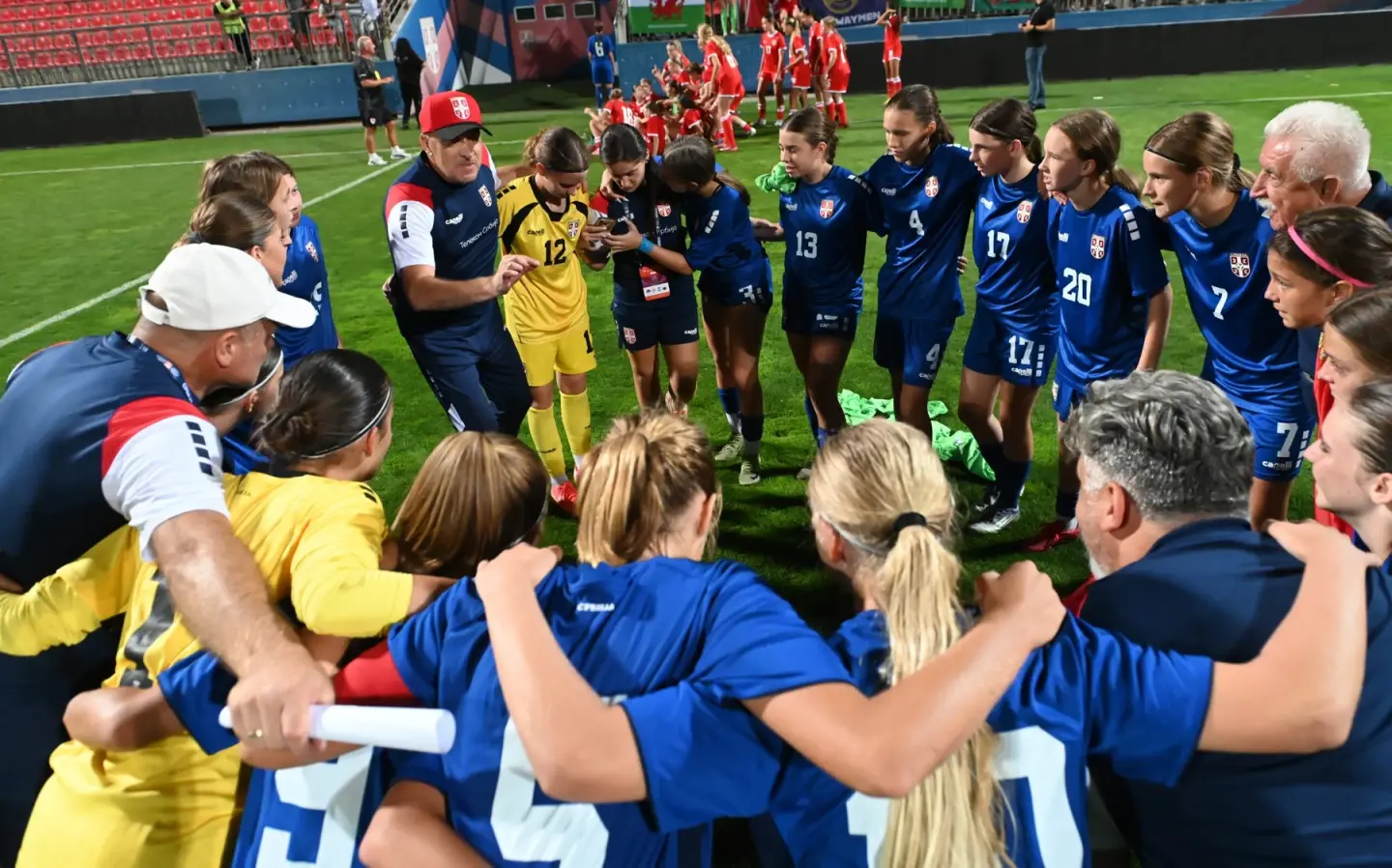
Serbia’s WU15 side ended the UEFA development tournament with a penalty shootout win over Wales. The match in Stara Pazova finished goalless at 0-0, and Serbia then prevailed 4-3 from the spot. It was their final fixture of the competition.
The decider required patience before the shootout
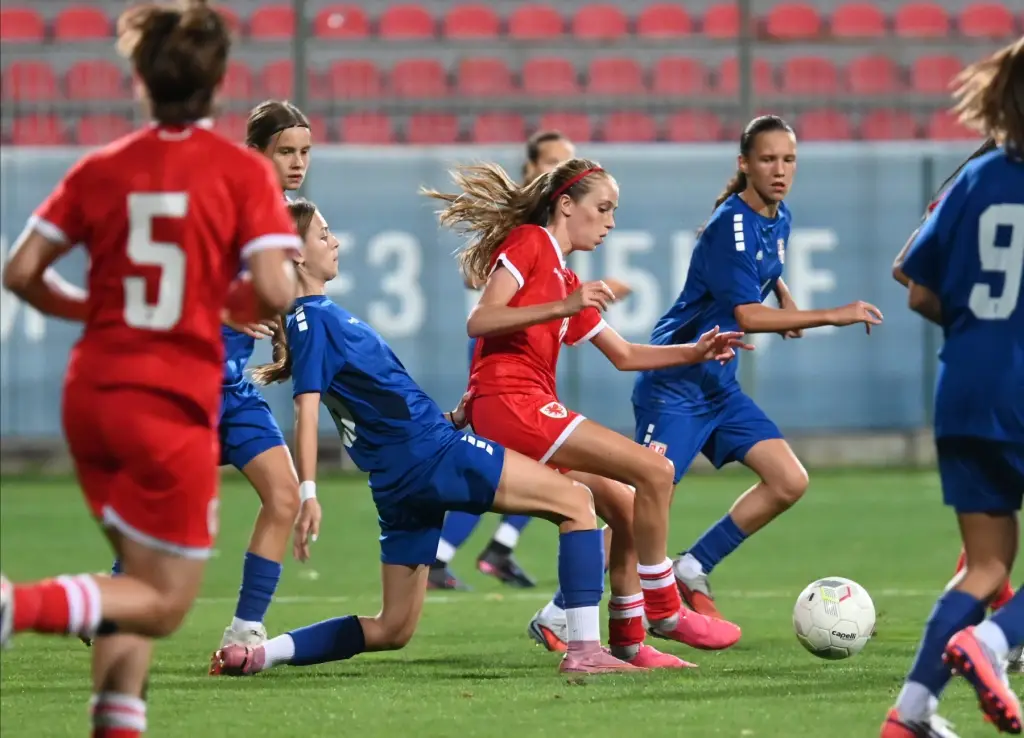
Neither Serbia nor Wales found the net in normal time. The scoreless stalemate still offered useful testing, as both sides protected their penalty areas well. For players born in 2012, an important part of development is keeping their shape on the pitch after substitutions and into the closing stages. Serbia did not need to push forward recklessly just because the score stayed level. The team reached the shootout calmly, where each kick carried a clear personal responsibility.
Serbia converted four penalties in the shootout
Serbia won the shootout 4-3 after normal time ended 0-0. Four converted penalties and the goalkeeper’s performance settled the outcome. Each player had to pick her corner calmly and repeat her technique regardless of the previous kick. The goalkeeper tracked her opponents’ body movement and waited for the right moment to react. Serbia came out on top in these individual duels and finished the tournament with a win.
| Match | Serbia’s result |
|---|---|
| Against Georgia | Win, 1-0 |
| Against Israel | Draw, 0-0; shootout defeat, 3-5 |
| Against Wales | Draw, 0-0; shootout win, 4-3 |
Serbia had a different task in each match
Serbia opened with a 1-0 win over Georgia. They then drew 0-0 with Israel and lost the shootout 3-5. The final game against Wales also ended without a goal, but this time Serbia were more accurate from the spot. These were three separate matches. The first showed the side could protect a narrow lead, the second brought the experience of a failed shootout, and the third offered a calmer response in the same format. That progress matters even though a development tournament is not measured like a senior championship.
Substitutions gave coaches a wider picture of the squad
Coach Aleksandar Petrović used substitutions throughout the tournament. This gave different players the chance to start, come on from the bench or take responsibility in the closing minutes. At this age, the aim goes beyond choosing a fixed starting line-up. The coaching staff watches how players take instructions, adapt to new teammates and respond after a mistake. Coming on in a goalless game presents a different challenge from protecting an early lead. The tournament offered both situations and let the coaches assess more players under similar conditions.
Senior national team coaches followed the players’ development
The FSS report notes that coaches from the senior women’s national teams attended the matches. Their presence links the WU15 group to a longer development pathway. A player does not progress or stall because of a single penalty, and a missed chance does not close that path. Coaches can compare movement, communication and decision-making across all three matches. That broader view stops young players being judged on one visible moment and helps the federation identify the skills to develop before the move into the next age group.
Three matches give a clear overview of the tournament
Serbia recorded one win in normal time and two goalless draws. After both draws, separate shootouts were played. Israel won the first, while Serbia were the stronger side in the second against Wales. The final appearance showed progress, as the Serbian players, after an earlier defeat, took a calmer and more accurate series of kicks.
Development continues after the final whistle
Individual analysis follows the tournament. Defenders can review how they protected the middle, midfielders can study the speed of their first pass, and forwards can look at their movement before the final ball. Penalty practice remains part of that work, but two goalless matches also show the need to create more chances without losing balance at the back. Serbia finished the tournament with a positive result against Wales and with three different experiences that the coaches can use at the next gathering.
The final result showed progress in the shootout
Serbia had lost a shootout to Israel earlier, but they were more successful against Wales in the same format. The players were therefore able to apply the lessons of the previous match quickly. A calmer approach, a clear decision before each kick and the goalkeeper’s work produced a positive end to the tournament. The coaching staff now has two different examples to analyse in terms of preparation and reaction under pressure.