
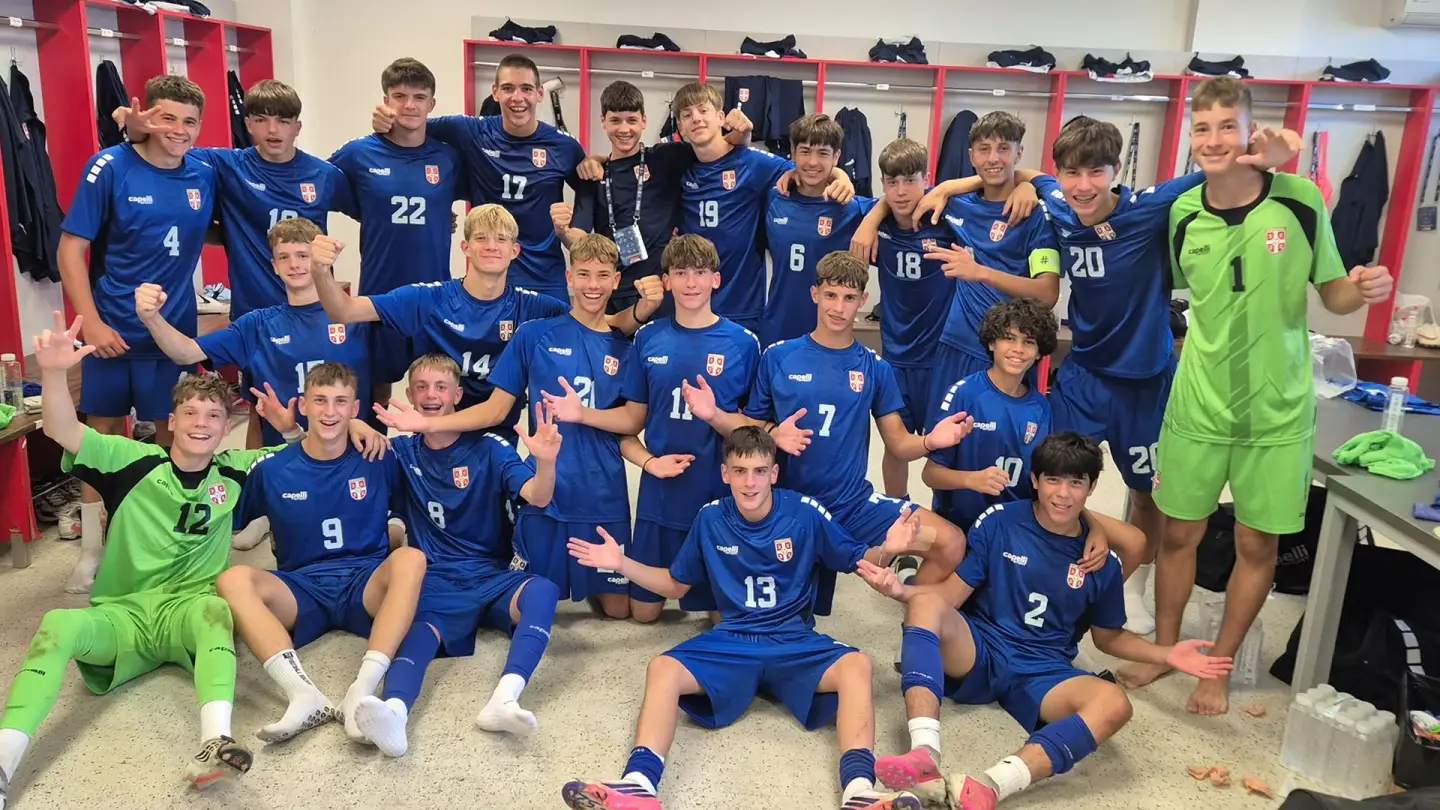
Serbia’s under-15 national team beat Kazakhstan 3:2 at the UEFA Development Tournament in Stara Pazova. The visitors were ahead by two goals at half-time, but Tufegdžić converted a penalty, and Nešković and Sinka then completed the turnaround within just five minutes. The match is already in the record books. The most important thing is the team’s response: the substitutions changed the tempo, the players kept asking for the ball, and the difficult deficit did not turn the restart into a run of rushed, unconnected efforts. The closing stages showed that the side can also hold on to a lead it fought hard to earn. Coaches have clear material for further work: a composed way out of pressing must be repeated even when there is no quick reward, and players should keep their agreed roles after a sudden swing in the score. That lesson matters more for the team’s development than the dramatic turnaround itself.
Kazakhstan took an early advantage
Artem struck from distance, and Abilaj later extended the visitors’ lead. Serbia had to accept a two-goal deficit before the break.
A deficit like that easily pushes young players to abandon their positions and chase every next ball. The coaching staff had to restore belief and offer a simple route to the first goal. Being two goals down was a test of positioning as much as of confidence. Serbia had to attack with more players without losing their cover behind the ball. The young side only found the right balance once passes became shorter and support for the player in possession arrived more quickly.
Substitutions brought fresh energy
Pavle Delibašić changed the line-up and the team’s rhythm at half-time and during the second half. The players from the bench helped Serbia press harder and attack open space more quickly.
A substitution only makes sense if it changes the tasks, not just the name on the team sheet. The reaction showed that the group understood where to move and how to support a teammate under pressure. The players from the bench offered more movement between the lines and allowed pressure to start closer to Kazakhstan’s goal. They did not change only the tempo but also the direction of the attack. The ball more often reached areas where the defence had to choose between stepping out to the player and protecting the penalty area.
The penalty opened the way back
Tufegdžić was accurate from the spot and reduced the gap while there was still enough time left. The goal confirmed that Serbia’s stronger pressure could produce a concrete result.
It was important that the team did not then attack without control and leave room for a counter. The players kept up the pressure but held their positions to win the second ball quickly. The penalty cut the deficit, but the reaction straight after the goal mattered more. Serbia did not waste time arguing, nor did it try to equalise with one long pass. The team quickly returned the ball to play and kept building attacks in the same way that had already begun to create chances.
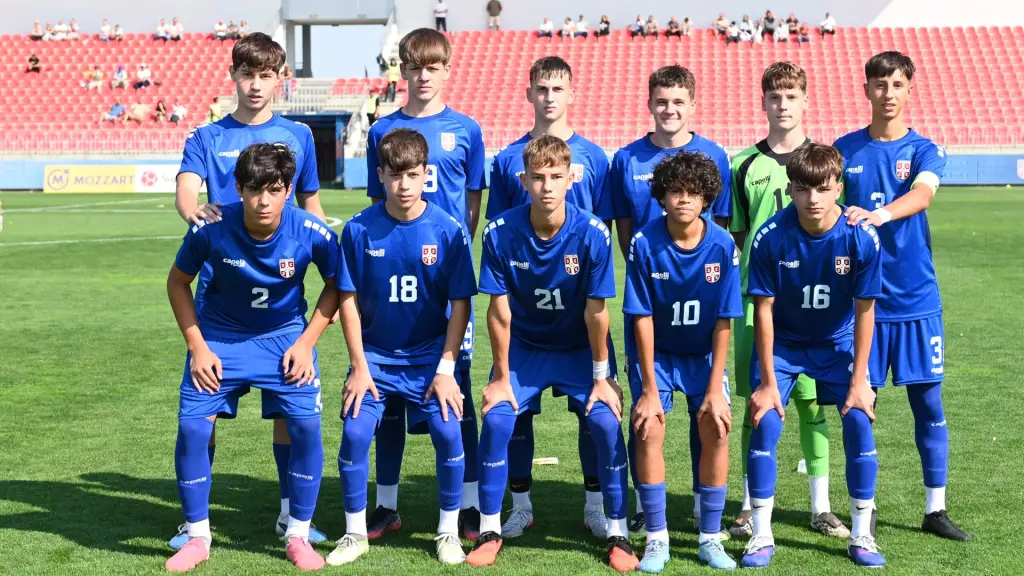
Nešković and Sinka completed the turnaround
Nešković equalised with an eye-catching strike, and Sinka then gave Serbia the lead from distance. Two goals in a short span completely changed the energy of the match.
The eye-catching goals took centre stage, but they came because the team kept the attack alive around the penalty area. It is a good example of how collective pressure opens space for individual quality. The goals from Nešković and Sinka differed in the way they were struck, but both came from the same pressure around the penalty area. The first rewarded a brave attempt from a difficult angle, the second a well-timed run into space. Individual quality came to the fore because the rest of the team kept the attack alive.
The final stretch demanded a different kind of discipline
After the turnaround, Serbia no longer had to attack with the same urgency. It was necessary to keep distances, choose the moment to press and prevent Kazakhstan from making a clean transition.
For young teams, emotional control is often hardest right after a big goal. That is why protecting the lead was almost as important as the turnaround itself. After the swing, the side had to change its rhythm without pulling back completely. Serbia chose when to press and when to close the central passing lane and force the opponent into longer passes. That part of the match matters for development, because young players learn to protect a result through decisions rather than random long balls.
Player development matters more than a single result
A win boosts confidence, but the basic purpose of a tournament is for players to learn how to respond to a changing score and the rhythm of a match. Serbia went through a weaker first half, a successful correction and the pressure of protecting a lead.
Each phase gives coaches concrete material for further work. The three goals will be remembered, but the lasting benefit lies in understanding why the response worked. One win does not define the value of a generation, but it provides good material for the next training session. The coaching staff can separate the problems from the first half from the moves that sparked the turnaround. The players thus receive a clear message: a bold response is worth most when it stays connected to agreed positions.