
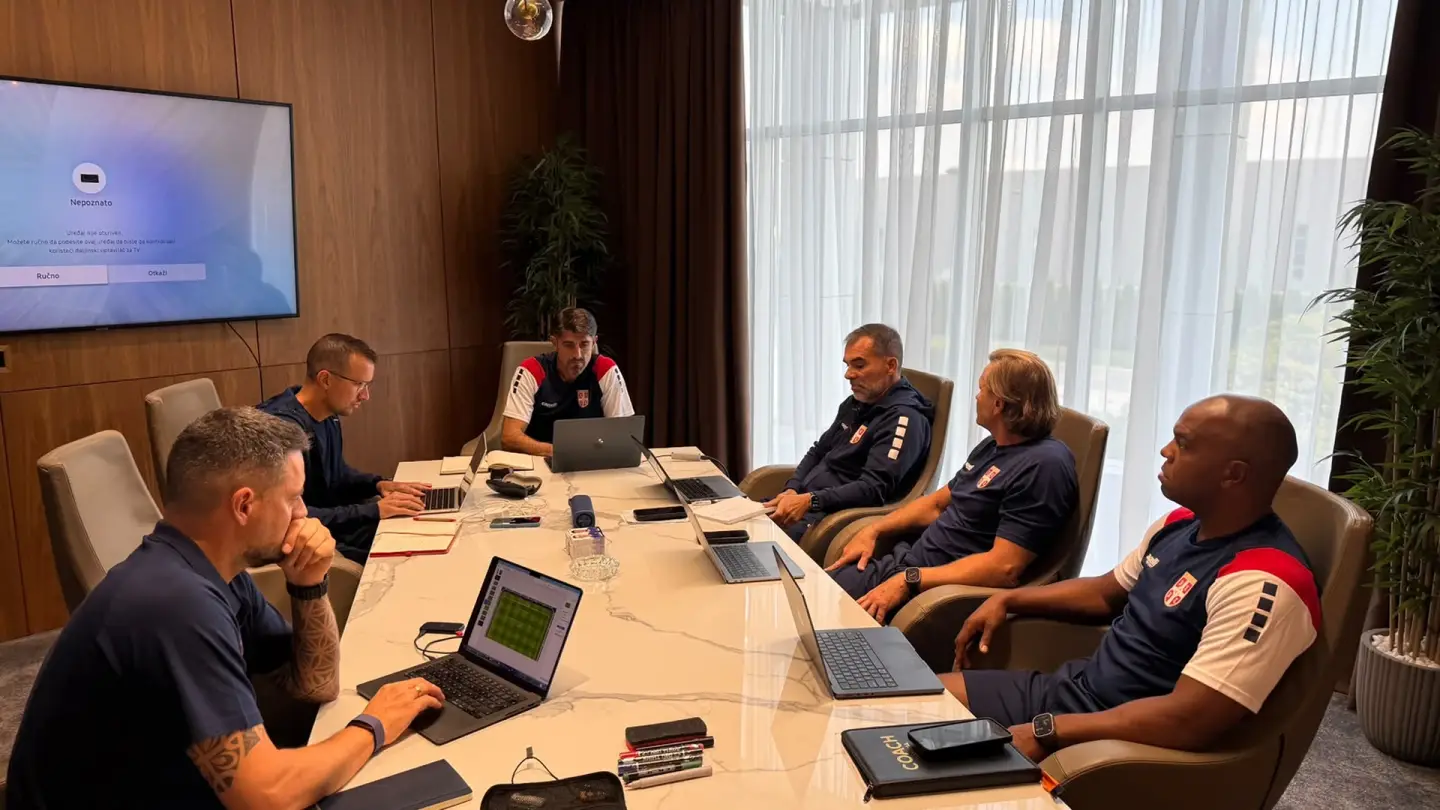
Serbia’s coaching staff is already working through the detail of the Nations League match against Greece in Belgrade. Veljko Paunović and his assistants are based at the FSS centre in Stara Pazova, following club fixtures, weighing up the form of individual players and studying the first opponent. The squad arrives on Monday, and the meeting with Greece is scheduled for 24 September at 20.45.
Preparation starts before the players walk in
The staff used the first days to gather information. The minutes players have logged in club matches show who is ready for a full load and who needs more careful management.
Analysing an opponent means looking for patterns that repeat, not one striking clip. A short spell with the national team can therefore start straight away with concrete tasks. Working ahead of the squad’s arrival cuts down the amount of new information the players must absorb on day one. They can be given short video analyses and clearly labelled situations, while the training pitch is kept for movement, quick reactions and direct communication. Early analysis also lets the assistants divide the work. One coach can study set pieces, another the way Greece breaks through pressing, and a third individual workloads, before the findings are merged into a plan the squad can actually use.
The opening match gets full attention
Greece is the immediate opponent, so it sets the first tactical problem. Serbia must know how it performs under pressure from its rival and how it reacts after losing the ball.
Set pieces need roles assigned before the final sessions. Later matches matter, but they must not overshadow the first plan. Greece will shape Serbia’s opening approach with its pressing and its possession football. A preferred formation is not enough on its own: the players need to know the first safe pass, the trigger for pressing and who protects the space behind after a turnover. The first fifteen minutes call for a specific response, since both teams will be testing each other’s preparation. Serbia needs calm options in possession and a clear reaction if Greece attacks immediately after winning the ball.
Club form has to fit the national team role
Playing well for a club does not automatically mean the same task with the national side. The combinations need to suit the opponent and the short time available to prepare.
Clear roles help players from different leagues recognise the same cue. A squad list only makes sense once each footballer knows his next obligation. Club form is only worth something once it is linked to a specific job for the national team. A winger may have less room, a midfielder a different zone, and a striker a different angle to start the press than during a club weekend. National-team football leaves little time to learn unfamiliar roles. Tasks close to club habits speed up the adjustment, provided the whole team still protects the same spaces.
Training time will be limited
Players arrive after different club commitments and in varying states of recovery. The first sessions should establish positions and communication without needless fatigue.
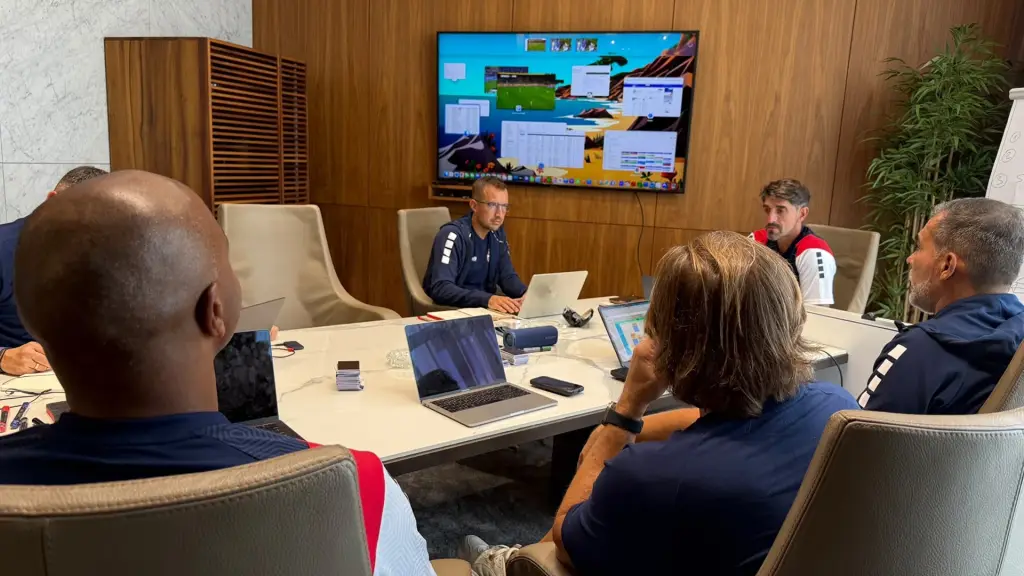
Video analysis can convey details without another full-intensity drill. A concise plan is easier to carry out than several variants introduced at once. Limited time makes recovery part of the tactics. Overly demanding sessions would blunt sharpness for the match, so the staff has to choose a small number of repeatable patterns and pass the finer points on through video. Recovery data may change the order of sessions or the minutes allotted to a drill. The tactical plan must be precise enough to withstand those individual adjustments without the staff inventing a new system every day.
The 24 September fixture remains the key deadline
The staff is at work, the players’ arrival is next, and the meeting with Greece is set for 24 September. The result and the starting line-up will only be known on the day of the match.
Player availability can still change after medical checks. The quality of the preparation will show in Serbia’s first decisions in Belgrade. The 24 September kick-off sets a clear deadline for medical assessments, roles at set pieces and the line-up decision. Until then, the most important part is the preparation process and the choice of solutions for the opening phase in Belgrade. The scheduled kick-off is the moment when preparation becomes performance. Until then, no presumed starting eleven is more reliable than the medical information and the players’ final reactions in training. The staff must therefore keep a back-up option for every important role. Changing one player should not force the rest of the team to learn an entirely new tactical plan just before the match. If the basic principles stay the same, a replacement can be given a simple task and quickly fall into the shared rhythm. This matters especially for set pieces and the first reaction after losing the ball. Such preparation gives Serbia stability even if the line-up changes at the last minute. Clarity in the plan reduces nerves before kick-off. Every player knows his first obligation.