
The finish in the Netherlands has become the benchmark
Paunović explained that Serbia want to build on the spell in Eindhoven when they pinned the Netherlands back close to their own goal. He did not present that phase as a finished model, but as proof that the side can be brave on the ball and aggressive without it.
For that approach to last longer, the first press has to be collective. If only the striker runs at the centre-back, the opponent will easily find a free midfielder. The wingers and the central players therefore need to close the next pass at the same moment.
The defensive duel is not separate from attack
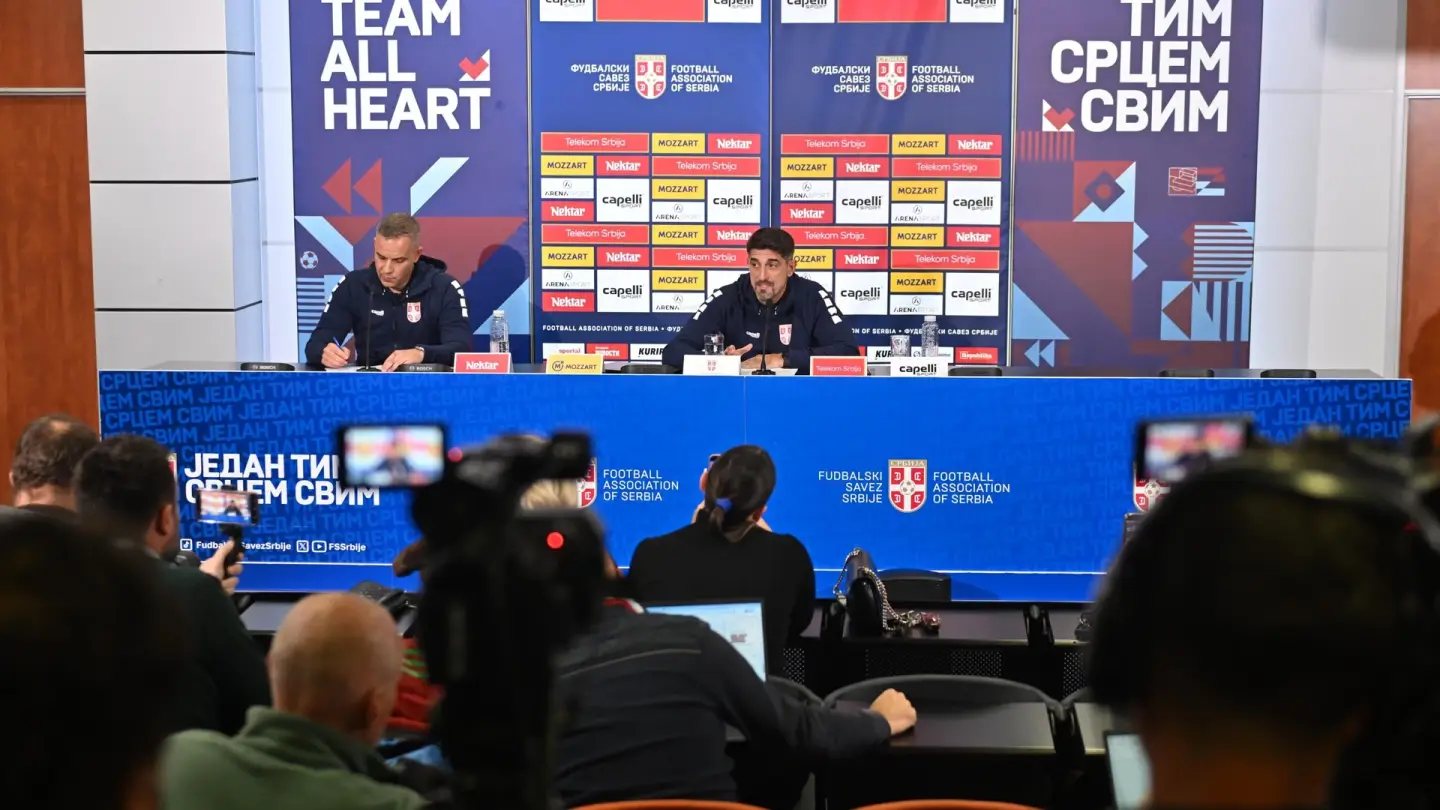
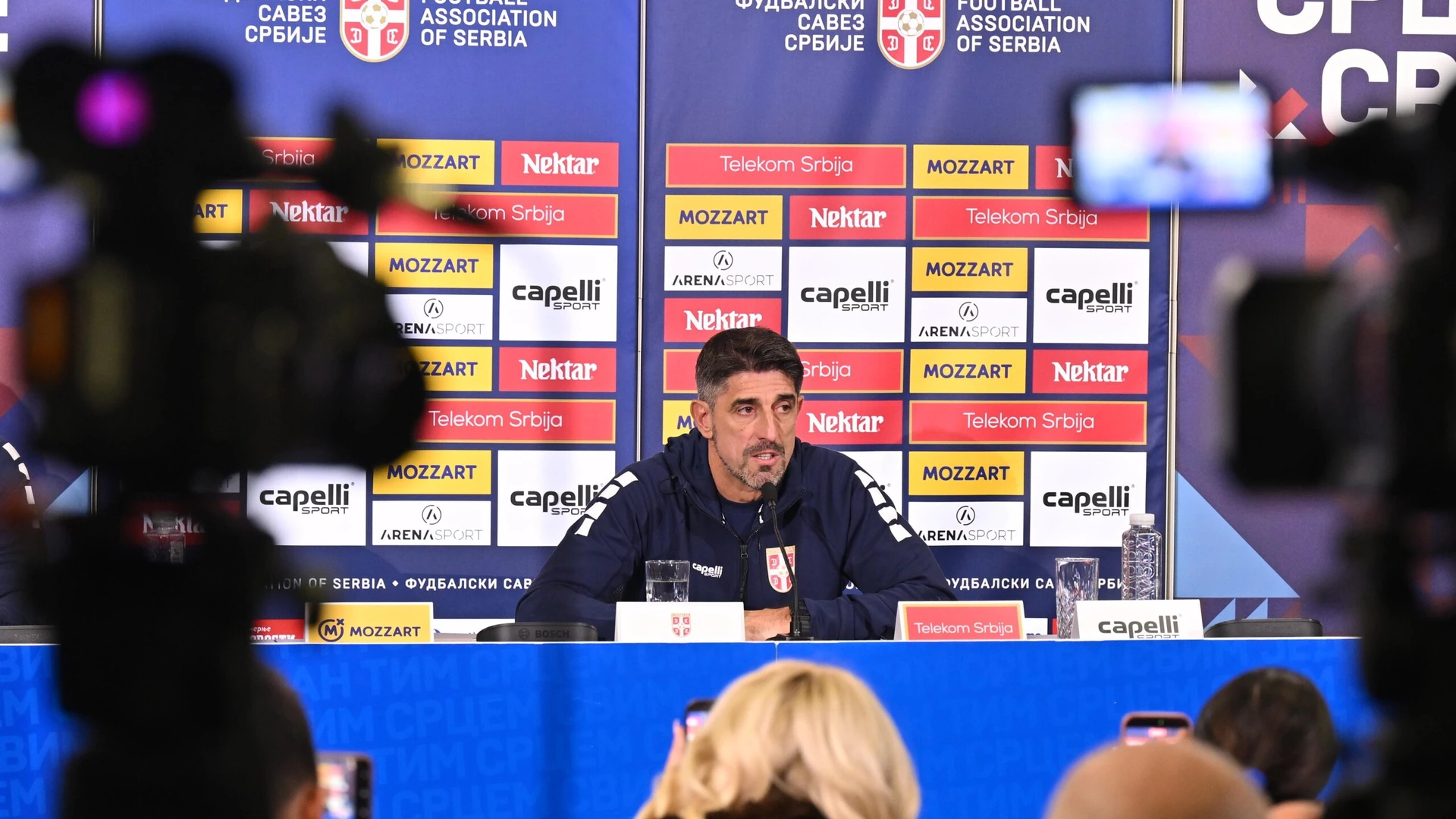
The press conference took place on 9 November at the FSS Sports Centre. The coach stressed concentration until the very end of every action, because a lost duel or poor positioning straight after an attack can immediately open up space for a quality opponent.
Serbia must keep enough players behind the ball even when they are attacking. That does not mean retreating, but maintaining the right distances between the centre-backs, the full-backs and the holding midfielder. That shape allows the team to win the ball back quickly or stop a counter before it reaches the danger zone.
The pass forward needs clear support
Paunović wants more play towards the opposition goal, but a vertical pass is of little use if the receiver is isolated. A player between the lines must have at least two options: a return pass and a runner attacking the space behind the defence.
When that support is missing, a simple pass out to the side can be the better choice. Patience does not mean slowness. It gives the team time to set up the next attack and stops one risky move from wiping out a good spell of possession.
Two matches call for a flexible line-up
Serbia host Germany in Belgrade on 13 November, then travel to Volos to face Greece on 16 November. The two opponents pose different problems: Germany can speed up the exchange of passes, while Greece often demand a physical duel and control of the space.
With so little time between the games, it will not be enough to prepare one starting XI. The coaching staff must also define the roles of players coming off the bench, so that substitutions keep the same direction of play. The aim is to turn the good idea from Eindhoven into consistent performance across the whole November cycle.
An important part of that consistency will be the reaction after a missed chance or a conceded goal. The team must not abandon the agreed shape by trying to win everything back in one move. Paunović wants every next possession to start again from a clear structure.