
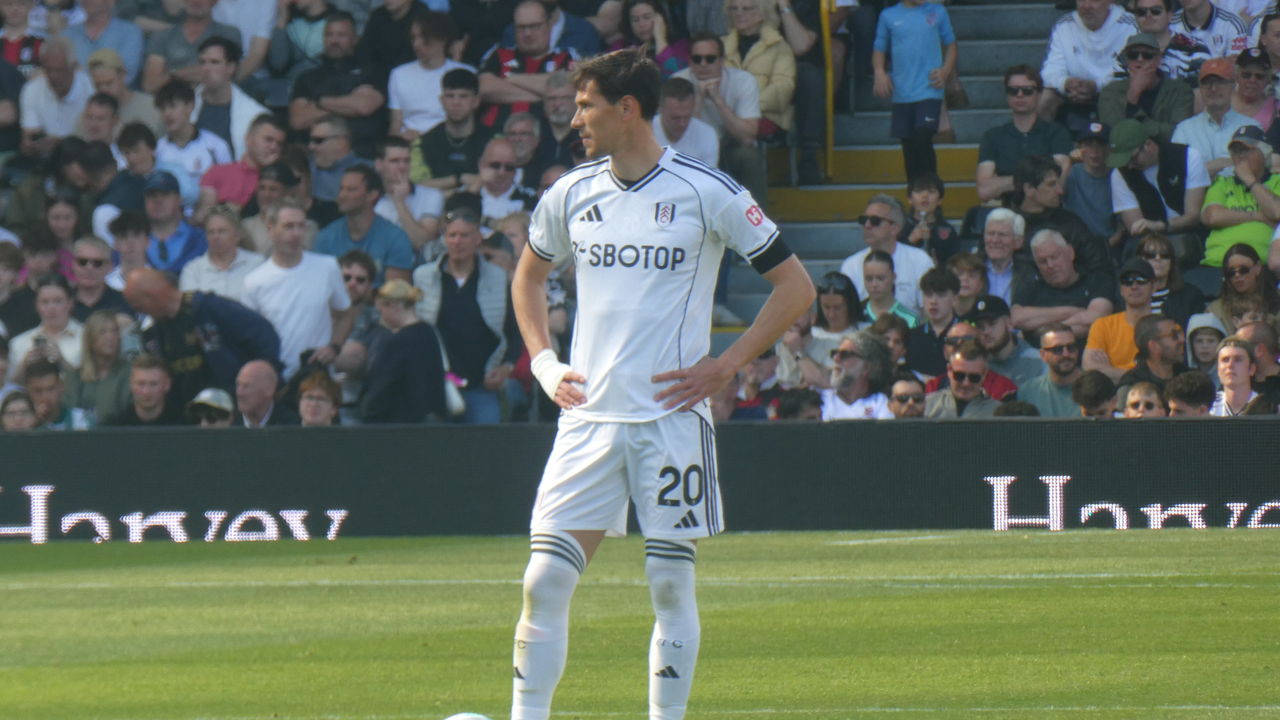
The Quiet Engine: How Saša Lukić Became Fulham’s Most Dependable Midfielder
In a Premier League era dominated by expensive signings who grab the headlines and goalscorers who thrive on social media, Saša Lukić has built something far rarer and, arguably, more valuable: a reputation founded on consistency, intelligence and a tireless willingness to do the unglamorous work that turns a mid-table side into something genuinely competitive. At Fulham, the Serbian midfielder has become precisely the type of player coaches speak about with admiration, even as headline writers pass him by.
Yet among the football circles that watch closely, including analysts, opposition scouts and managers who must prepare to face him, Lukić’s standing has grown considerably since his move to west London. He represents a particular strand of Serbian talent: technically grounded, physically available and tactically disciplined in a way that reflects the rigorous European education that shaped him. As the Serbian national team looks towards a new cycle after its absence from the 2026 FIFA World Cup, Lukić’s Premier League platform makes him one of the more valuable assets in the national setup.
From Turin to the Thames: The Route to Craven Cottage
Lukić’s footballing education was forged in Italy, where he spent the formative years of his development in Turin. The Serie A environment, demanding defensively, tactically structured and unforgiving of positional errors, suited his profile. He crystallised into one of the more complete central midfielders in the Italian top flight, capable of winning the ball, distributing it under pressure and contributing to transitions in both directions. Torino supporters saw in him a dependable presence, even if the clubs fighting perennial battles in the middle of the table limited his exposure on the European stage.

The move to Fulham represented a step into genuinely unexplored territory. The Premier League is a different beast altogether: quicker in transition, more physically demanding and played in a stadium atmosphere that can disorientate even experienced continental players. Lukić adapted. That adaptation was not instant, as rarely is the case for players arriving from Serie A, but it was thorough. His reading of the game allowed him to offset the difference in pace he initially encountered, and his fitness, always one of his strengths, meant he could withstand the pressing demands that modern Premier League football requires.
Pressing Metrics and the Burden of the Modern Midfielder
Modern football analysis has given us the vocabulary to describe what Lukić does: he is a player with a high PPDA contribution, meaning that in teams that measure defensive intensity by the number of passes allowed per defensive action, he tips the balance in a positive direction. His pressing is not the reckless, high-energy variety that exhausts a player by November; it is considered, triggered by specific cues, such as a heavy first touch from an opponent or a backwards pass that invites pressure, and executed with enough positional awareness that he rarely leaves dangerous space behind him.
Box-to-box midfielders in the Premier League are asked to cover extraordinary distances. Tracking data consistently shows that elite players in that role cover between eleven and thirteen kilometres per match, with a large share of that distance at high intensity. Lukić’s ability to sustain that output across a long season while retaining technical quality in both penalty areas is what sets him apart from players who offer energy without a final product. He presses without gambling, a discipline that cannot easily be coached into a player and is largely innate.
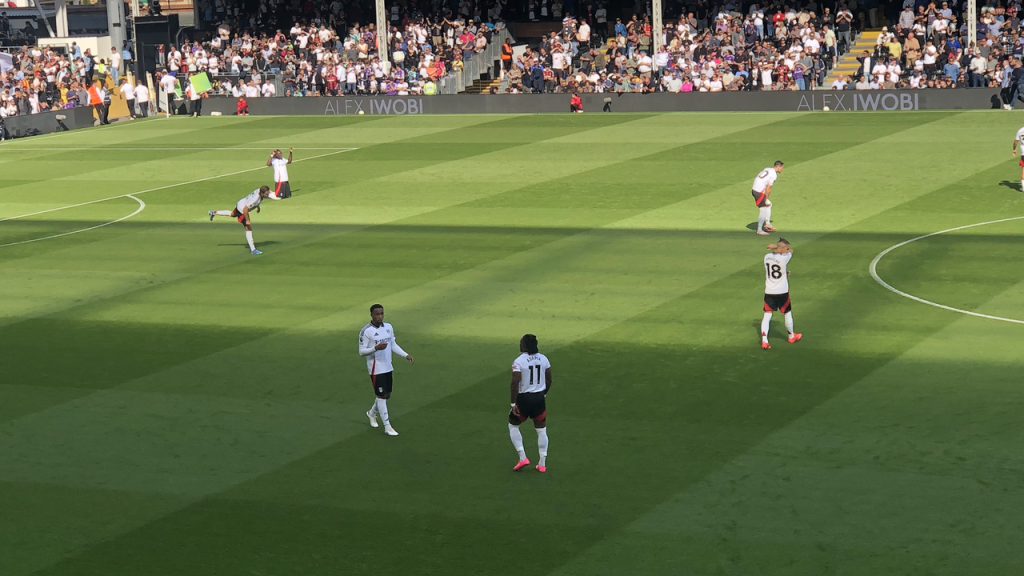
Fulham’s tactical shape in its current setup has directly benefited from having a midfielder who can work both as a defensive shield and as the first distributor of play. When Fulham win the ball in the central third, Lukić is often the player who sets the tempo of the counterattack, whether that means a short vertical pass to launch the attack or slowing the game to allow the side to regroup. It is precisely this decision-making under pressure that Premier League managers have in mind when they speak of a midfielder who has a “feel for the game”.
Goal Contributions and an Underrated Attacking Threat
The narrative around Lukić sometimes underplays his attacking role. Box-to-box midfielders who press effectively are sometimes viewed purely as defensive assets, with their goal contributions treated as pleasant bonuses rather than essential expectations. In Lukić’s case, however, his runs from deep, his ability to arrive late in the penalty area and his delivery from set pieces have produced meaningful returns in goals and assists during his time at Fulham.
His scoring record from midfield is not that of a traditional number ten lurking behind the striker; it is a record of a player who recognises specific moments: the second ball after a corner, the rebound on the edge of the box, the late run that arrives ahead of the opposition’s defensive press. These are goals that demand spatial intelligence and timing rather than individual brilliance, which makes them repeatable rather than exceptional. Repeatability, in this context, is a quality.
His assist contributions follow a similar logic. Many of Lukić’s key passes are not Hollywood through balls; they are precise, well-weighted deliveries into space that allow Fulham’s attacking players to receive the ball on the run and face goal. In a league as physically demanding as the Premier League, giving a striker or winger that half-second of advantage, receiving the ball with momentum rather than having to stop and set, is the difference between a chance created and a chance wasted.